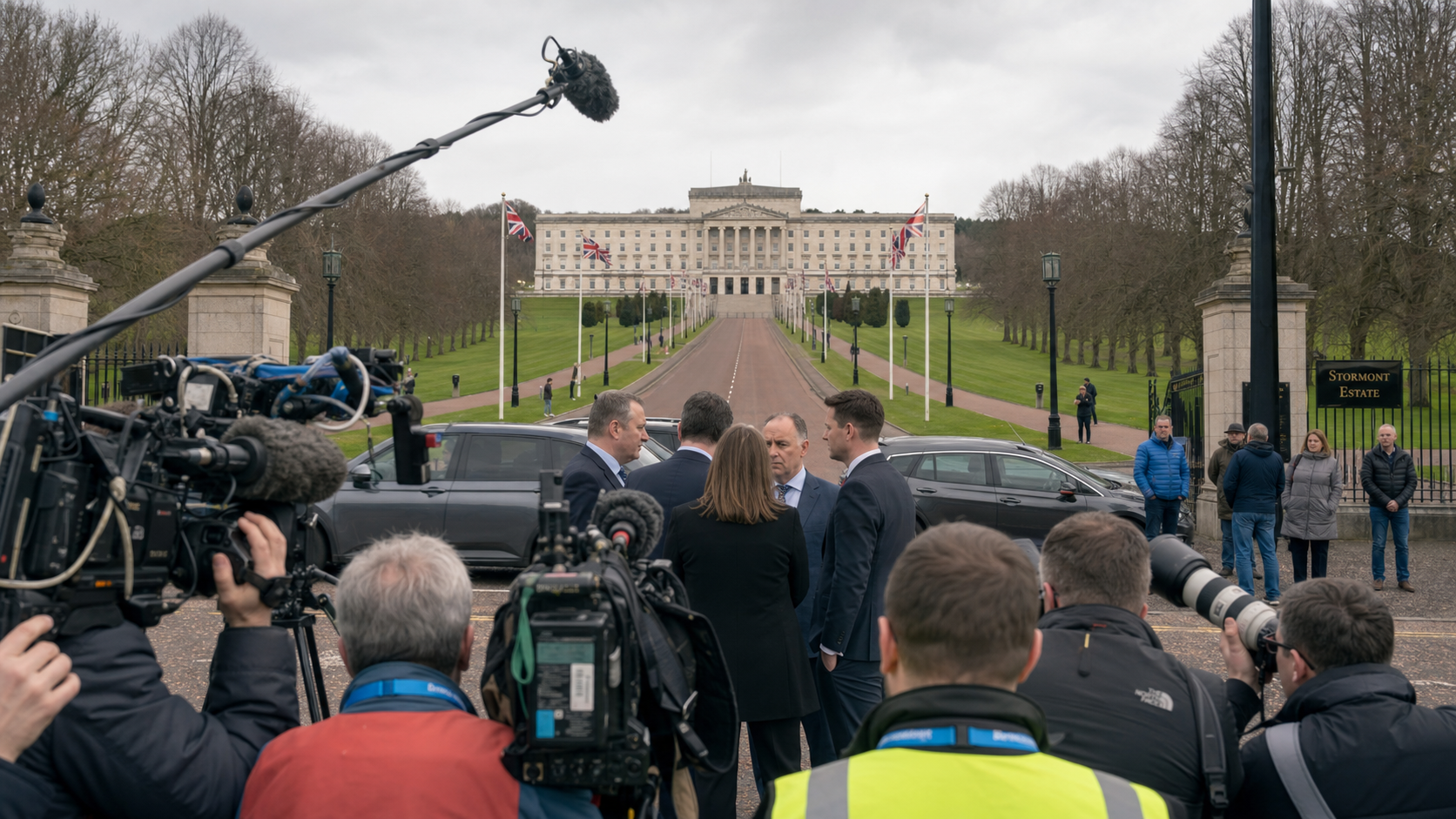
DUP Crisis Deepens as Donaldson Scandal Threatens Party's Status as Largest Unionist Bloc at Stormont
The Democratic Unionist Party is facing the most serious electoral threat in its history as polling conducted in the wake of the Jeffrey Donaldson child sex abuse scandal suggests the party could lose its status as the largest unionist designation in the Stormont Assembly at the 2027 election — a development that would represent a seismic shift in the balance of power in Northern Ireland politics and raise fundamental questions about the future of unionism as a political force.
Background
The DUP has been the dominant force in unionist politics since its founding by Ian Paisley in 1971, overtaking the Ulster Unionist Party as the largest unionist party in the 2003 Assembly election and maintaining that position through every subsequent election. The party's dominance has been built on a combination of grassroots organisation, a clear ideological identity rooted in evangelical Protestantism and opposition to Irish nationalism, and a series of strong leaders who have been able to mobilise the unionist electorate effectively.
The arrest and subsequent conviction of Jeffrey Donaldson — who led the party from 2021 until his arrest in March 2024 — has shattered this image of strength and reliability. Donaldson was one of the most experienced and respected figures in unionist politics, a veteran of the Good Friday Agreement negotiations and a long-serving MP who was widely regarded as a safe pair of hands. The revelation that he had been convicted of serious historic child sexual abuse has been experienced by many DUP supporters as a profound betrayal, raising questions not only about Donaldson personally but about the culture and oversight mechanisms of the party he led.
The party's response to the scandal has been complicated by the need to balance accountability with the risk of further damaging its own reputation. Gavin Robinson, who returned to the leadership following Donaldson's arrest, has attempted to draw a line under the affair by commissioning an internal review of safeguarding procedures and distancing the party from Donaldson's legacy. However, the ongoing legal proceedings — including the appeal lodged on Friday — ensure that the scandal will remain in the public eye for the foreseeable future.
Key Developments
The most alarming development for the DUP is the polling data emerging in the weeks since Donaldson's conviction. Several surveys have shown a significant decline in support for the party, with some polls suggesting that the Ulster Unionist Party or even the Traditional Unionist Voice could overtake the DUP as the largest unionist party in the Assembly. If this were to happen, it would end the DUP's quarter-century of dominance within unionism and potentially alter the dynamics of the power-sharing Executive in fundamental ways.
The formal conduct reviews launched by the Stormont Assembly and the Northern Ireland Civil Service are adding to the pressure on the party. These reviews are examining whether there were failures of oversight or safeguarding during Donaldson's time as a junior minister and at Parliament Buildings — questions that, if answered unfavourably, could implicate not just Donaldson but the institutions and individuals around him. The reviews are expected to report by the end of 2026, potentially providing further damaging revelations in the run-up to the 2027 election.
Within the party, there are reports of significant internal tension, with some members questioning whether Robinson's leadership is sufficiently decisive in addressing the fallout from the scandal. The party's annual conference, scheduled for the autumn, is expected to be a critical moment for Robinson to reassert his authority and set out a clear vision for the party's future.
Why It Matters
The DUP's difficulties matter for Northern Ireland politics as a whole, not just for the unionist community. The party's dominance within unionism has been a stabilising factor in the power-sharing arrangements, providing a clear and consistent interlocutor for the British and Irish governments and for Sinn Féin. A fragmented unionism, with multiple parties competing for the same electorate, would be more difficult to manage within the institutional framework of the Good Friday Agreement and could create new sources of instability. The prospect of the DUP losing its status as the largest unionist party would also have implications for the designation system that underpins the Assembly's voting arrangements, potentially requiring changes to the rules governing the formation of the Executive.
Local Impact
The political uncertainty generated by the DUP's difficulties is being felt across Northern Ireland, but particularly in the party's traditional heartlands in East Belfast, North Antrim, and the greater Belfast area. In these communities, the DUP has been not just a political party but a social institution, providing a network of connections and services that extends well beyond electoral politics. The erosion of the party's support base threatens not just its electoral position but the broader social infrastructure it has sustained. For the wider unionist community, the crisis raises deeper questions about political identity and representation at a time when demographic change and the ongoing debate about Irish unity are already creating significant anxiety.
What's Next
The DUP faces a series of critical tests in the coming months. The party's autumn conference will be the first major opportunity for Robinson to address the membership directly and set out his vision for recovery. The publication of the Assembly and Civil Service conduct reviews, expected by the end of 2026, will determine whether the scandal generates further damaging revelations. The 2027 Assembly election will be the ultimate test, determining whether the DUP can retain its position as the largest unionist party or whether the Donaldson scandal has permanently altered the balance of power within unionism. In the meantime, the party must continue to function as a governing partner in the Stormont Executive, managing the day-to-day business of government while dealing with the ongoing fallout from the most serious crisis in its history.