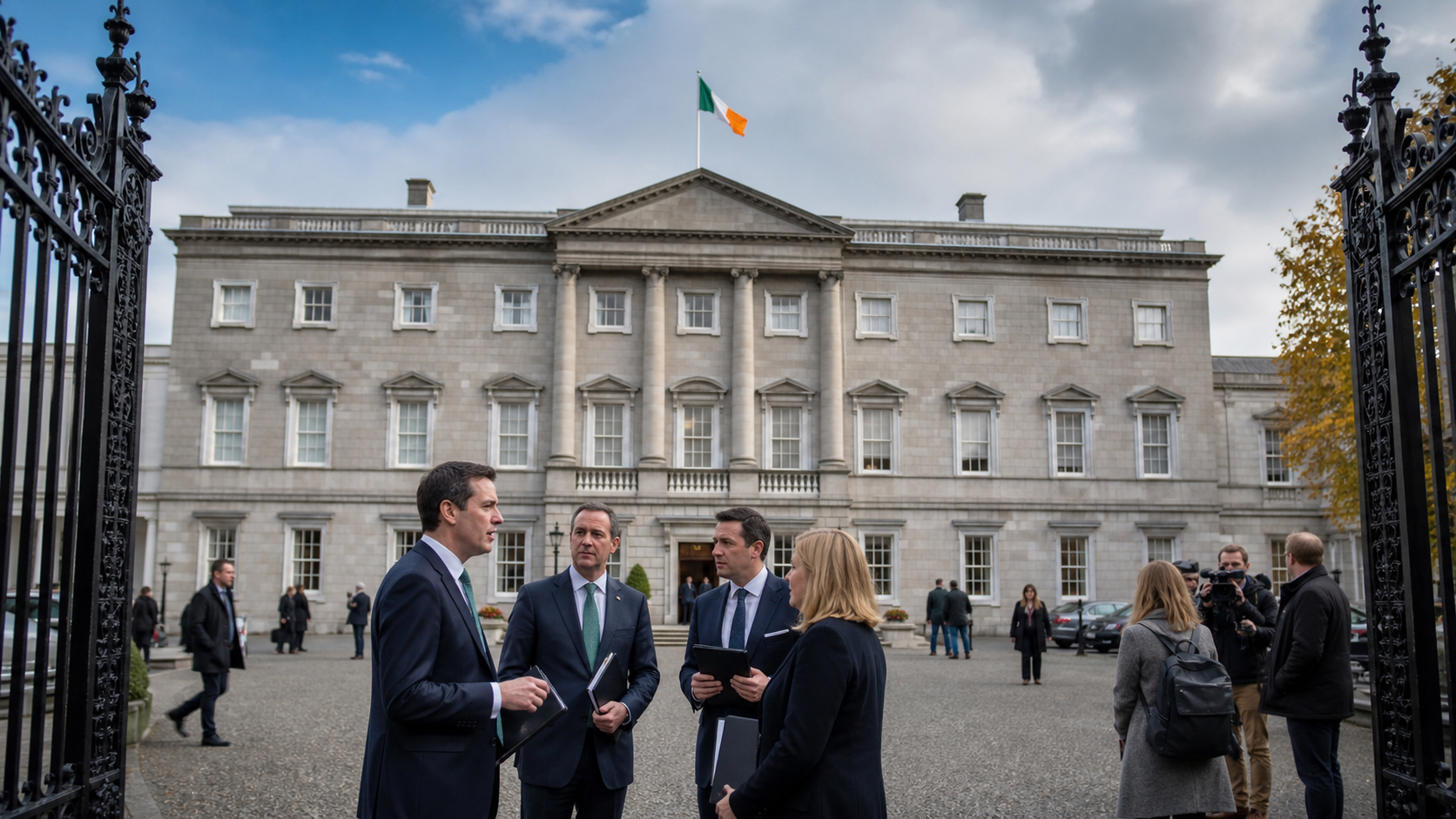
Fine Gael to Publish 'Blueprint for a Unified Island' by November as Unity Debate Reshapes Irish Politics
Tánaiste Simon Harris has announced that Fine Gael is developing its own 'blueprint for a unified island,' due for release by November 2026 — a significant strategic shift that signals the coalition government's recognition that Irish unity has become a mainstream political question requiring a substantive response, even as the government maintains its opposition to the legislated timelines for unity preparations that Sinn Féin has been demanding.
Background
The question of Irish unity has moved from the margins to the mainstream of political debate in the Republic of Ireland with remarkable speed over the past decade. A combination of factors has driven this shift: the Brexit referendum and its particular impact on Northern Ireland, the growth of Sinn Féin as a major political force in the Republic, demographic changes in Northern Ireland that have altered the traditional unionist majority, and a series of opinion polls suggesting that support for unity is growing on both sides of the border.
The political landscape was transformed by the 2020 general election in the Republic, in which Sinn Féin emerged as the largest party by first-preference votes, driven in part by its advocacy for Irish unity. While Sinn Féin was excluded from government by the formation of a Fianna Fáil-Fine Gael-Green coalition, the election result forced the establishment parties to engage more seriously with the unity question than they had previously been willing to do.
The government's response has centred on the 'Shared Island' initiative, launched by Taoiseach Micheál Martin in 2020, which channels investment into cross-border cooperation and all-island projects while explicitly avoiding any commitment to a timeline for a border poll. The initiative has been backed by a €1 billion fund and has supported a range of projects in infrastructure, health, education, and economic development. However, Sinn Féin and other unity advocates have argued that the Shared Island approach is a substitute for genuine unity planning rather than a step towards it.
Key Developments
The immediate trigger for Fine Gael's blueprint announcement was the government's defeat of Sinn Féin's Planning for Constitutional Change Bill, which was rejected by 79 votes to 69 in the Dáil earlier this month. The bill would have mandated the preparation of a Green Paper on Irish unity and the establishment of a Citizens' Assembly to examine the constitutional, economic, and social implications of unification. The government opposed the bill on the grounds that its timelines were 'not credible' and that the Shared Island approach was a more practical path to closer North-South relations.
However, the closeness of the vote — and the political pressure generated by Sinn Féin's sustained campaign on the unity issue — appears to have convinced Fine Gael that a purely defensive posture is no longer sustainable. The announcement of a Fine Gael blueprint represents an attempt to seize the initiative on the unity question, developing a government-aligned vision for what a unified Ireland might look like that can compete with Sinn Féin's narrative.
In a notable development during the Dáil debate on the Sinn Féin bill, Tánaiste Harris acknowledged the economic benefits of a single currency in a united Ireland, citing reduced transaction costs for cross-border trade. This was a more explicit engagement with the economic case for unity than Fine Gael has typically been willing to make, suggesting a genuine shift in the party's approach to the issue.
Why It Matters
The Fine Gael blueprint announcement matters because it represents a significant evolution in the position of one of Ireland's two largest establishment parties on the unity question. For most of its history, Fine Gael has been the most cautious of the major parties on Irish unity, prioritising the maintenance of good relations with Britain and the unionist community over any active pursuit of constitutional change. The decision to develop a blueprint for a unified island — however carefully hedged — signals that this caution is giving way to a recognition that the political landscape has changed and that Fine Gael must engage substantively with the unity question or cede the ground to Sinn Féin. The November publication date is also significant: it will come just weeks before the Dáil returns from its summer recess and in the run-up to what is expected to be an intensely contested period of political activity ahead of the 2027 elections.
Local Impact
The unity debate has different resonances in different parts of Ireland. In border counties such as Cavan, Monaghan, Donegal, and Louth, where cross-border economic and social ties are strongest, the question of unity is experienced as a practical matter with immediate implications for daily life. In Dublin, the debate is more abstract but no less politically charged, with the unity question increasingly intersecting with issues of housing, healthcare, and economic inequality. In Northern Ireland, the Fine Gael blueprint announcement will be watched closely by both unionist and nationalist communities, with unionists likely to view it with concern and nationalists with cautious interest. The DUP has already indicated it will oppose any government-sponsored unity planning process, while Sinn Féin has welcomed the Fine Gael announcement as evidence that the unity debate is moving in the right direction.
What's Next
Fine Gael is expected to publish its unity blueprint in November 2026, ahead of the Dáil's return from the Christmas recess. The document is likely to set out the party's vision for the economic, social, and constitutional arrangements of a unified Ireland, while stopping short of any commitment to a specific timeline for a border poll. The Taoiseach's Shared Island unit will continue its work in parallel, with a new round of cross-border investment projects expected to be announced in the autumn. Sinn Féin has indicated it will continue to press for a Citizens' Assembly on unity, and the issue is expected to be a central theme of the 2027 election campaign in both the Republic and Northern Ireland.