Budget 2027 Blow for First-Time Buyers as Help to Buy Increase Rejected by Senior Government Figures
First-time buyers hoping for a significant boost to the Help to Buy scheme in Budget 2027 have received a clear signal that it will not materialise, after Tánaiste Simon Harris and Taoiseach Micheál Martin publicly rejected Housing Minister James Browne's proposal to increase the maximum tax refund from €30,000 to €50,000 — a move that would have cost the exchequer an estimated €200 million annually but which senior government figures have concluded is not affordable in the current budgetary context.
Background
The Help to Buy scheme, introduced in 2016, allows first-time buyers of new homes to claim a refund of income tax and DIRT paid over the previous four years, up to a maximum of €30,000 or 10% of the purchase price, whichever is lower. The scheme is available for new homes valued at less than €500,000 and has been credited with stimulating demand for new housing at a time when supply was severely constrained. It has been used by tens of thousands of first-time buyers since its introduction and has become one of the most significant housing supports available to those entering the property market for the first time.
The scheme has also been criticised, however, for potentially inflating house prices by increasing the purchasing power of buyers without a corresponding increase in supply. Some economists have argued that demand-side supports of this kind are counterproductive in a market where the fundamental problem is insufficient supply, and that the money would be better spent on direct investment in social and affordable housing. The government has consistently rejected this analysis, arguing that the scheme is targeted at new builds and therefore stimulates supply rather than simply inflating prices for existing homes.
Housing Minister James Browne had been lobbying actively for an increase in the scheme's maximum refund to €50,000, arguing that rising construction costs had eroded the scheme's effectiveness and that first-time buyers needed additional support to bridge the gap between their savings and the cost of a new home. The proposal was supported by the construction industry and by some housing advocacy groups, but it faced significant opposition from within the government itself.
Key Developments
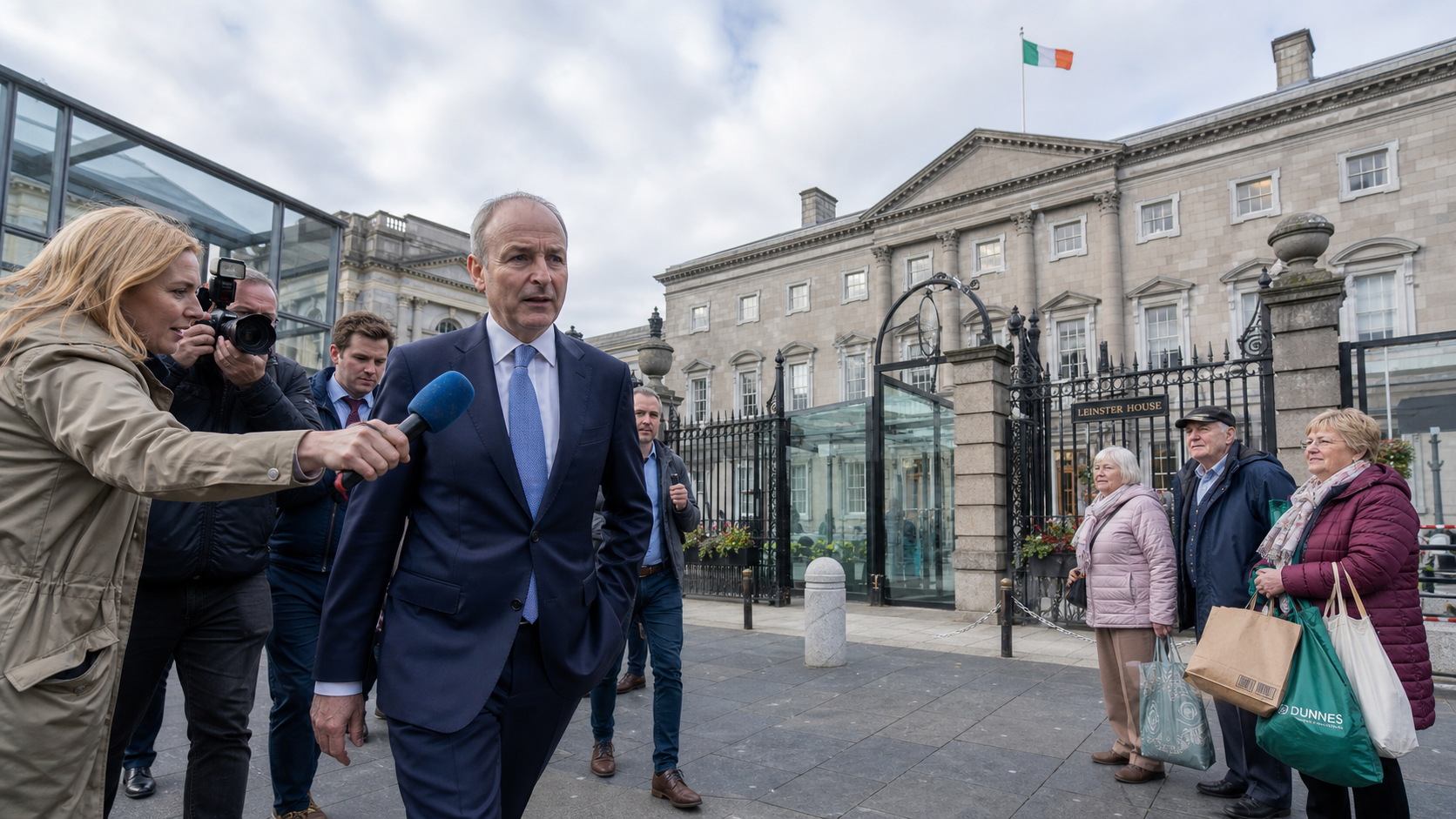
The rejection of the proposal was delivered in unusually direct terms by both the Tánaiste and the Taoiseach. Harris, speaking to reporters on Monday, said that the Minister for Finance's role includes the responsibility to say "no" to budgetary proposals that are not affordable, and confirmed that he was not planning any new measures regarding housing taxation. Martin was equally clear, describing the proposal as a "non-runner" in the current budgetary context.
The Minister for Finance's position reflects a broader concern within the government about the inflationary impact of demand-side housing supports. With house prices continuing to rise in most parts of the country, there is a reluctance to introduce measures that could further inflate the market, even if the political pressure to do something for first-time buyers is intense.
The government has instead announced plans for a major public awareness campaign to inform prospective homeowners about the existing Help to Buy scheme, the cost-rental scheme, and the Vacant Property Refurbishment Grant — measures that are already available but which research suggests are not well understood by a significant proportion of the public. A study by Glenveagh Homes found that approximately 40% of the public remained unaware of the Help to Buy scheme, suggesting that better communication of existing supports could have a meaningful impact without additional exchequer cost.
Why It Matters
The rejection of the Help to Buy increase is a significant political moment, not least because it represents a public disagreement between the Housing Minister and the most senior figures in the government. Browne's proposal was not a minor technical adjustment — it was a substantial policy change that would have cost the exchequer €200 million annually and would have been the most significant enhancement to the scheme since its introduction. The fact that it was rejected so publicly, and so early in the pre-budget period, suggests that the government's room for manoeuvre on housing supports is more constrained than the Housing Minister had hoped.
For first-time buyers, the news is disappointing but not entirely surprising. The government has been signalling for some weeks that Budget 2027 would be a relatively tight budget, with the focus on cost-of-living measures — childcare, heating oil, income tax — rather than new capital commitments. The Help to Buy scheme will remain in place at its current level, which is still a significant support, but those who had been hoping for a step change in the level of assistance available will be disappointed.
The broader housing crisis — characterised by insufficient supply, rising prices, and a growing gap between incomes and the cost of homeownership — will not be resolved by any single budgetary measure. The government's housing plan, which focuses on increasing supply through planning reform, infrastructure investment, and direct state building, remains the primary vehicle for addressing the crisis, but its results will take years to materialise.
Local Impact
The impact of the Help to Buy decision will be felt most acutely in the commuter counties around Dublin — Kildare, Meath, Wicklow, and Louth — where new housing developments are most active and where first-time buyers are most likely to be using the scheme. In these areas, where the average price of a new three-bedroom semi-detached house now exceeds €400,000, the gap between the maximum Help to Buy refund and the deposit required by lenders remains significant. Estate agents in these areas reported that the rejection of the increase was a blow to buyer confidence, though they noted that demand for new homes remained strong despite the news. In Cork, Galway, and Limerick, where new housing is also being built at scale, the reaction was similar.
What's Next
Budget 2027 will be announced on October 6, and the government has indicated that housing will be a significant focus of the package, even if the Help to Buy increase has been ruled out. Measures under consideration include an extension of the Vacant Property Refurbishment Grant, additional funding for the Land Development Agency, and a new scheme to support the construction of apartments in urban areas. The Housing Minister has indicated that he will continue to make the case for additional first-time buyer supports within the constraints of the budgetary framework, and has not ruled out returning to the Help to Buy question in future budgets.