Harland & Wolff Launches Drive to Recruit 94 Workers for Royal Navy Fleet Solid Support Programme
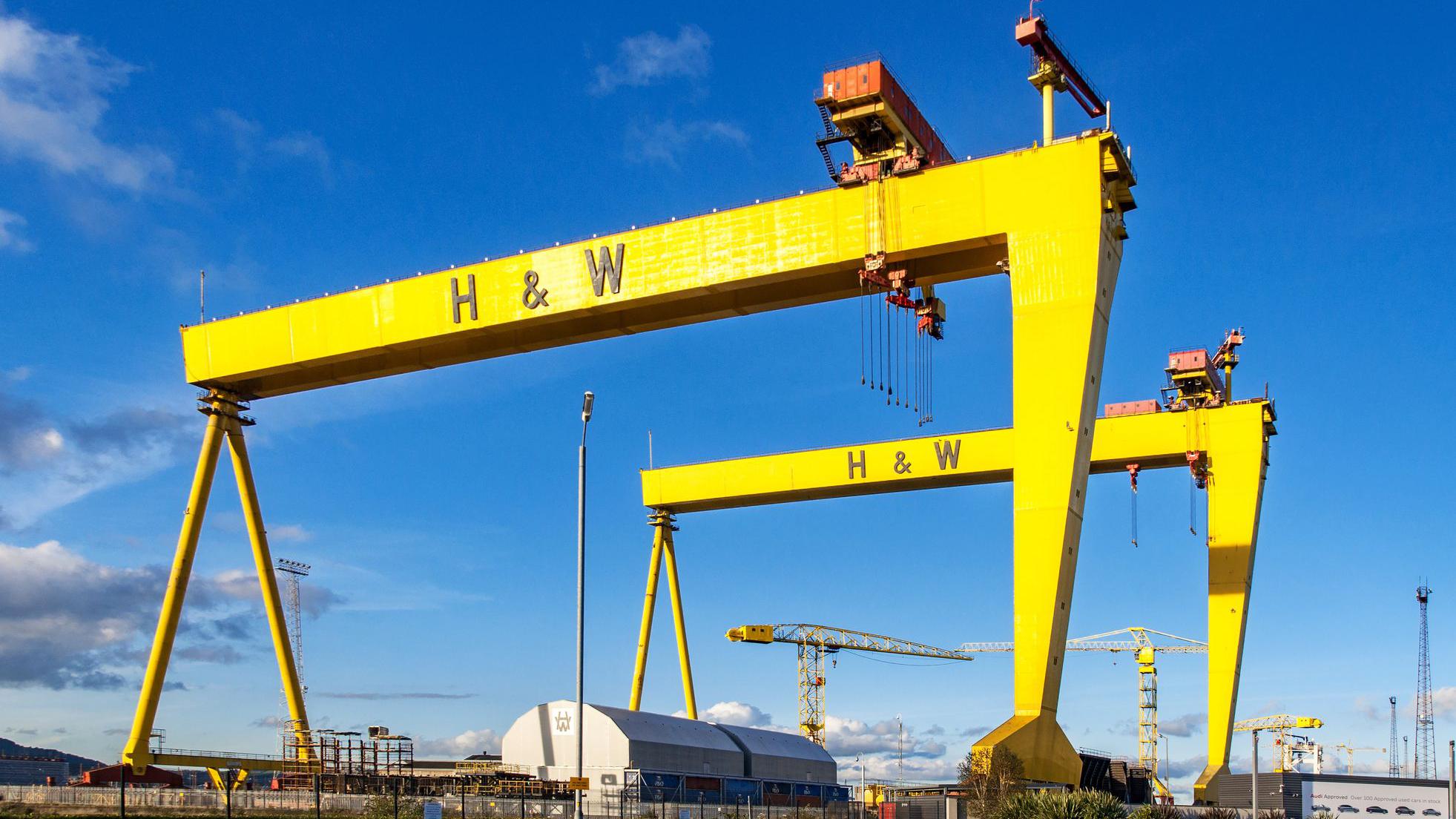
The Harland & Wolff shipyard in Belfast has launched a targeted recruitment campaign for 94 additional workers to support the construction of Fleet Solid Support ships for the Royal Navy, as the historic yard — now operating under Navantia UK ownership — accelerates its industrial revival with a £98.5 million investment in modernised facilities and a long-term ambition to employ 1,500 people on the banks of the Lagan.
Background
Few names in Belfast's industrial history carry the weight of Harland & Wolff. The shipyard, founded in 1861 on Queen's Island at the mouth of the River Lagan, was for more than a century the defining institution of Belfast's working-class identity, employing tens of thousands of workers at its peak and producing some of the most famous vessels ever to sail the world's oceans — including, most infamously, the RMS Titanic. The yard's decline through the latter decades of the twentieth century, culminating in its near-closure and eventual sale, was experienced by many in Belfast as a loss not merely of employment but of something fundamental to the city's sense of itself.
The acquisition of Harland & Wolff by Navantia UK — the British subsidiary of the Spanish state-owned shipbuilder — in 2024 marked the beginning of a new chapter. Navantia UK secured the contract to build three Fleet Solid Support (FSS) ships for the Royal Fleet Auxiliary, a programme that represents the most significant shipbuilding contract awarded in Belfast in a generation. The FSS vessels, each displacing approximately 39,000 tonnes, will provide logistical support to the Royal Navy's carrier strike groups, carrying ammunition, food, and stores to warships at sea.
The construction programme involves a modular approach, with sections built at Navantia UK's facilities in Appledore in Devon and Cadiz in Spain before being transported to Belfast for final integration and outfitting. The Belfast yard has undergone significant capital investment to support this work, including the installation of robotic cutting equipment, a mechanised panel line, and an expanded fabrication hall.
Key Developments
The latest recruitment drive seeks 28 workers to begin immediately, with a further 66 positions to be filled in September. The roles are primarily in skilled trades — welders, platers, and pipe-fitters — reflecting the specific demands of the FSS build schedule at this stage of the programme. The campaign brings the total number of apprentices in training at the Belfast site to over 120, as part of a broader strategy to develop a new generation of skilled shipbuilders from within Northern Ireland's workforce.
The current workforce at the Belfast yard stands at approximately 450 people, a figure that Navantia UK intends to grow substantially over the coming years. The company's stated ambition is to reach 1,500 employees at the Belfast site, a level that would represent a genuine industrial revival for a yard that once employed many times that number. Across the entire Navantia UK group, which operates four sites in the UK, there is a target to have 500 apprentices in training by 2030.
The apprenticeship programme is delivered in partnership with the Northern Regional College, providing a structured pathway from school-leaver to qualified tradesperson. Navantia UK has described the Belfast apprenticeships as offering "terrific opportunities to learn while you earn," and the programme has attracted strong interest from young people across the greater Belfast area and beyond.
Why It Matters
The revival of Harland & Wolff matters to Belfast in ways that go beyond the economic. The yard's history is woven into the fabric of the city's identity, and its decline left a wound in the east Belfast communities that had depended on it for generations. The FSS programme represents a genuine opportunity to rebuild not just a workforce but a tradition of skilled industrial employment that has been largely absent from the city for three decades. Northern Ireland's manufacturing base has contracted significantly since the 1970s, and the shipyard's revival — if sustained — could provide a model for how public procurement can be used to anchor high-quality employment in regions that have experienced deindustrialisation. The programme also has strategic significance for the UK's defence industrial base, with Belfast playing a central role in the Royal Navy's logistics capability for the foreseeable future.
Local Impact
The recruitment drive is expected to draw applicants primarily from east Belfast and the surrounding areas of Newtownabbey, Castlereagh, and Ards, where the shipbuilding tradition runs deepest. Local schools and further education colleges have been engaged by Navantia UK as part of its outreach programme, and careers events are planned at venues across the greater Belfast area in the coming weeks. The Northern Regional College's partnership with the yard has already produced a cohort of apprentices who are working on the FSS programme, and the college has indicated it is prepared to expand its intake to meet the growing demand for trained personnel. For the communities of east Belfast — Sydenham, Ballymacarrett, Connswater — the sight of cranes active again at the yard and recruitment notices in local papers represents something more than a job opportunity.
What's Next
Applications for the 28 immediate positions are open now, with the September intake to be advertised in the coming weeks. Navantia UK has indicated that further recruitment rounds are likely as the FSS programme progresses through its build schedule. The company is also exploring potential future contracts — including the UK Ministry of Defence's Multi-Role Support Ship requirement — that could provide additional long-term work for the Belfast yard beyond the current FSS programme. A decision on the MRSS contract is expected in 2027.