Gerry Kelly to Step Down at Next Stormont Election After Three Decades of Republican Politics
Veteran Sinn Féin MLA Gerry Kelly has confirmed he will not contest the next Northern Ireland Assembly election, bringing to a close a career in representative politics that has spanned three decades and encompassed some of the most turbulent and transformative chapters in the history of the North.
Background
Gerry Kelly's political biography is inseparable from the history of the conflict and peace process in Northern Ireland. Born in North Belfast in 1953, he became involved in republican politics as a young man and was convicted in 1973, at the age of 19, for his role in the IRA bombing of the Old Bailey courthouse in London. He received two life sentences and, during his imprisonment, participated in a 60-day hunger strike during which he was force-fed. He was later transferred to the Maze Prison, from which he was one of the key figures in the mass breakout of 1983 — the largest prison escape in Europe since the Second World War.
Following his release, Kelly became a central figure in Sinn Féin's political development, serving as a negotiator during the talks that led to the Good Friday Agreement in 1998. He was first elected to the Northern Ireland Forum in 1996 and subsequently became an MLA for North Belfast following the Agreement, a seat he has held continuously since. He served as a junior minister in the Northern Ireland Executive between 2007 and 2011, during the period of power-sharing between Sinn Féin and the DUP under the leadership of Martin McGuinness and Ian Paisley.
Kelly is one of the longest-serving members of the Assembly, alongside Speaker Edwin Poots, and his departure will mark the end of an era for a generation of republican politicians who came of age during the Troubles and helped navigate the transition to constitutional politics.
Key Developments
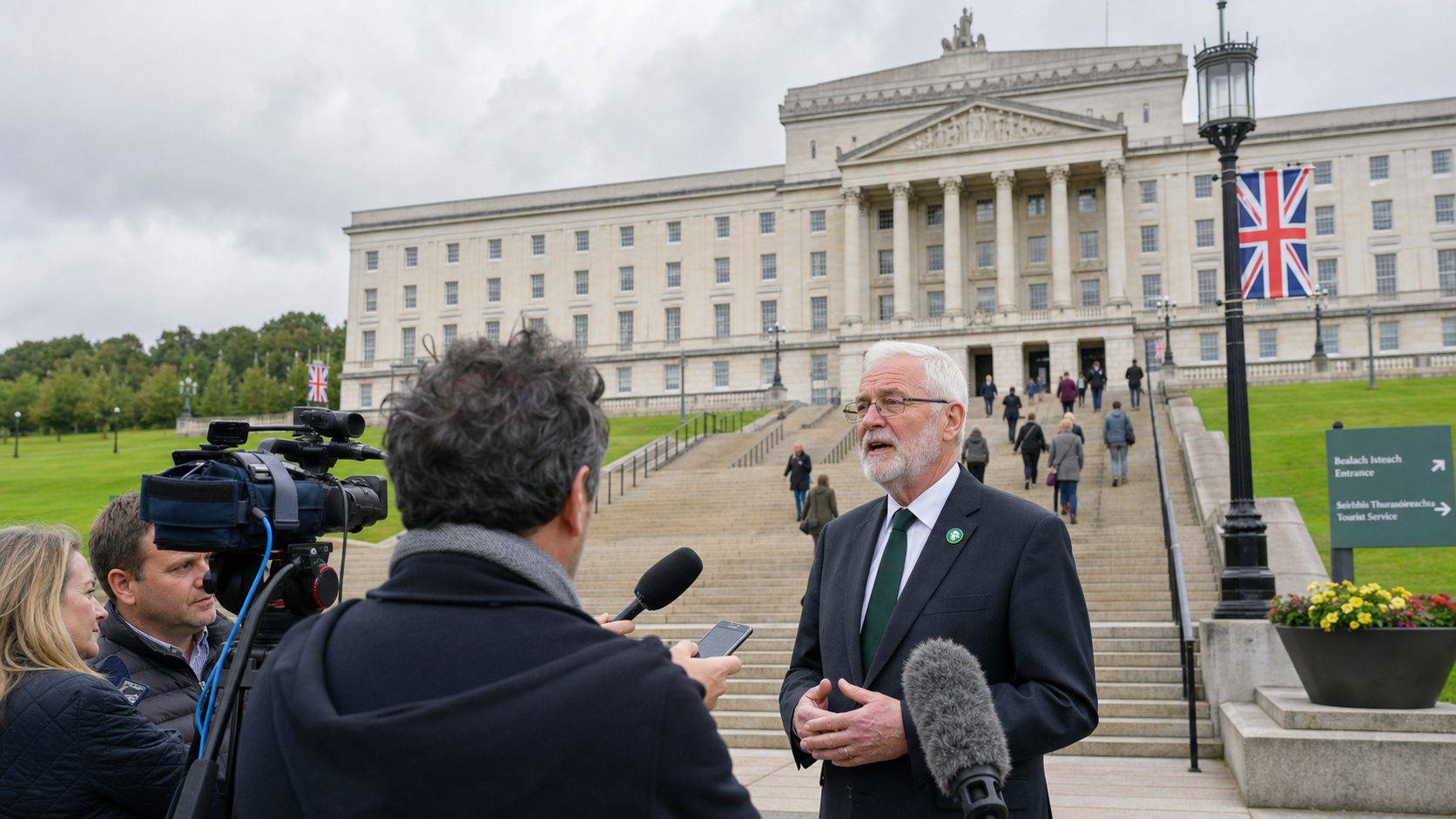
Kelly confirmed his decision on 22 July 2026, stating that he would not stand as a candidate in the next Assembly election, which is due by May 2027. He said he intends to remain a political activist but acknowledged that he would no longer be a "24/7 activist" and was looking forward to spending more time with his family. He will continue to fulfil his duties as an MLA until the election.
Reflecting on his career, Kelly expressed pride in his contributions to the peace process, the Good Friday Agreement, and the historic appointment of Michelle O'Neill as the first republican First Minister of Northern Ireland. He described the latter as a moment that would have been unimaginable to him during his years of imprisonment and said it represented the most profound vindication of the political path Sinn Féin had chosen.
First Minister Michelle O'Neill paid tribute to Kelly's "decades of dedicated service and commitment to Irish unity," describing him as a figure who had given everything to the republican movement and to the communities of North Belfast. Sinn Féin's leadership acknowledged that his departure would leave a significant gap in the Assembly, both in terms of experience and institutional memory.
Why It Matters
Kelly's retirement is a significant moment in the ongoing evolution of Sinn Féin as a political party. The generation of republicans who were directly involved in the conflict and its resolution are gradually stepping back from frontline politics, creating both a challenge and an opportunity for the party. The challenge is to maintain the depth of institutional knowledge and political credibility that figures like Kelly brought to negotiations and governance. The opportunity is to present a new generation of leaders who are defined by their vision for the future rather than their connection to the past.
North Belfast, the constituency Kelly has represented since 1998, is one of the most politically contested areas in Northern Ireland. The seat has been the subject of intense competition between Sinn Féin, the DUP, and the Alliance Party, and Kelly's departure will trigger a significant selection process within Sinn Féin to identify a candidate capable of holding the seat. The party's performance in North Belfast will be closely watched as an indicator of its broader electoral health ahead of the 2027 election.
For the Assembly as an institution, the departure of one of its founding members is a reminder of how much has changed since 1998 and how much the political landscape of Northern Ireland continues to evolve. The Assembly that Kelly helped to establish is now led by a republican First Minister — a development that would have seemed extraordinary to most observers at the time of the Good Friday Agreement.
Local Impact
In North Belfast, Kelly's announcement has been received with a mixture of respect and reflection. The constituency encompasses some of the most deprived communities in Northern Ireland, including parts of the New Lodge, Ardoyne, and Tiger's Bay areas, and Kelly has been a consistent advocate for investment in those communities throughout his time as an MLA. His work on issues including housing, policing, and community relations has left a tangible legacy in the area.
The PSNI's relationship with North Belfast communities has been a recurring theme of Kelly's political career, and his departure comes at a time when that relationship remains complex and contested. His successor will inherit both the opportunities and the challenges of representing a constituency that has been at the heart of Northern Ireland's political story for generations.
What's Next
Sinn Féin is expected to begin its candidate selection process for North Belfast in the coming months, with the party's internal structures determining who will contest the seat at the next election. Kelly will remain active in the Assembly until the election, continuing to represent his constituents and contribute to the party's legislative work. Political analysts will be watching closely to see whether Sinn Féin can hold North Belfast without the personal vote that Kelly has accumulated over nearly three decades of representation.