General Practice in Ireland at 'Breaking Point' as GP Shortage Leaves Thousands Without a Doctor
The Irish Medical Organisation has issued a stark warning that general practice in Ireland is at a "breaking point," with an estimated shortfall of 1,400 GPs against a workforce of approximately 4,600 currently in practice, nearly 30 per cent of whom are expected to retire within the next five years — a crisis that is being exacerbated by the government's expansion of free GP visit cards, which has increased patient demand without a corresponding increase in the number of doctors available to meet it.
Background
General practice is the foundation of any functioning health system. GPs are the first point of contact for the vast majority of health concerns, and their ability to diagnose, treat and refer patients appropriately is central to the efficiency and effectiveness of the entire health service. When general practice is under pressure, the consequences ripple through the entire system — patients who cannot see a GP turn to emergency departments, hospital outpatient clinics and other services that are not designed to handle primary care demand.
Ireland has been facing a GP shortage for years, but the situation has deteriorated significantly in recent times. The combination of an ageing GP workforce, insufficient numbers of medical graduates choosing general practice as a career, and the expansion of eligibility for free GP care has created a perfect storm that is leaving many communities — particularly in rural areas and the commuter belt around Dublin — without adequate primary care provision.
The government's decision to expand free GP visit cards to all adults under 70 was a significant policy commitment, designed to reduce the financial barrier to accessing primary care and to shift demand away from more expensive hospital-based services. However, the expansion was implemented without a corresponding increase in the number of GPs, and the result has been a sharp increase in demand on a workforce that was already stretched to its limits.
Key Developments
The IMO's assessment is that Ireland needs approximately 6,000 GPs to meet current demand, but has only around 4,600 in practice — a shortfall of 1,400. The situation is expected to worsen significantly over the next five years, as approximately 30 per cent of the current GP workforce approaches retirement age. If those retirements are not offset by a corresponding increase in the number of new GPs entering practice, the shortfall will grow to potentially catastrophic levels.
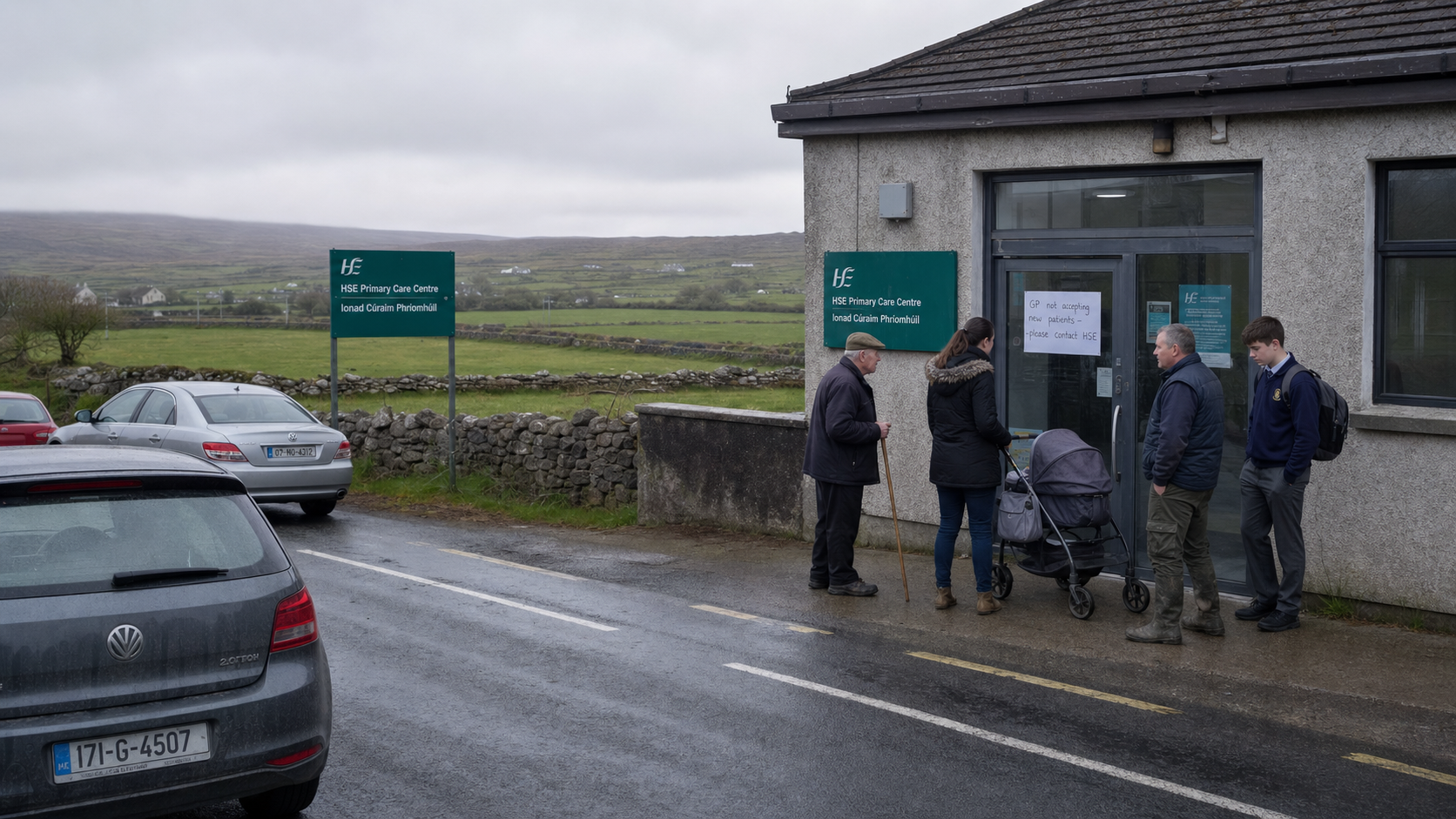
The practical consequences are already being felt across the country. Many GP practices, particularly in the Dublin commuter belt and in rural areas, have closed their lists to new patients — meaning that people who move to those areas, or who are looking for a GP for the first time, are unable to register with a local practice. In some areas, the nearest practice accepting new patients is many kilometres away, creating significant barriers to access for people without private transport.
The expansion of free GP visit cards has increased the number of consultations that GPs are expected to carry out, without any increase in the fees paid to GPs for those consultations or any reduction in the administrative burden associated with running a practice. Many GPs have described the situation as unsustainable, and there has been a significant increase in the number of GPs choosing to emigrate or to move into other areas of medicine.
Why It Matters
The GP shortage matters because it affects the health outcomes of everyone in Ireland, not just those who are currently unable to register with a practice. When people cannot access primary care, they delay seeking treatment for conditions that could be managed effectively at an early stage, and those conditions often deteriorate to the point where they require more intensive and expensive hospital-based treatment. The cost of the GP shortage — in human terms and in financial terms — is therefore much greater than the immediate inconvenience of not being able to see a doctor.
The shortage also has implications for the government's Sláintecare reform programme, which is designed to shift the Irish health system towards a model based on primary and community care rather than hospital-based care. Sláintecare's ambitions cannot be realised if the primary care workforce is inadequate to meet demand, and the GP shortage is therefore a fundamental obstacle to the reform programme's success.
For context, Ireland's ratio of GPs to population is among the lowest in Western Europe. The OECD average is approximately 3.5 GPs per 1,000 population; Ireland's ratio is closer to 0.9 per 1,000, reflecting both the absolute shortage of GPs and the relatively high proportion of the population that is covered by the public health system.
Local Impact
The impact of the GP shortage is felt most acutely in specific geographic areas. In the Dublin commuter belt — counties Kildare, Meath, Wicklow and Louth — rapid population growth has not been matched by a corresponding increase in GP capacity, and many practices in these areas have been closed to new patients for years. In rural areas — particularly in the west and north-west of Ireland — the retirement of long-serving GPs has left communities without any local primary care provision, with patients having to travel significant distances to see a doctor.
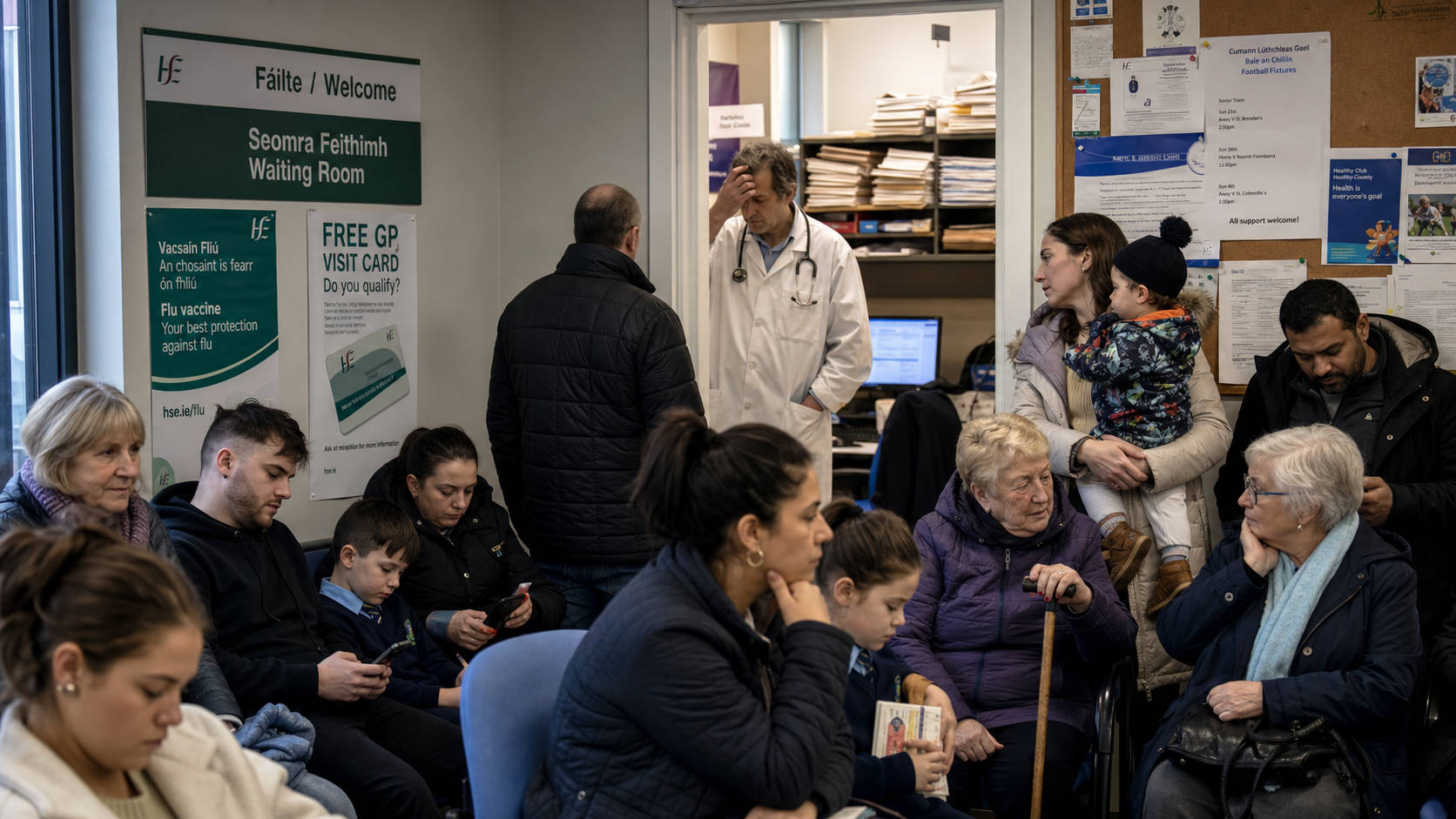
In urban areas, the shortage is less visible but no less real. Many Dublin practices have waiting times of several weeks for non-urgent appointments, and the pressure on GPs to see more patients in less time is affecting the quality of care that can be provided. Several GPs have spoken publicly about the difficulty of providing the kind of thorough, relationship-based care that is the hallmark of good general practice when they are under constant pressure to see more patients.
What's Next
The Department of Health is expected to publish a GP workforce strategy later in 2026, setting out a range of measures designed to address the shortage over the medium term. These are expected to include an increase in the number of GP training places, financial incentives to encourage GPs to practice in underserved areas, and measures to reduce the administrative burden on practices. The IMO has called for an emergency summit involving the government, the HSE and the medical profession to develop a coordinated response to the crisis, and has indicated that industrial action cannot be ruled out if the government fails to act.