FonaCAB Expands Beyond Belfast with Acquisition of Two Banbridge Taxi Firms
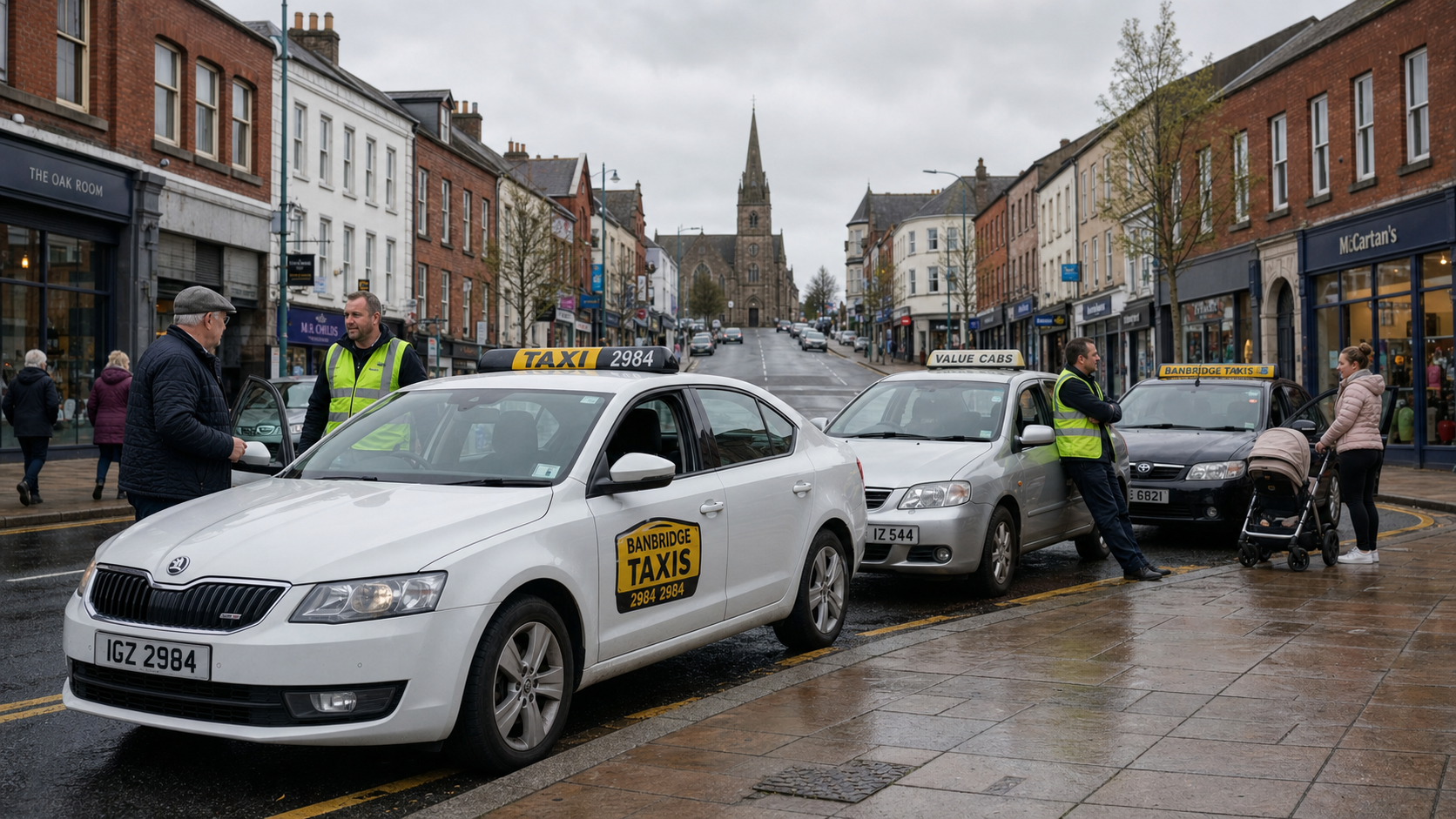
Belfast-based taxi company fonaCAB has acquired Q Cabs and Bann Taxis, two of Banbridge's most established independent taxi operators, in a move that adds approximately 40 drivers to its fleet and extends its reach further into County Down as the company continues its strategy of regional expansion through acquisition.
Background
FonaCAB has been a dominant force in Belfast's taxi market for decades, operating as a taxi management service with a fleet of more than 1,200 cars across the city and its immediate hinterland. Under the leadership of chief executive William McCausland, the company has pursued a deliberate strategy of growth through acquisition rather than organic expansion, targeting established regional operators with loyal customer bases and experienced driver networks. This approach has allowed fonaCAB to extend its geographic footprint without the time and cost involved in building a new operation from scratch in an unfamiliar market.
The Banbridge acquisitions follow a pattern of expansion that has already taken fonaCAB into Craigavon, where it acquired multiple firms including Anytime Taxis and Autocabs in previous years. Banbridge, a market town in County Down with a population of approximately 20,000, sits on the main Belfast-Dublin corridor and serves as a commercial hub for a wide rural hinterland. Q Cabs and Bann Taxis had both served the town and surrounding area for more than 30 years, building strong reputations and loyal customer bases over that period.
The taxi industry in Northern Ireland has undergone significant consolidation in recent years, driven by the competitive pressure of app-based ride-hailing services and the operational advantages that larger operators enjoy in terms of technology investment, insurance costs, and driver recruitment. FonaCAB's acquisition strategy is a direct response to these pressures, allowing it to achieve the scale necessary to compete effectively with national and international platforms while maintaining the local knowledge and community relationships that distinguish it from its larger competitors.
Key Developments
The acquisitions of Q Cabs and Bann Taxis were finalised in mid-August 2026, with services previously provided under those brands transitioning to the fonaCAB banner. Drivers from both acquired firms were generally offered the opportunity to continue working under the fonaCAB operation, ensuring continuity of service for customers who had built relationships with individual drivers over many years. The transition has involved physical changes at the former Q Cabs office at 30 Scarva Street in Banbridge, where signage and operational infrastructure have been updated to reflect the change in ownership.
The acquisitions resulted in the loss of approximately eight office staff positions at the two acquired firms, some of whom had significant tenure with their previous employers. FonaCAB has not commented publicly on the specific terms of the transactions, and the financial details of the deals have not been disclosed. The company's broader strategy, however, is clear: to build a Northern Ireland-wide taxi network capable of competing with app-based platforms on technology and coverage while retaining the local character and community relationships that have been the foundation of its success in Belfast.
The Banbridge expansion gives fonaCAB a presence in a strategically important corridor between Belfast and the border, serving communities that have historically been underserved by large taxi operators. The town's position on the A1 dual carriageway, which carries significant cross-border traffic, also makes it a useful base for longer-distance journeys that fonaCAB's Belfast operation has not traditionally served.
Why It Matters
The fonaCAB acquisitions are a microcosm of a broader trend in the Northern Ireland economy: the consolidation of locally-owned businesses into larger regional operators capable of competing with national and international platforms. For taxi users in Banbridge and the surrounding area, the transition to fonaCAB brings access to a more sophisticated booking platform and a larger driver network, which should improve service reliability and reduce waiting times. For the drivers who have joined the fonaCAB network, the change brings access to a larger customer base and the operational support of a well-resourced company. The loss of the independent operators, however, represents a reduction in the diversity of the local business landscape, and some customers will mourn the passing of firms that were genuinely embedded in the community over three decades.
Local Impact
For Banbridge town centre and the surrounding rural areas of County Down, the fonaCAB acquisition means that taxi services will now be managed through a Belfast-based platform rather than locally-owned businesses. The practical impact on service quality will depend on how effectively fonaCAB integrates the Banbridge operation into its wider network. The company's track record in Craigavon suggests that the transition can be managed successfully, with service levels maintained or improved. For the eight office staff who have lost their positions, the local employment market in Banbridge and the wider Newry, Mourne and Down district council area offers limited alternatives in the transport sector, and some may need to retrain or relocate to find comparable employment.
What's Next
FonaCAB is expected to continue its regional expansion strategy in the coming years, with other established independent operators in towns across Northern Ireland likely to be approached as potential acquisition targets. The company's ability to sustain this strategy will depend on its financial performance and its capacity to integrate new operations without disrupting the quality of service in its existing markets. The Department for Infrastructure, which regulates the taxi industry in Northern Ireland, will monitor the consolidation trend to ensure that it does not result in reduced competition or deteriorating service standards for consumers.