Fleadh Cheoil na hÉireann Closes in Belfast After Record One Million Visitors Descend on the City
Fleadh Cheoil na hÉireann, the world's largest celebration of Irish traditional music, song, and dance, drew to a close in Belfast on Sunday evening after eight days that transformed the city centre into a living, breathing festival of culture — with visitor numbers surpassing one million and an economic impact that organisers say will comfortably exceed the projected £53 million.
Background
Belfast's hosting of Fleadh Cheoil na hÉireann 2026 was the first time in the festival's 75-year history that it had been held in the city, and the significance of that fact was not lost on anyone involved. The Fleadh, which is organised annually by Comhaltas Ceoltóirí Éireann, rotates between towns and cities across Ireland, but the decision to bring it to Belfast was widely seen as a statement about the city's transformation and its place within the broader Irish cultural landscape.
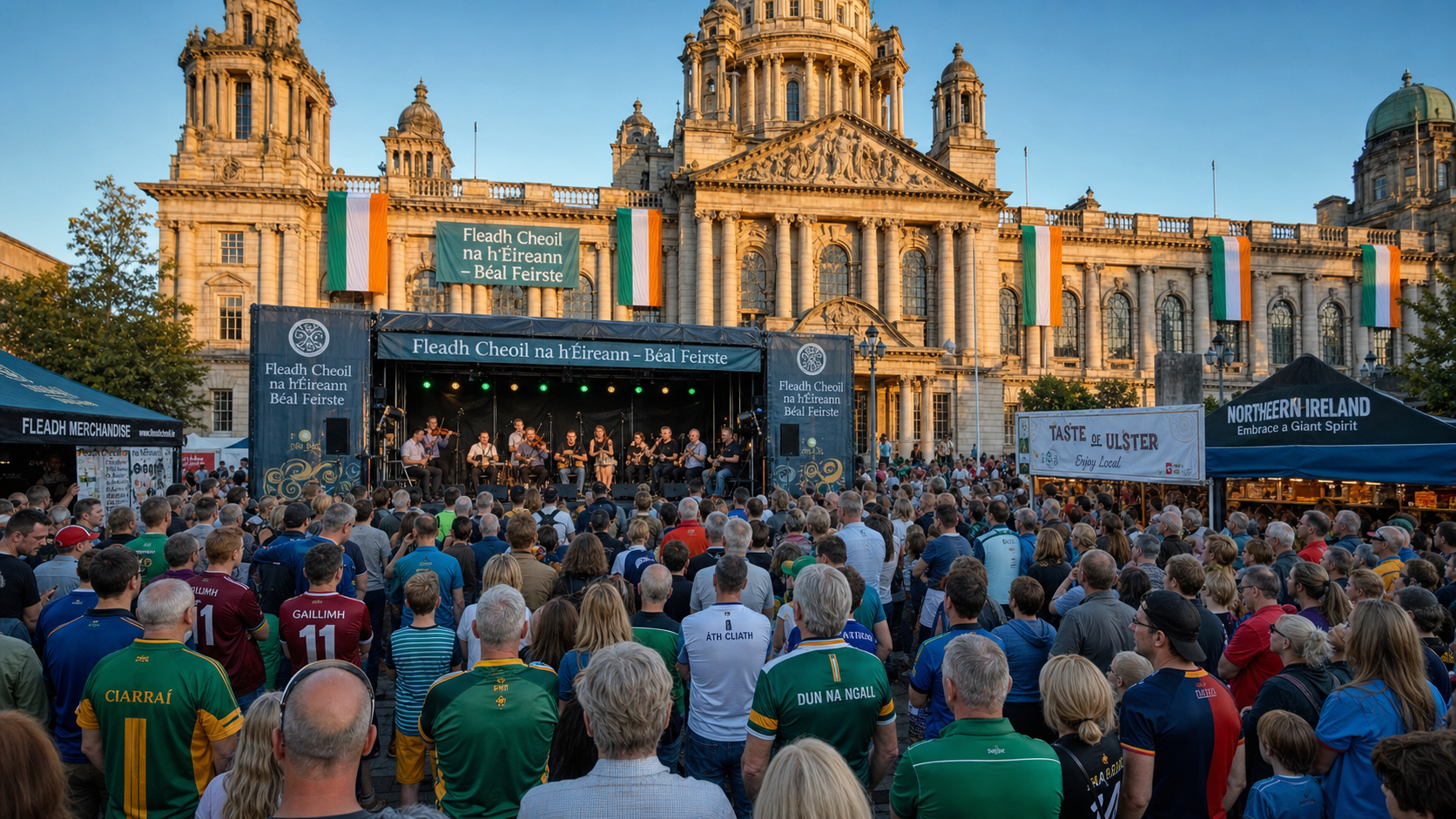
The festival ran from Sunday, August 2, to Sunday, August 9, with the city centre pedestrianised for much of the week to accommodate the extraordinary volume of visitors. More than 180 competition categories took place across venues including the Waterfront Hall, Ulster Hall, and St George's Market, while informal street sessions filled the Cathedral Quarter, the Custom House Square, and dozens of pubs and public spaces across the city. Translink operated extended services throughout the week, though the sheer scale of attendance created significant pressure on the transport network.
The festival's arrival in Belfast was the culmination of years of planning and negotiation between Comhaltas, Belfast City Council, and the Northern Ireland Executive. The city invested heavily in infrastructure and promotion, and the payoff has been substantial — both in economic terms and in terms of the cultural statement the event made about Belfast's identity and ambitions.
Key Developments
Sunday's closing day featured the Senior Céilí Band Competition at the Waterfront Hall, one of the most prestigious events in the Fleadh calendar, drawing competitors from across Ireland and the diaspora. The Gig Rig on the Custom House Square hosted a closing concert that drew thousands of revellers for a final evening of music and celebration. Road closures in the city centre remained in effect until 7am on Monday morning to allow for the safe dispersal of crowds.
Visitor numbers exceeded one million — a figure that surpassed the projected 800,000 and placed the 2026 Belfast Fleadh among the most attended in the festival's history. Organisers confirmed that the economic impact would comfortably exceed the £53 million projection, with hotels, restaurants, and retailers across the city reporting exceptional trading throughout the week. The festival also attracted significant international media coverage, with broadcasters from across Europe and North America reporting on the event.
There were some logistical challenges. Translink faced criticism after approximately 30 passengers were stranded at a locked Newry train station in the early hours of Saturday morning, following a late-night service from Belfast. The transport operator apologised and described the incident as an operational issue, but it highlighted the pressure placed on the network by the scale of the event.
Why It Matters
The Fleadh's arrival in Belfast carries a significance that goes beyond tourism economics. Traditional Irish music has historically been associated with nationalist and republican communities in the north, and the festival's presence in a city that has spent decades navigating questions of identity and belonging was a powerful cultural moment. The sight of marching band musicians — a tradition more commonly associated with unionist culture — participating in Fleadh events was noted by commentators as a genuinely new development. Belfast City Council's cross-community support for the festival, and the warm reception it received from communities across the city, suggested that the Fleadh had found a home in Belfast that transcended the old divisions.
For Comhaltas Ceoltóirí Éireann, the Belfast Fleadh represents a milestone in the organisation's mission to promote Irish traditional music as a living, evolving art form that belongs to everyone on the island.
Local Impact
The economic impact of the Fleadh was felt across Belfast's hospitality and retail sectors, with hotels reporting full occupancy throughout the week and restaurants in the Cathedral Quarter, the Titanic Quarter, and the city centre trading at record levels. The Translink Glider and Metro services carried significantly elevated passenger numbers, and the pedestrianisation of key city centre streets created a festival atmosphere that extended well beyond the formal competition venues. Communities in west Belfast, north Belfast, and east Belfast all hosted informal sessions and events connected to the Fleadh, ensuring that the festival's reach extended beyond the city centre. The Belfast Exposed gallery, the Ulster Museum, and other cultural institutions reported increased footfall during the week.
What's Next
Fleadh Cheoil na hÉireann 2027 will move to a new host town, with the selection process expected to begin in the autumn. Belfast City Council has indicated it would welcome a return of the festival in future years, and Comhaltas has spoken warmly of the city's hosting. A full economic impact assessment will be published in the coming weeks, and Belfast City Council will present a report to councillors on the outcomes of the 2026 event. The road closures in the city centre were lifted on Monday morning, and normal traffic patterns resumed across the Glider and Metro networks.