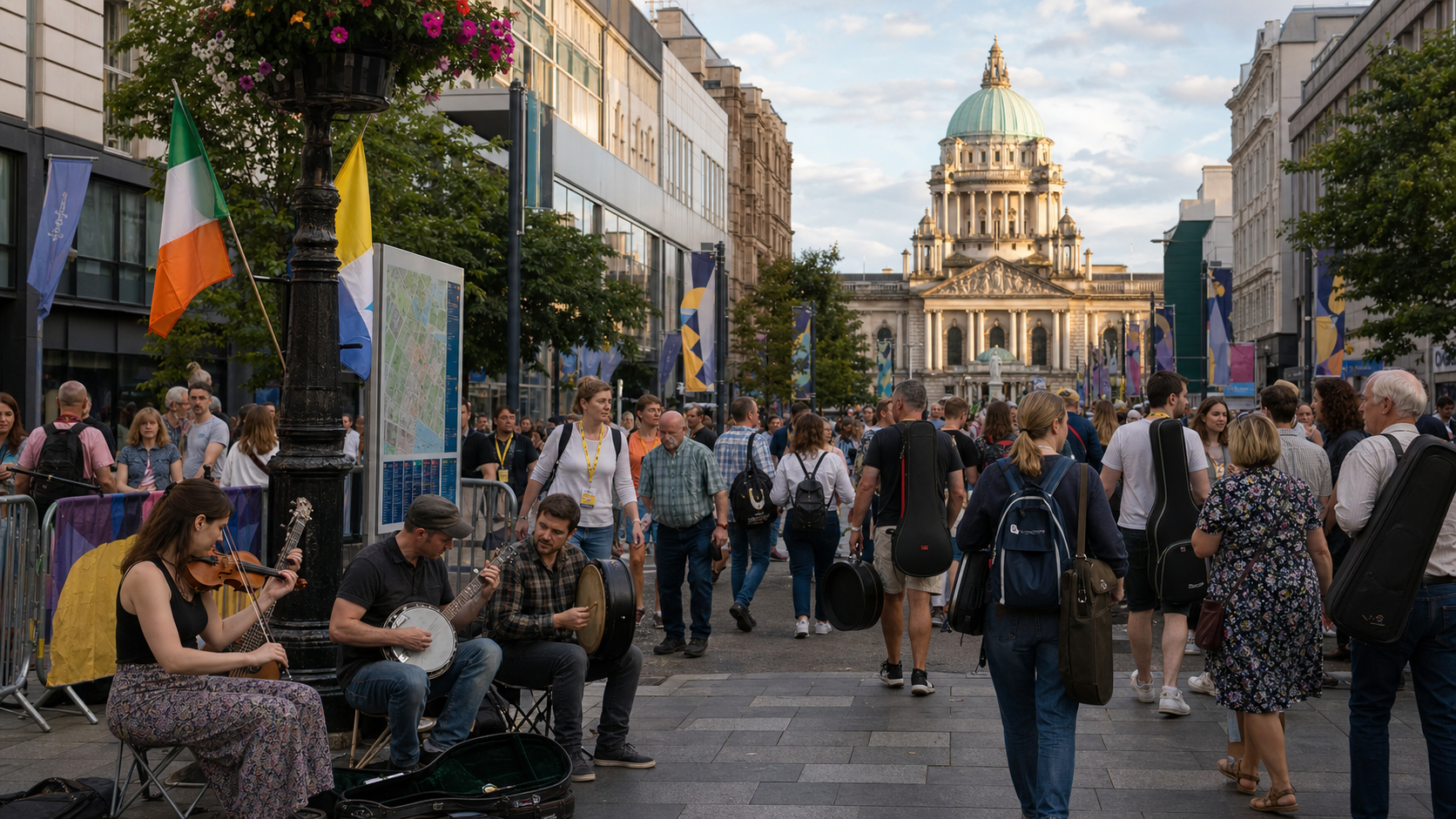
Fleadh Cheoil Belfast 2026: City Prepares for 800,000 Visitors as World's Largest Trad Music Festival Approaches
Belfast is in the final stages of preparation for what promises to be the most significant cultural event in the city's recent history, with Fleadh Cheoil na hÉireann 2026 set to open on Sunday, August 2, and run until Sunday, August 9. More than 800,000 visitors are expected to attend the week-long festival, which marks the first time the Fleadh — the world's largest celebration of traditional Irish music, song, language, and dance — has been held in Belfast. The city's designation as the only UNESCO City of Music on the island of Ireland makes it a particularly resonant host for an event that sits at the heart of Irish cultural identity.
Background
Fleadh Cheoil na hÉireann has been held annually since 1951, rotating between towns and cities across Ireland and, in recent years, venturing to locations with significant Irish diaspora populations. The festival is organised by Comhaltas Ceoltóirí Éireann, the organisation dedicated to the promotion of Irish traditional music, song, dance, and language, and it combines All-Ireland competitions across more than 180 categories with a vast programme of free public performances, céilís, workshops, and cultural events.
The decision to bring the Fleadh to Belfast for the first time was announced several years ago and has been the subject of considerable anticipation. The city's relationship with traditional Irish music has historically been complex, shaped by the political and cultural divisions of the Troubles, but the past two decades have seen a remarkable flowering of trad music culture in Belfast, with sessions in pubs across the city and a growing community of young musicians who have embraced the tradition with genuine enthusiasm.
Belfast City Council has invested significantly in the event, working with Comhaltas and a range of partner organisations to ensure that the festival is accessible to all communities across the city. The decision to pedestrianise large sections of the city centre for the duration of the festival reflects the scale of the ambition and the confidence that Belfast can host an event of this magnitude.
Key Developments
The Gig Rig at Belfast City Hall will serve as the festival's primary outdoor stage, hosting free daily performances from August 2 to August 9, including the Opening Ceremony on Sunday and the Closing Event the following Sunday. The Waterfront Hall will host the Senior Céilí Band Competition on August 9, one of the most prestigious events in the Fleadh calendar. A dedicated food village at St Anne's Cathedral, a Craic and Craft Market near the Waterfront Hall, and markets at the Titanic Quarter will provide additional focal points for visitors.
Translink has put in place extensive additional services, including special bus routes and Park and Ride facilities on all major approach roads to the city. Road closures across the city centre will be in effect from 5:00 a.m. on August 2 until 7:00 a.m. on August 10. Accommodation across Belfast and the wider region has been booked out for months, with camping options at Ormeau Park and the Titanic Quarter providing additional capacity.
Why It Matters
The Fleadh's arrival in Belfast is significant for reasons that go well beyond the economic impact, substantial as that will be. The festival represents a statement about the city's cultural confidence and its capacity to host events that draw on the full breadth of Irish tradition. For a city that spent decades defined by conflict and division, the prospect of 800,000 visitors coming to celebrate Irish music, language, and culture in its streets is genuinely transformative. The inclusion of Ulster Scots and South Asian cultural showcases alongside the traditional Irish programme reflects a deliberate effort to make the festival inclusive and representative of the full diversity of Belfast's communities. That ambition, if realised, would make this Fleadh genuinely historic.
Local Impact
The economic impact of the Fleadh on Belfast and the wider Northern Ireland economy is expected to be substantial. Previous Fleadh events in cities of comparable size have generated tens of millions of pounds in visitor spending, and Belfast's hospitality sector — hotels, restaurants, pubs, and shops — is well placed to benefit. The city centre, which has seen significant investment in recent years, will be showcased to an international audience. Translink has reported record advance bookings for the festival period. Local businesses along the main festival routes, including the Cathedral Quarter, the city centre, and the Titanic Quarter, have been preparing for months, with many laying on special menus, extended hours, and festival-themed events.
What's Next
The festival opens on Sunday, August 2, with the Opening Ceremony at the Gig Rig at Belfast City Hall. The All-Ireland competitions begin on Monday, August 3, and run throughout the week across venues across the city. The Closing Event on Sunday, August 9, will bring the week to a conclusion with a major outdoor performance at City Hall. Full details of the programme, including stage times and competition schedules, are available on the official Fleadh Cheoil 2026 website and through the Belfast City Council events portal.