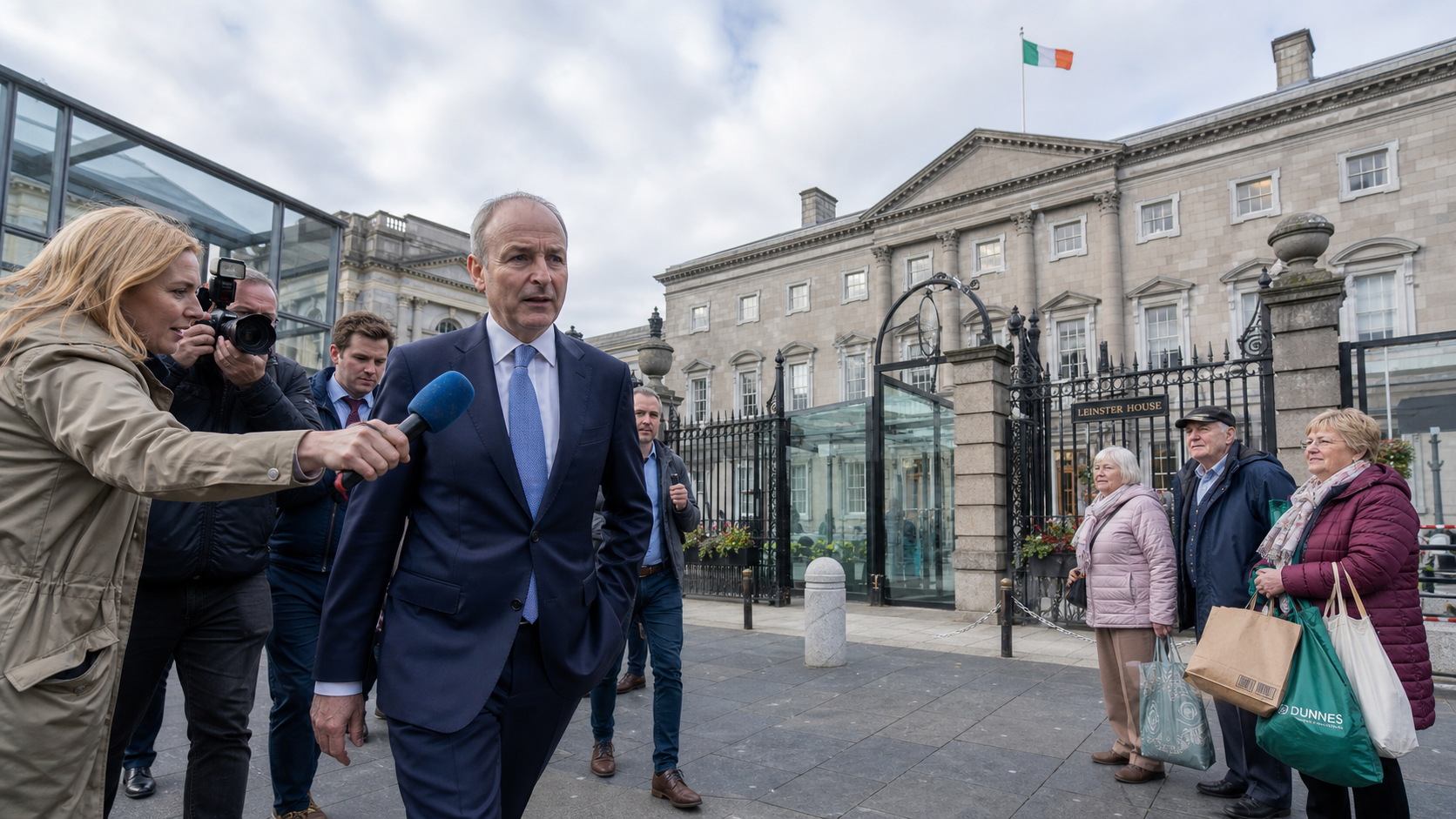
ESRI Warns of Food Price Surge and Tax Base Fragility as Government Faces Budget 2027 Crunch
The Economic and Social Research Institute has issued a stark warning to the Government ahead of Budget 2027, projecting that Irish inflation will remain stubbornly high at 3.6% in 2026 and 3.3% in 2027, while identifying the country's tax base as more fragile than many economists have previously acknowledged — with multinational dependence running deeper than the corporation tax figures alone suggest.
Background
The ESRI's quarterly economic bulletin is one of the most closely watched publications in Irish public life, providing an independent assessment of the economy's performance and prospects that carries significant weight in the political debate around the annual budget. The institute's economists have a track record of identifying structural vulnerabilities in the Irish economy that are sometimes obscured by the headline growth figures, and their warnings about the fragility of the tax base have been a consistent theme of their analysis over the past decade.
Ireland's public finances have been transformed by the surge in corporation tax receipts from multinational companies, which has turned a chronic deficit into a substantial surplus and allowed the Government to fund significant increases in public spending while also building up the Future Ireland Fund and the Infrastructure, Climate and Nature Fund. The corporation tax windfall has been so large — receipts reached €24 billion in 2025, compared to €7 billion a decade earlier — that it has fundamentally changed the political economy of budgeting in Ireland, creating expectations of continued generosity that may not be sustainable.
The ESRI has consistently warned that this dependence on a small number of large multinational companies creates a structural vulnerability that is not adequately reflected in the Government's fiscal planning. The institute's latest bulletin extends this analysis, arguing that the dependence runs deeper than the corporation tax figures suggest — that multinational activity also artificially inflates income tax and VAT receipts through the presence of highly paid employees and the broader economic ecosystem they support.
Key Developments
The ESRI projects Irish inflation at 3.6% for 2026 and 3.3% for 2027, driven by persistent food price pressures and the ongoing impact of global energy volatility on consumer prices. The institute highlights Ireland's particular vulnerability to food price inflation, noting that the country imports a significant proportion of its food supply and is therefore exposed to unexpected weather events and supply chain disruptions in ways that more self-sufficient economies are not.
On the tax base, the ESRI's analysis is particularly pointed. The institute argues that the Government's reliance on multinational receipts is "deeper than many economists have suggested in the past," because the presence of large multinationals also drives income tax and VAT receipts that would not exist without them. This means that a significant withdrawal of multinational activity — whether driven by changes in global tax rules, shifts in corporate strategy, or geopolitical developments — would have a much larger impact on the public finances than the corporation tax figures alone would suggest.
The ESRI also found that health spending in the first eight months of 2026 was 8.9% higher than in the same period of 2025, far exceeding the 5% full-year projection. Social protection spending was 7.4% higher against a 6% projection. These overruns, the institute warned, put the Government at risk of breaking its own spending limits — a concern that is particularly acute given the commitments made in the Programme for Government and the expectations generated by previous budgets.
Why It Matters
The ESRI's warnings arrive at a critical moment in the Budget 2027 process. Ministers are meeting this week to finalise the details of the budget package, which is expected to include a range of cost-of-living measures, infrastructure investments, and tax changes. The institute's analysis suggests that the Government is operating with less fiscal headroom than the headline surplus figures imply, and that the decisions made on 6 October will have consequences that extend well beyond the immediate electoral cycle.
The food price warning is particularly significant for lower-income households, which spend a higher proportion of their income on food and are therefore more exposed to food price inflation than wealthier households. The ESRI's projection of 3.3% inflation in 2027 — if realised — would represent a continued erosion of real living standards for those on fixed incomes, social welfare payments, and lower wages, even as the headline economic figures remain positive.
Local Impact
The practical impact of the ESRI's warnings will be felt most acutely in the decisions made on Budget Day, 6 October. If the Government accepts the institute's analysis of tax base fragility, it may be more cautious about committing to permanent spending increases that would be difficult to reverse if multinational receipts decline. This caution could affect the scale of increases in social welfare payments, public sector pay, and capital investment — all of which have significant implications for communities across Ireland. In Dublin, where the cost of living is highest and where the concentration of multinational employment is greatest, the budget decisions will be watched particularly closely by workers and families who are struggling with housing costs, childcare, and the general cost of living.
What's Next
Budget 2027 will be presented to the Dáil on 6 October by Finance Minister Jack Chambers and Public Expenditure Minister Paschal Donohoe. The ESRI's bulletin will inform the pre-budget deliberations taking place this week, and the institute's economists are expected to appear before the Oireachtas Committee on Budgetary Oversight in the coming days to elaborate on their analysis. A one-day civil service strike is scheduled for 14 October, which could affect the implementation of budget measures if the pay dispute is not resolved before then.