Dáil Returns for Emergency Sitting as Carbon Tax U-Turn Debate Dominates Summer Recall
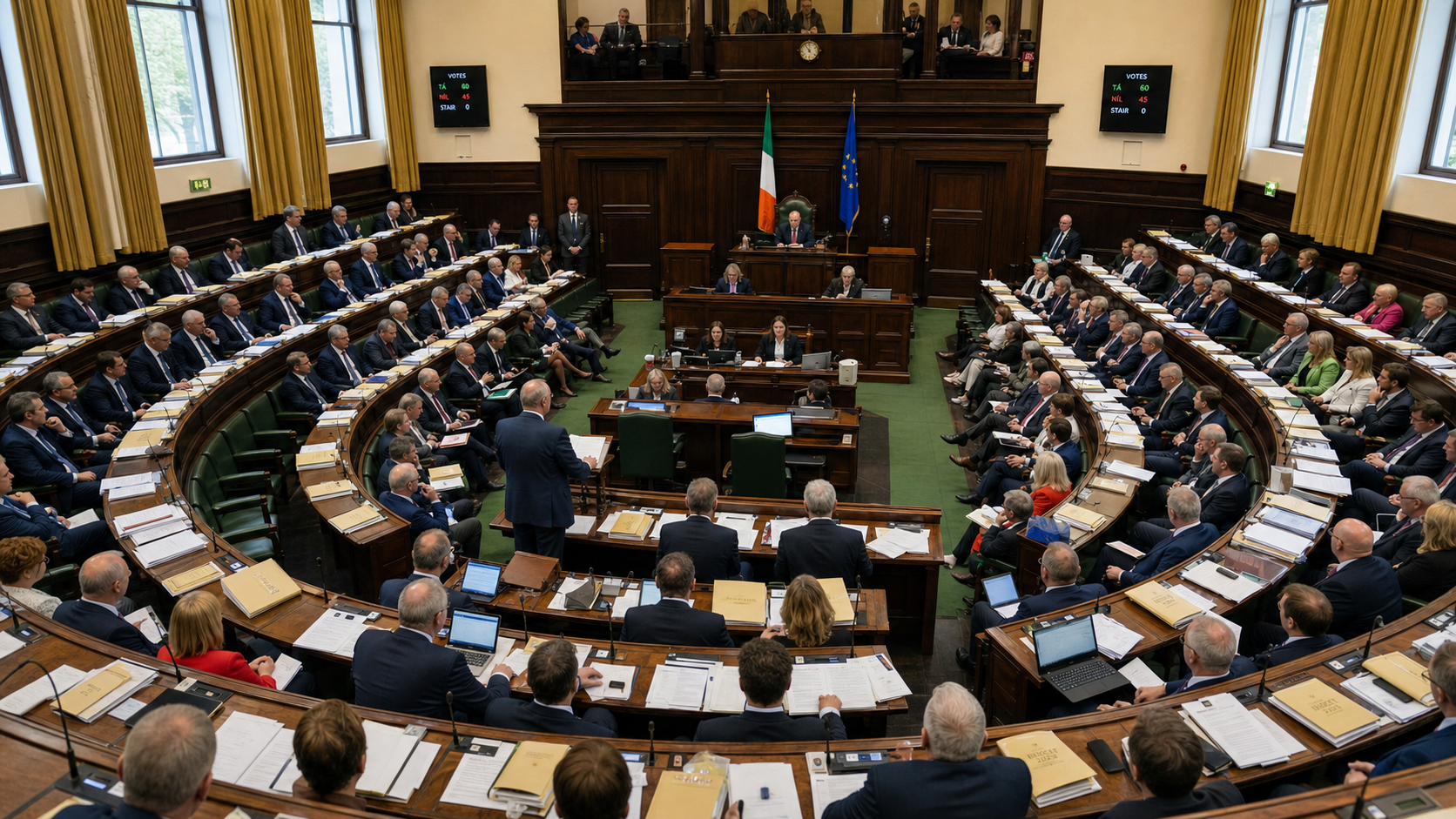
The Dáil has returned for a brief summer recall that has been dominated by the carbon tax debate, with opposition parties accusing the government of preparing a significant U-turn on its climate commitments ahead of Budget 2027, while government TDs have sought to frame the issue as a matter of responsible fiscal management in the face of ongoing cost-of-living pressures.
Background
Summer recalls of the Dáil are relatively rare — the Oireachtas typically rises in July and does not return until September, and the bar for bringing TDs back to Leinster House during the recess is high. The recall this year was triggered by the need to pass emergency legislation extending cuts to petrol and diesel excise duties for a further two months until November, following the government's decision not to allow the temporary cuts — which have been in place since 2022 — to expire at the end of August.
The excise cuts, which reduce the cost of petrol and diesel by approximately 8 cent and 6 cent per litre respectively, were introduced as a temporary measure in response to the energy price surge that followed Russia's invasion of Ukraine. They have been extended repeatedly since then, at a cost to the exchequer of several hundred million euros per year, and they have become a politically sensitive issue because allowing them to expire would result in an immediate and visible increase in fuel prices at the pump.
The decision to extend the cuts for a further two months — rather than making them permanent or allowing them to expire — reflects the government's desire to defer the politically difficult decision until after Budget 2027, when it can be presented as part of a broader package of measures rather than as a standalone price increase.
Key Developments
The recall sitting was brief but heated. Opposition parties, led by Sinn Féin and the Social Democrats, used the occasion to press the government on its carbon tax plans, arguing that the combination of extended excise cuts and a potential pause in the carbon tax increase amounted to a fundamental abandonment of Ireland's climate commitments. Sinn Féin's Pearse Doherty accused the Tánaiste of "speaking out of both sides of his mouth" on climate policy, while Social Democrats co-leader Holly Cairns described the government's approach as "climate cowardice".
Government TDs pushed back, arguing that the cost-of-living crisis is real and that the government has a responsibility to protect households from fuel price increases that are beyond their control. Fine Gael's Paschal Donohoe, the Minister for Public Expenditure, said the government remained committed to its climate targets but that the pace of the carbon tax increase needed to be calibrated against the broader economic context.
Green Party leader Roderic O'Gorman, whose party is a junior coalition partner, was notably more cautious in his public statements, warning that any pause in the carbon tax trajectory would be a "serious test" of the coalition's integrity on climate but stopping short of threatening to withdraw support from the government.
Why It Matters
The carbon tax debate is a microcosm of the broader tension at the heart of Irish climate policy: the gap between the ambition of the targets and the political will to implement the measures needed to achieve them. Ireland has consistently missed its annual emissions reduction targets, and the Climate Change Advisory Council has warned repeatedly that the country is not on track to meet its 2030 goals. A pause in the carbon tax increase would make that task even harder, and it would send a damaging signal to the EU and to international partners about Ireland's commitment to the green transition.
At the same time, the political reality is that the government faces an electorate that is deeply concerned about the cost of living and that has shown, in successive opinion polls, limited appetite for measures that increase the cost of fuel. The challenge for the government is to find a way to maintain the integrity of its climate commitments while managing the distributional consequences of the transition — a challenge that no Irish government has yet fully resolved.
Local Impact
The carbon tax debate has particular resonance in rural constituencies, where TDs from all parties are acutely aware of the dependence of their constituents on private cars and home heating oil. In counties such as Roscommon, Leitrim, Longford, and Cavan, where public transport is sparse and the alternatives to fossil fuels are limited, the carbon tax is experienced as a direct and unavoidable cost rather than an incentive to change behaviour. Government TDs from these constituencies have been among the most vocal in pressing for a pause in the increase, and their concerns are likely to weigh heavily in the Budget 2027 deliberations.
What's Next
Budget 2027 will be presented on 6 October, and the carbon tax decision will be one of the most closely watched elements of the package. The government has until then to decide whether to proceed with the scheduled increase, pause it for a year, or announce a broader review of fuel policy. The Green Party's position will be critical: if the party signals that it will not support a budget that pauses the carbon tax, the government will face a difficult choice between its climate commitments and its coalition arithmetic. The coming weeks will be a significant test of the coalition's cohesion and its credibility on climate.