DUP's Unprecedented Donaldson Review Raises Questions About Party Governance and Intelligence Failures
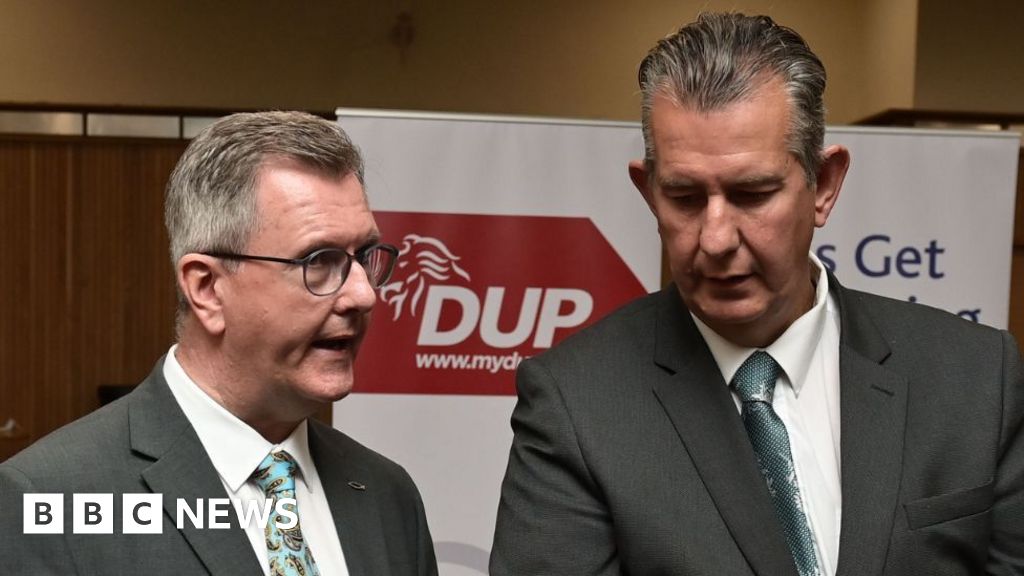
The Democratic Unionist Party's decision to initiate an independent review into the conduct of former leader Jeffrey Donaldson has opened a process that political analysts say will be one of the most consequential internal inquiries in the history of Northern Irish politics — raising fundamental questions not only about the DUP's internal governance and culture but also about whether intelligence and security services had prior knowledge of Donaldson's behaviour and failed to act on it.
Background
Jeffrey Donaldson's conviction for historical sexual offences sent shockwaves through Northern Irish politics and the wider unionist community. As leader of the DUP from 2021 until his resignation in March 2024, Donaldson was one of the most powerful and influential figures in Northern Irish public life, playing a central role in the negotiations over the Northern Ireland Protocol and the Windsor Framework and serving as the public face of unionism during a period of intense political turbulence. His conviction has therefore raised questions that go far beyond the personal conduct of one individual.
The most pressing of these questions concerns what was known, and by whom, about Donaldson's behaviour before his arrest. In the months since his conviction, a range of allegations and claims have circulated about the extent of prior knowledge within the DUP, within the broader unionist political community, and within the intelligence and security services. These claims have not been substantiated, but they have created a cloud of suspicion that the DUP's leadership has recognised can only be dispelled by a thorough and credible independent inquiry.
The political context in which the review is being conducted is also significant. The DUP is navigating a difficult period, with its poll ratings having declined significantly in the wake of the Donaldson affair and with competition intensifying from both the Traditional Unionist Voice on its right flank and the Ulster Unionist Party, which has sought to position itself as a more moderate and credible alternative. The party's new leader, Gavin Robinson, has staked his leadership on the commitment to transparency and accountability that the review represents.
Key Developments
The formal initiation of the independent review on 2 July marks the beginning of what is expected to be a lengthy and potentially painful process for the DUP. The review has been described by party sources as 'unprecedented' in the context of Northern Irish political parties, reflecting both the gravity of the situation and the DUP's recognition that a thorough and credible process is essential to its long-term credibility. The terms of reference are expected to be published within the next week, and the composition of the independent panel will be announced at the same time.
Political analysts have identified several key tests that the review will need to pass if it is to be regarded as genuinely credible. First, the panel must be demonstrably independent — composed of individuals with no prior connection to the DUP or to the broader unionist political community. Second, the terms of reference must be sufficiently broad to allow the panel to examine all relevant questions, including the conduct of intelligence and security services. Third, the process must be transparent, with the panel's findings published in full and without redaction except where strictly necessary to protect ongoing legal proceedings.
The PSNI has confirmed that its own investigation into related matters remains ongoing and that the independent review will not impede or duplicate that process. The Police Ombudsman for Northern Ireland has also indicated that it is monitoring the situation and may have a role to play depending on the findings of the PSNI investigation.
Why It Matters
The Donaldson review matters for reasons that extend well beyond the internal affairs of the DUP. The questions it will examine — about institutional knowledge, accountability, and the culture within political parties — are relevant to all of Northern Ireland's political institutions and to the broader question of how public figures in positions of trust are held accountable for their conduct. If the review finds that concerns about Donaldson's conduct were known to party officials and were not acted upon, the implications for public trust in the DUP and in the broader political system will be severe. The potential involvement of intelligence and security services in the story adds a further dimension of public interest, touching on questions of oversight and accountability that go to the heart of democratic governance in Northern Ireland. For the victims of Donaldson's offences, the review represents an opportunity for some measure of institutional accountability — an acknowledgement that the systems that should have protected them failed to do so.
Local Impact
The Donaldson affair has had a profound impact on communities across Northern Ireland, particularly in the Lagan Valley constituency that he represented for nearly three decades. In towns such as Lisburn, Dromore, and Hillsborough, where Donaldson was a familiar and respected political figure, the revelations about his conduct have caused deep shock and distress. The DUP's local associations in these areas have faced difficult conversations with members and supporters about the party's future direction and its commitment to accountability. The review is expected to provide some of the answers that local communities are seeking, though many observers caution that no review process can fully repair the damage done to public trust by the Donaldson conviction. The Lagan Valley constituency, which Donaldson held with large majorities for nearly three decades, will be a key battleground at the next Westminster election, with the DUP facing a genuine challenge to retain the seat in the changed political landscape.
What's Next
The terms of reference for the independent review are expected to be published within the next week, along with the composition of the review panel. An interim report is expected before the end of 2026, with a final report anticipated in early 2027. The review's findings will be published in full, the DUP has said, though it has reserved the right to redact information that could prejudice any ongoing legal proceedings. The Northern Ireland Assembly's Committee on Standards and Privileges is expected to consider whether any further action is required in relation to Donaldson's conduct as a Member of the Legislative Assembly. The PSNI investigation is expected to conclude in the coming months, and any charges arising from that investigation will be a matter for the Public Prosecution Service for Northern Ireland.