DUP's Gavin Robinson Urges Unionist Cooperation to Prevent 'Gift-Wrapping' Seats to Sinn Féin Ahead of 2027 Elections
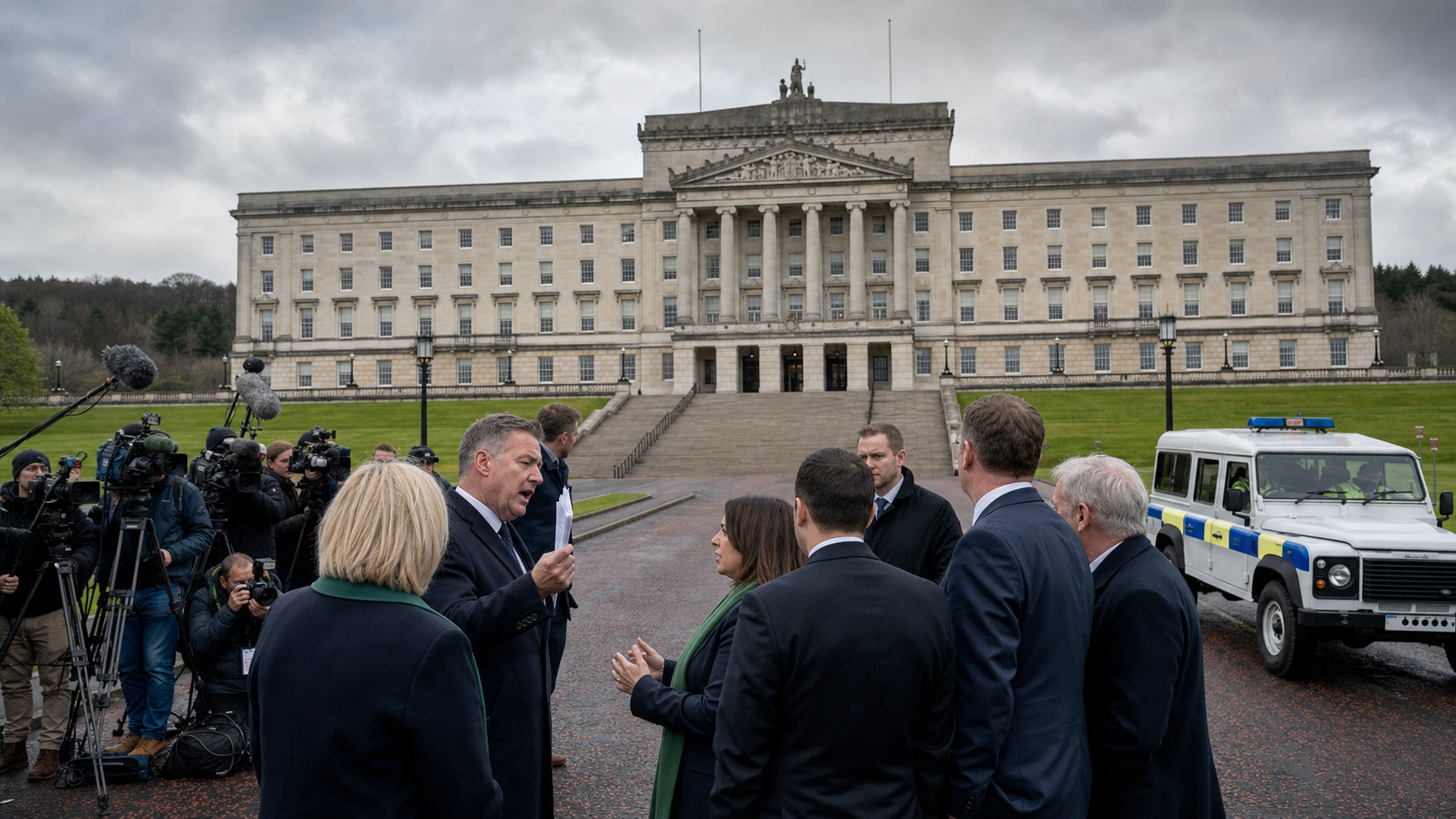
DUP leader Gavin Robinson has used his party conference address to make a direct and urgent plea for practical cooperation among unionist parties ahead of the Northern Ireland Assembly and council elections scheduled for May 2027, warning that a fragmented unionist vote risks handing seats to Sinn Féin, the SDLP, and the Alliance Party. Robinson's call comes as the broader unionist bloc faces its most challenging electoral environment in decades, with Sinn Féin polling at approximately 28 to 29% and the Alliance Party consolidating its position as a major cross-community force.
Background
Gavin Robinson has led the Democratic Unionist Party since the resignation of Jeffrey Donaldson in March 2024, a period that has been defined by the challenge of rebuilding the party's credibility and electoral position following the trauma of Donaldson's arrest and subsequent conviction. Robinson, a veteran politician who has represented Belfast East at Westminster since 2015, has sought to project stability and pragmatism, steering the party back into the Stormont Executive in February 2024 after a two-year boycott over the Northern Ireland Protocol.
The DUP's electoral position has been under sustained pressure. The 2024 UK General Election was a difficult one for the party, with the loss of several long-held Westminster seats. Polling for the 2027 Assembly elections shows the DUP at between 18 and 22%, behind Sinn Féin and in a tight contest with the Alliance Party for second place. The rise of the Ulster Unionist Party under Jon Burrows — who has been polling ahead of the DUP in some surveys — adds a further complication to the unionist electoral arithmetic.
The Northern Ireland Assembly elections, which must be held no later than May 6, 2027, will be the first major electoral test since the restoration of the Executive and the first opportunity for voters to pass judgement on the performance of the power-sharing institutions since their return. The stakes are high for all parties, but particularly for the DUP, which needs to demonstrate that its decision to re-enter the Executive was the right one.
Key Developments
Robinson's conference address focused heavily on the need for unionist parties to work together to maximise the pro-union vote in the 2027 elections. He argued that the splitting of the unionist vote between the DUP, UUP, TUV, and smaller parties effectively "gift wraps" seats to Sinn Féin, the SDLP, and the Alliance Party — parties that, in Robinson's framing, do not share the DUP's commitment to the union with Great Britain.
Robinson stopped short of calling for a formal electoral pact, acknowledging the difficulties that such arrangements have historically encountered, but urged unionist parties to engage in practical collaboration — including candidate selection strategies designed to avoid splitting the vote in key constituencies. He also emphasised the DUP's record in government, pointing to the party's role in securing the Stormont Framework and in delivering on key policy commitments in areas including health, education, and economic development.
The call for cooperation was received with some scepticism by the UUP, whose leader Jon Burrows has argued that the path to unionist growth lies in expanding the overall unionist vote rather than in dividing the existing vote more efficiently. The TUV, led by Jim Allister, has been even more dismissive, arguing that cooperation with the DUP would compromise the TUV's principled opposition to the current constitutional arrangements.
Why It Matters
The question of unionist cooperation is one of the most consequential strategic questions facing the pro-union community in Northern Ireland. The demographic trajectory of the region — with the nationalist and republican vote growing steadily as a proportion of the electorate — means that the unionist bloc cannot afford to waste votes through internal fragmentation. At the same time, the diversity of opinion within unionism — from the DUP's pragmatic devolutionism to the TUV's principled opposition to the current arrangements — makes meaningful cooperation genuinely difficult. Robinson's conference call is therefore as much a statement of aspiration as a concrete plan, and its effectiveness will depend on whether the other unionist parties are willing to engage in the kind of practical discussions that could translate into electoral cooperation on the ground.
Local Impact
The implications of unionist electoral strategy are felt most directly in the constituencies where the pro-union vote is most closely divided. In areas such as Fermanagh and South Tyrone, Upper Bann, and parts of Belfast, the difference between a unionist candidate winning or losing a seat can come down to a few hundred votes — votes that might be secured through a more coordinated approach to candidate selection and voter transfer strategies. The 2027 elections will also determine the composition of Northern Ireland's 11 district councils, where unionist representation has been declining in several areas, including Belfast City Council, where Sinn Féin and the Alliance Party have made significant gains in recent years.
What's Next
The Northern Ireland Assembly and council elections are scheduled for no later than May 6, 2027. In the months between now and then, the DUP, UUP, TUV, and other unionist parties will be finalising their candidate selections and electoral strategies. Informal discussions about cooperation are expected to continue, though the prospects for a formal pact remain uncertain. The DUP's conference season will be followed by the publication of the party's manifesto for the 2027 elections, which Robinson has indicated will focus on economic development, public service delivery, and the party's vision for Northern Ireland's place within the United Kingdom.