DUP Tables No-Confidence Motion Against Agriculture Minister Muir Over Fivemiletown Cattle Cull Controversy
DUP MLA Jonathan Buckley has formally tabled a motion of no confidence in Agriculture, Environment and Rural Affairs Minister Andrew Muir at the Stormont Assembly, following months of political pressure over the handling of a cattle cull in Fivemiletown, County Tyrone, in June 2026, in which 51 cows were shot following a court order — a move that Minister Muir has characterised as politically motivated and that his Alliance Party colleagues have dismissed as a "political stunt."
Background
The Fivemiletown cattle cull has been one of the most politically charged agricultural controversies in Northern Ireland in recent years. In June 2026, the Department of Agriculture, Environment and Rural Affairs carried out an operation to cull 51 cattle near Fivemiletown in County Tyrone, following a court order that disqualified the herd owner from keeping animals. The operation was conducted by DAERA officials and involved the shooting of the animals on the farm.
The incident sparked immediate and intense reaction from farming organisations, rural communities, and political representatives across the spectrum. Critics questioned whether all alternative options — including rehoming the animals or transferring them to another keeper — had been exhausted before the decision to cull was taken. The manner in which the operation was carried out, and the apparent lack of transparency about the decision-making process, added to the sense of outrage among farming communities in County Tyrone and beyond.
Minister Muir, who has been one of the more progressive voices in the Executive on environmental and climate issues, found himself at the centre of a controversy that cut across the usual political fault lines. Farmers who might otherwise have little sympathy with the DUP's political agenda were united in their anger at the cull, and the minister's initial response — which was seen by critics as insufficiently empathetic — compounded the political damage.
Key Developments
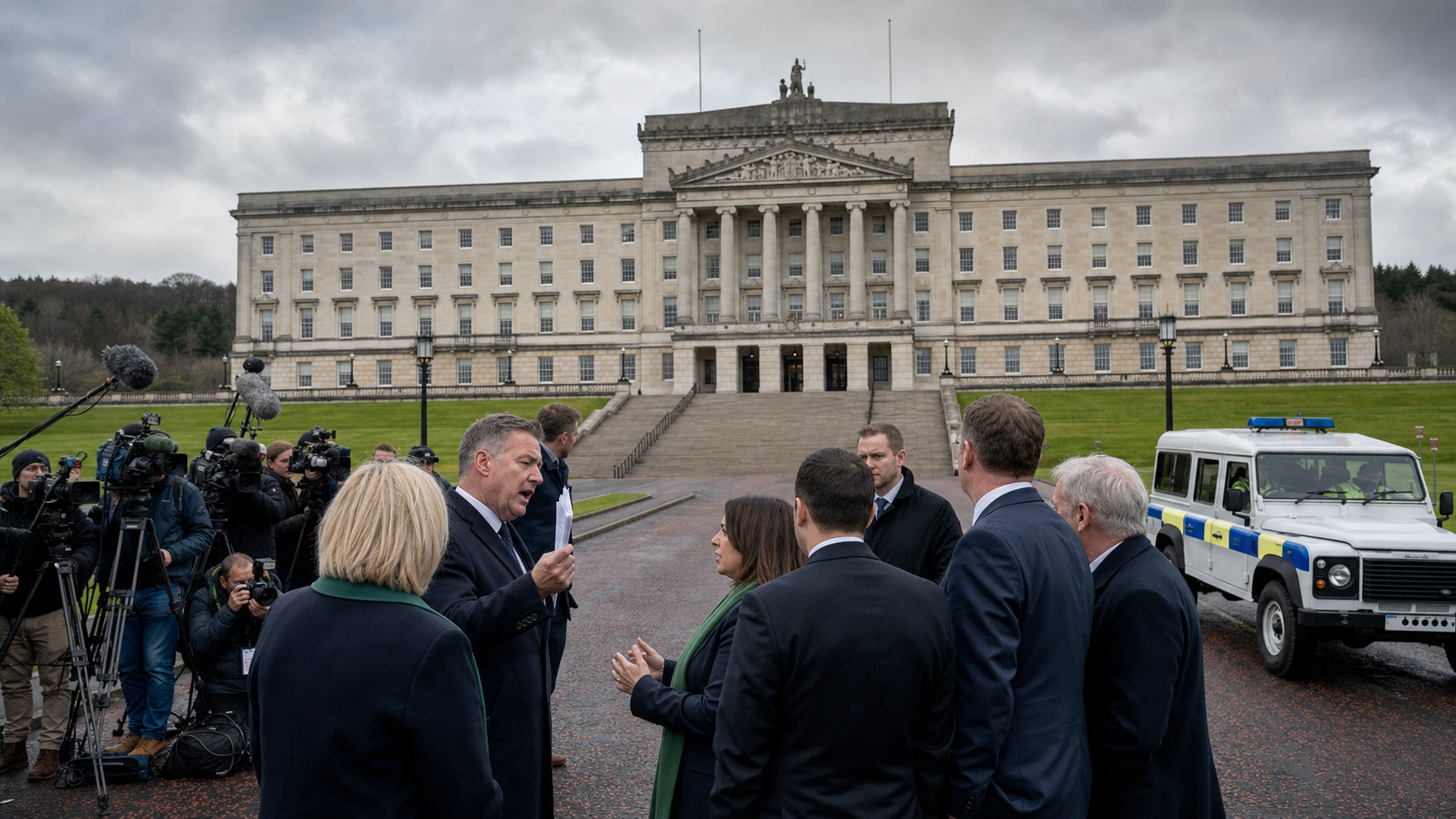
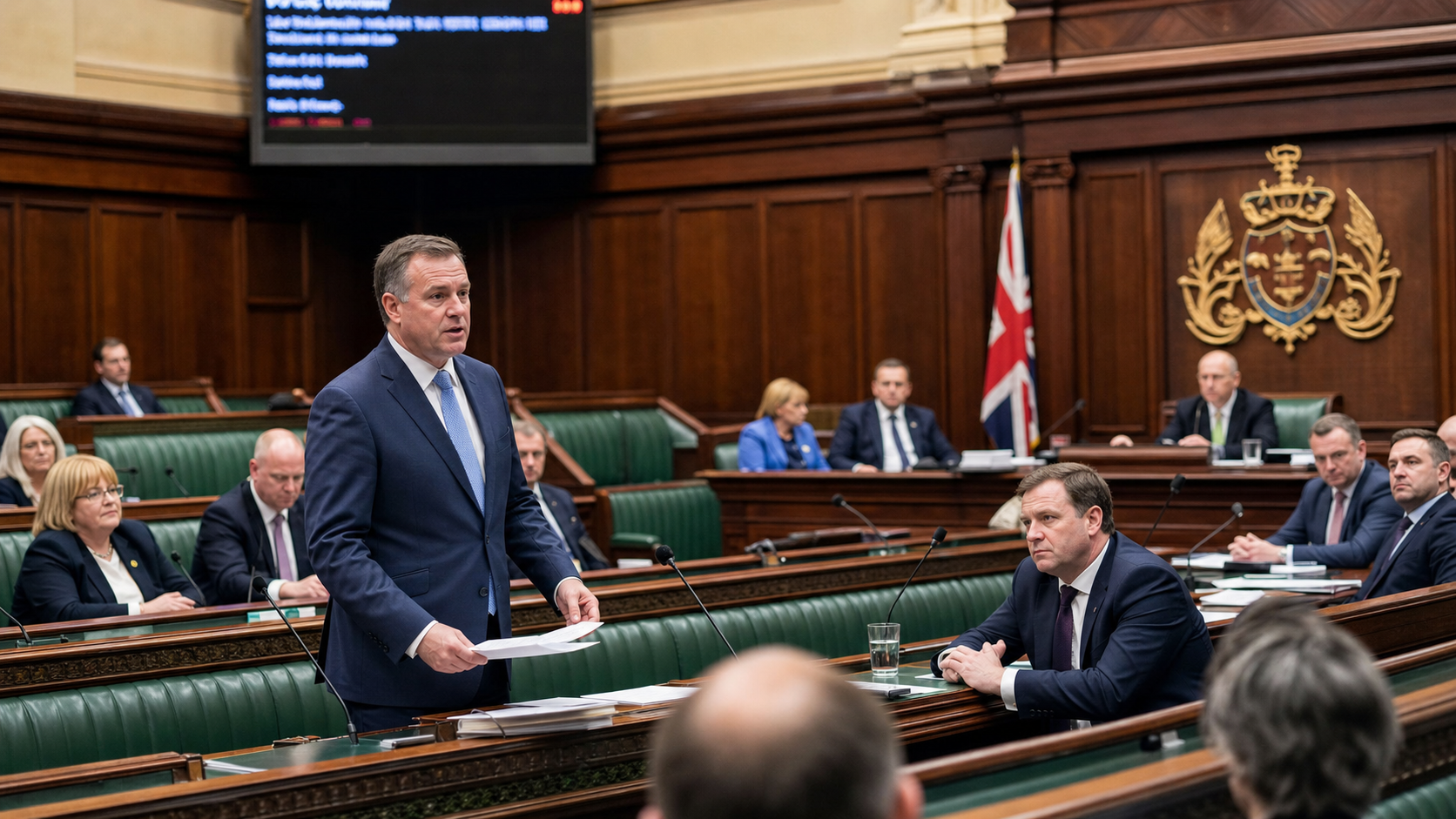
DUP MLA Jonathan Buckley tabled the motion of no confidence on Monday, September 7, with DUP MLA Deborah Erskine also declaring her support and TUV MLA Timothy Gaston calling for the minister's resignation. The motion is expected to be debated in the Assembly in the coming weeks, though its outcome is not in doubt — the DUP does not have the numbers to pass a motion of no confidence without support from other parties, and Alliance, Sinn Féin, and the SDLP have all indicated they will not support it.
Minister Muir has defended his position robustly, stating that the Fivemiletown operation was neither authorised nor directed by him personally. He has commissioned an independent external review to investigate the incident and has pledged full transparency regarding the findings. Addressing his political opponents, the minister suggested that the intensity of the reaction is rooted in long-standing opposition to his focus on climate action and environmental policy, rather than solely the Fivemiletown incident. Alliance spokesperson John Blair labelled the DUP's motion a "political stunt" and reaffirmed full support for the minister.
A concurrent attempt to pass a vote of no confidence in DAERA at the Mid Ulster District Council on September 7 was narrowly defeated by a single vote — 19 votes against to 18 in favour — with Sinn Féin councillors opposing the motion on the grounds that it was premature while the independent review was still in progress.
Why It Matters
The Fivemiletown controversy and the subsequent no-confidence motion illuminate several important dynamics in Northern Ireland politics. The first is the ongoing tension between environmental and agricultural policy — a tension that is not unique to Northern Ireland but which is particularly acute in a jurisdiction where farming communities have significant political influence and where the transition to more sustainable agricultural practices is both economically challenging and politically sensitive. The second is the question of ministerial accountability. Minister Muir's insistence that he did not personally authorise the cull raises legitimate questions about the chain of command within DAERA and about the extent to which ministers can be held responsible for operational decisions taken by their departments. The independent review he has commissioned will need to address these questions clearly if it is to restore confidence in the department's decision-making processes. The third dynamic is the use of no-confidence motions as a political tool. The DUP's decision to table this motion, knowing it cannot pass, is primarily a statement of political intent — a signal to farming communities that the party is on their side and that it holds the minister responsible for what happened in Fivemiletown.
Local Impact
The controversy has been felt most acutely in the farming communities of County Tyrone, where the Fivemiletown cull took place, and in the broader agricultural community across Northern Ireland. Farming organisations including the Ulster Farmers' Union have called for the independent review to be completed as quickly as possible and for its findings to be published in full. The review is expected to examine the decision-making process that led to the cull, the options that were considered and rejected, and the communication with the herd owner and other stakeholders. Its findings will be closely scrutinised by farming organisations, political parties, and the Agriculture Committee at Stormont.
What's Next
The motion of no confidence is expected to be scheduled for debate in the Assembly within the next two to three weeks. The independent review commissioned by Minister Muir is expected to report within three months. The Agriculture Committee at Stormont has indicated that it will hold a dedicated session on the Fivemiletown incident, taking evidence from DAERA officials, the minister, and farming representatives. The committee's findings will be published before the end of the year.