DUP Slumps to Five-Year Low in New Poll as Donaldson Scandal Continues to Haunt Party
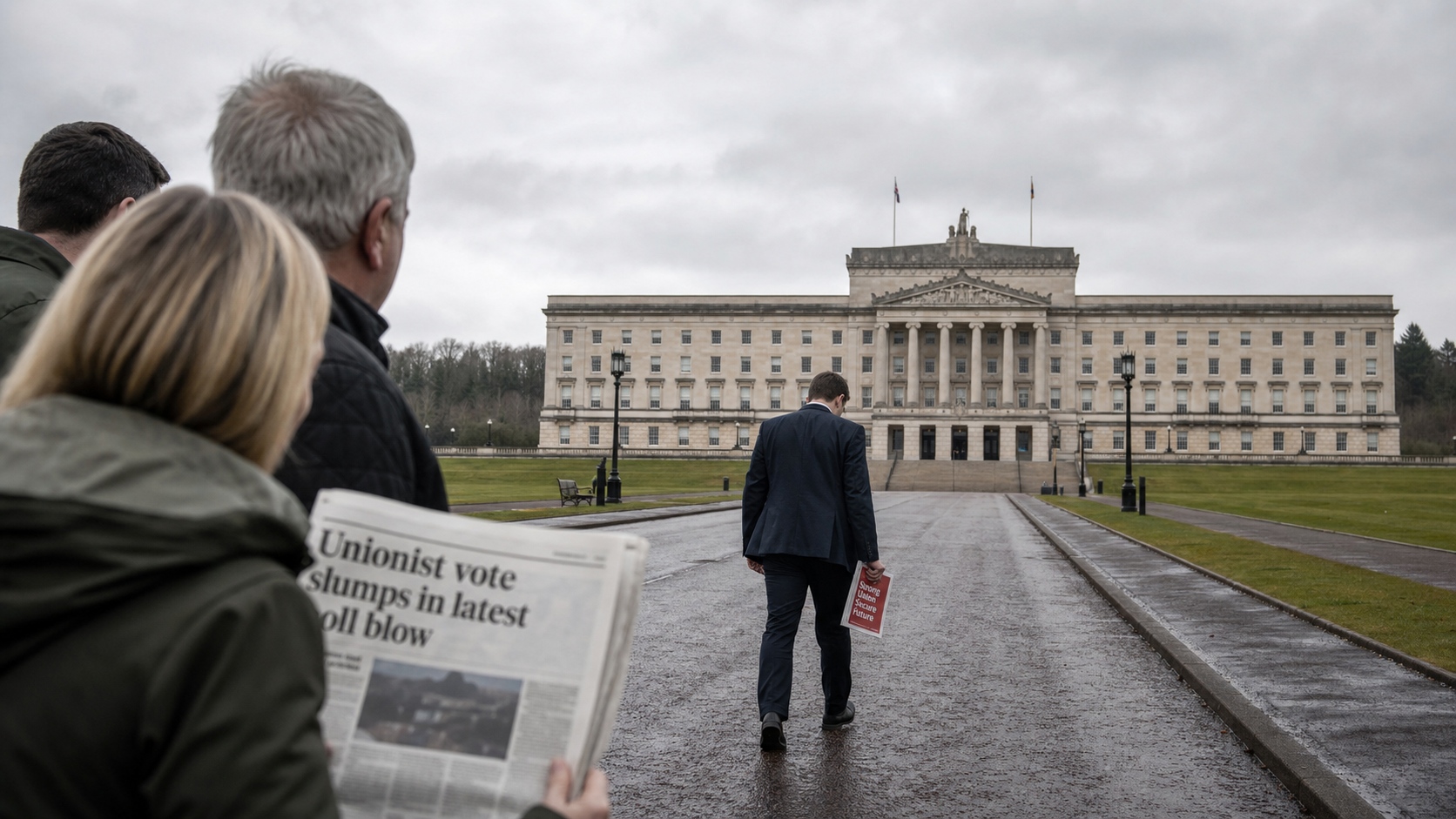
The Democratic Unionist Party has fallen to 15% support in the latest LucidTalk poll commissioned by the Belfast Telegraph — its lowest level in five years — as the devastating fallout from former leader Jeffrey Donaldson's conviction for child sex offences continues to erode the party's standing, with Sinn Féin and the Alliance Party also experiencing significant declines in a set of figures that points to a broad crisis of confidence in the Northern Ireland Executive's three largest parties.
Background
The DUP has been navigating one of the most turbulent periods in its history since the arrest and subsequent conviction of Jeffrey Donaldson, who led the party from 2021 until his resignation in March 2024 following his arrest on charges of child sex offences. Donaldson, who had been one of the most prominent figures in unionist politics for more than two decades, was convicted earlier this year, and the revelation that he had been living what commentators described as a "double life" while serving as party leader has had a profound and lasting impact on the DUP's reputation.
The party has been attempting to rebuild under new leadership, but the process has been complicated by the scale of the reputational damage and by the questions that have been raised about what, if anything, senior party figures knew about Donaldson's conduct before his arrest. The LucidTalk poll found that only 57% of DUP voters expressed confidence that the party had been truthful about its knowledge of Donaldson's behaviour — a figure that suggests the trust deficit extends even into the party's own support base.
The broader context for the poll is one of significant political flux in Northern Ireland. The transition to a new UK government under Prime Minister Andy Burnham, the ongoing budget pressures facing the Stormont Executive, and the failure to deliver on key commitments — including the long-delayed Casement Park stadium project — have all contributed to a climate of voter dissatisfaction that is affecting all the major parties.
Key Developments
The LucidTalk poll, which was conducted in late July 2026, placed the DUP at 15% — a five-year low that represents a significant decline from the party's performance in the 2022 Assembly election. The figures suggest that voters disillusioned with the DUP are shifting their support towards the Ulster Unionist Party and the Traditional Unionist Voice, with the UUP recording a 3% increase since the previous poll and a total swing of approximately 5% since the last Assembly election.
Sinn Féin's support dropped to 22%, a level not seen in the last decade, while the Alliance Party hit its lowest polling figures since before the 2019 European elections. The simultaneous decline of all three Executive parties is a striking feature of the poll and suggests that the dissatisfaction is not simply a transfer of support from one party to another but a broader withdrawal of engagement from the political process.
Analysts have pointed to the lack of visible delivery on key issues as a primary driver of the decline. The stalled Casement Park project — which was supposed to be a flagship development for the Executive — has become a symbol of the gap between political promises and practical outcomes. Cost-of-living pressures, health service performance, and the ongoing budget impasse have all contributed to a sense that the Executive is not delivering for the people of Northern Ireland.
Why It Matters
The polling figures matter for several reasons. For the DUP, the fall to 15% raises fundamental questions about the party's capacity to recover its position as the dominant force in unionist politics. The party has been the largest unionist party at Stormont since 2003, and its current polling level — if replicated in an Assembly election — would represent a historic defeat. The challenge for the DUP's leadership is not just to address the immediate fallout from the Donaldson scandal but to articulate a compelling vision for what the party stands for and what it can deliver for its voters.
For Sinn Féin, the decline to 22% is a reminder that the party's position as the largest party in the Assembly is not guaranteed. The party has struggled to demonstrate the benefits of its participation in the Executive to its own voters, and the perception that it has been insufficiently assertive in its dealings with the DUP has cost it support. The challenge for Sinn Féin is to show that power-sharing is delivering tangible improvements for the communities it represents.
The broader picture — of three Executive parties in simultaneous decline — raises questions about the health of the power-sharing institutions themselves. The Good Friday Agreement's consociational model, which requires the largest unionist and nationalist parties to share power, is predicated on the assumption that those parties retain the confidence of their respective communities. If that confidence is eroding, the model faces a challenge that goes beyond the fortunes of any individual party.
Local Impact
In constituencies across Northern Ireland, the polling figures will be closely watched by candidates and party strategists as they assess their prospects for the next Assembly election, which is not due until 2027. For DUP representatives in particular, the fall to 15% will prompt difficult conversations about the party's strategy and messaging. The party's performance in its traditional heartlands — in east Belfast, in north Antrim, and in the rural areas of Counties Down and Armagh — will be a key indicator of whether the Donaldson fallout is a temporary setback or a more fundamental realignment of unionist politics.
What's Next
The DUP's new leadership team is expected to set out a programme for rebuilding the party's support in the coming months, with a particular focus on demonstrating delivery on the issues that matter most to unionist voters — the economy, public services, and the constitutional question. The party's performance in any by-elections that arise before the 2027 Assembly election will be closely watched as an indicator of whether the recovery is taking hold. The LucidTalk polling series will continue to track the parties' fortunes, with the next poll expected in the autumn.