Drumcree Crisis Threatens Stormont's Future as DUP and Sinn Féin Clash Over Rule of Law
The Drumcree parade crisis has placed the future of the Stormont power-sharing institutions in serious doubt, with the DUP accusing First Minister Michelle O'Neill of breaking the law by participating in the Garvaghy Road blockade and Sinn Féin counter-accusing the DUP of using the rule of law as a political weapon to delegitimise nationalist resistance to an unjust decision. Political analysts warn that the mutual breakdown of trust between the two largest parties could make it impossible to govern effectively in the weeks and months ahead.
Background
The Stormont power-sharing institutions were established under the Good Friday Agreement of 1998 and have had a turbulent history. The Executive has collapsed on multiple occasions — most recently in 2022, when the DUP withdrew from the institutions in protest at the Northern Ireland Protocol — and has always required a degree of mutual trust and respect between unionist and nationalist parties to function. That trust has been severely tested by the events of the past week.
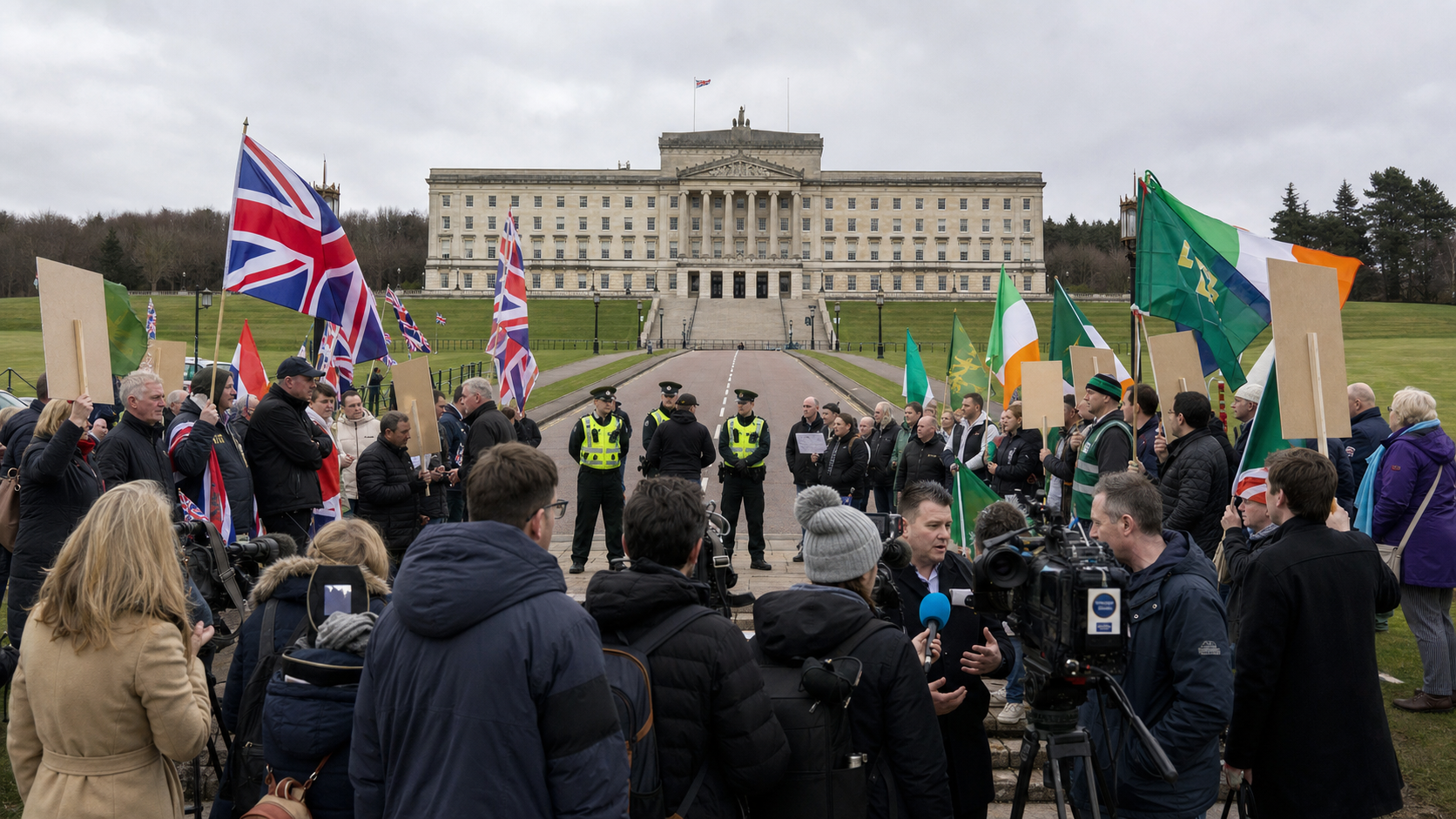
The Drumcree dispute has exposed a fundamental tension at the heart of the power-sharing arrangement: the question of what happens when a legally authorised decision — in this case, the Parades Commission's determination that the Orange Order could march along the Garvaghy Road — is regarded by one community as so fundamentally unjust that it cannot be accepted. The Parades Commission's determination was upheld by the courts, but it proved impossible to implement in the face of mass community resistance.
The DUP's response to the crisis has been to focus on the First Minister's participation in the blockade, arguing that her presence at an illegal protest was incompatible with her pledge of office and her responsibility to uphold the rule of law. Sinn Féin's response has been to argue that the Parades Commission's decision was itself a violation of the rights of the Garvaghy Road residents, and that the First Minister was exercising her right as a citizen to stand with her community.
Key Developments
DUP leader Gavin Robinson accused O'Neill of "breaking the law" and called on her to resign or face a motion of no confidence in the Assembly. Robinson argued that a First Minister who participates in an illegal blockade cannot credibly uphold the rule of law in other contexts, and that her presence at the protest had emboldened those who believe that community resistance can override legal determinations.
O'Neill rejected the characterisation, saying she had exercised her right as a citizen to stand with her community in the face of a decision she regarded as wrong. She pointed out that the Parades Commission's determination had been described as "incomprehensible and wrong" by Taoiseach Micheál Martin, and argued that the DUP's selective invocation of the rule of law — which had not prevented the party from collapsing the institutions on multiple occasions — lacked credibility.
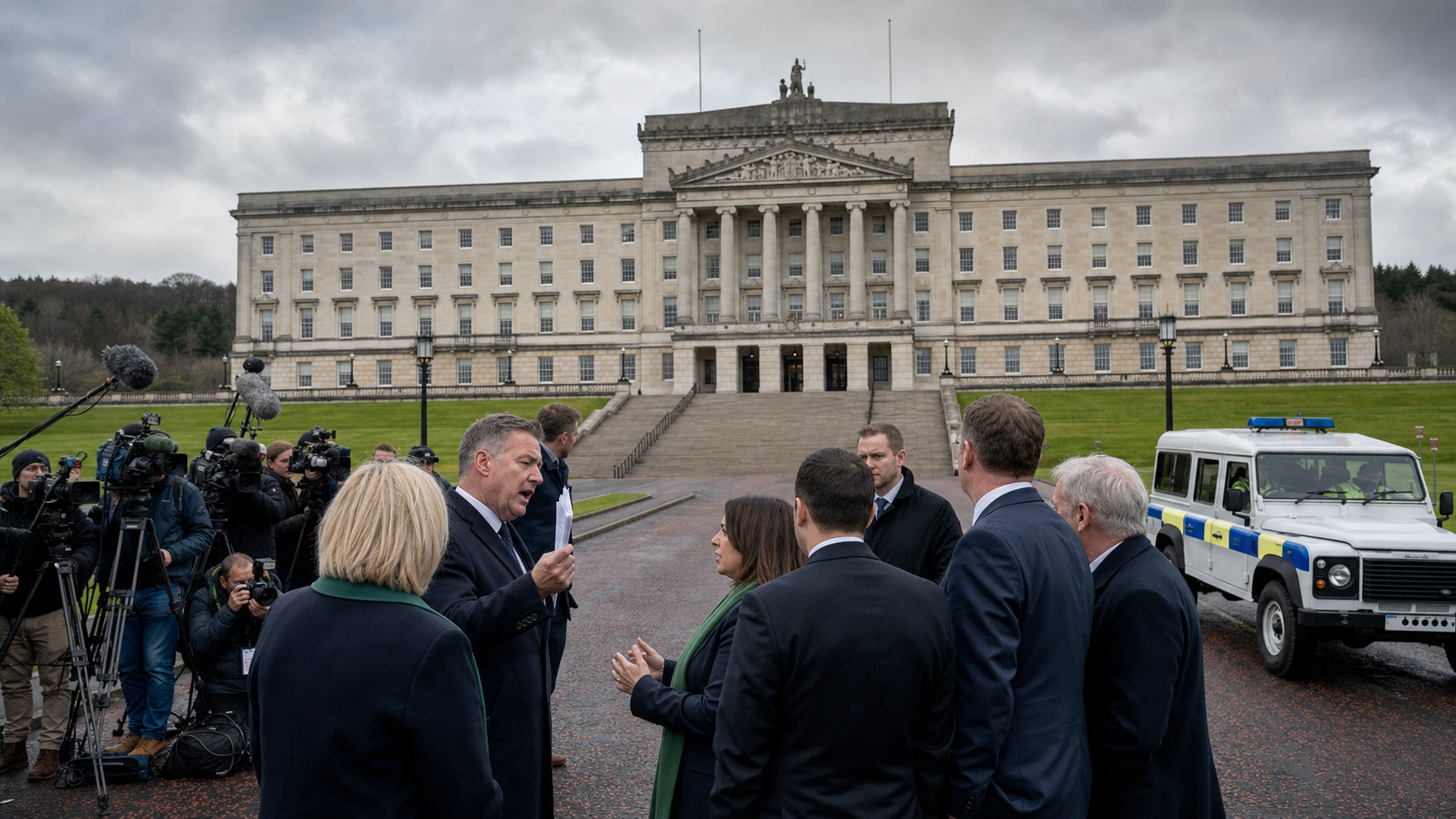
British Prime Minister Andy Burnham called for calm and emphasised that Northern Ireland had made "big gains" that should not be jeopardised. Northern Ireland Secretary Sir Chris Bryant, who has been holding talks with all parties, has urged both sides to "double down on compromise" and has warned against "relitigating" the past.
Why It Matters
The Drumcree crisis matters for Stormont because it has exposed the fragility of the shared understanding of the rule of law that underpins the power-sharing arrangement. The Good Friday Agreement was built on the premise that both communities would accept the legitimacy of decisions made through agreed processes, even when they disagreed with the outcome. The events of the past week have challenged that premise in a fundamental way.
The crisis also matters because it has arrived at a moment when the institutions are already under strain from the budget deadlock. The combination of a political crisis over Drumcree and a financial crisis over the budget creates a perfect storm that could overwhelm the Executive's capacity to function. Political analysts note that this is the third time in five years that the institutions have faced an existential threat, and that each crisis leaves them weaker and more vulnerable to the next.
Local Impact
Across Northern Ireland — in unionist communities in East Belfast and Antrim, in nationalist communities in West Belfast and Derry — the Drumcree crisis has reopened wounds that many had hoped were healing. The closure of schools in Portadown, the deployment of 200 PSNI officers, and the petrol bombs thrown in Derry are all reminders of how quickly the peace can be disturbed. For the communities of the Garvaghy Road, the experience of the past week has been traumatic; for the Orange Order and its supporters, the failure to march the route has been a source of deep frustration.
What's Next
The Stormont Executive is expected to meet this week, with the Drumcree fallout and the budget crisis both on the agenda. Sir Chris Bryant has indicated that he will continue to engage with all parties in the coming days, and there is speculation that the British and Irish governments may jointly propose a mediation process. The DUP's threat of a motion of no confidence in the First Minister has not yet been formally tabled, and it remains to be seen whether the party will follow through. The Orange Order must submit a new application to the Parades Commission before any further attempt to march the Garvaghy Road can be made, providing a window for political engagement.