PSNI Investigates Derry Bonfires as Hate Crimes After Lecky Road Flyover Blaze Draws Widespread Condemnation
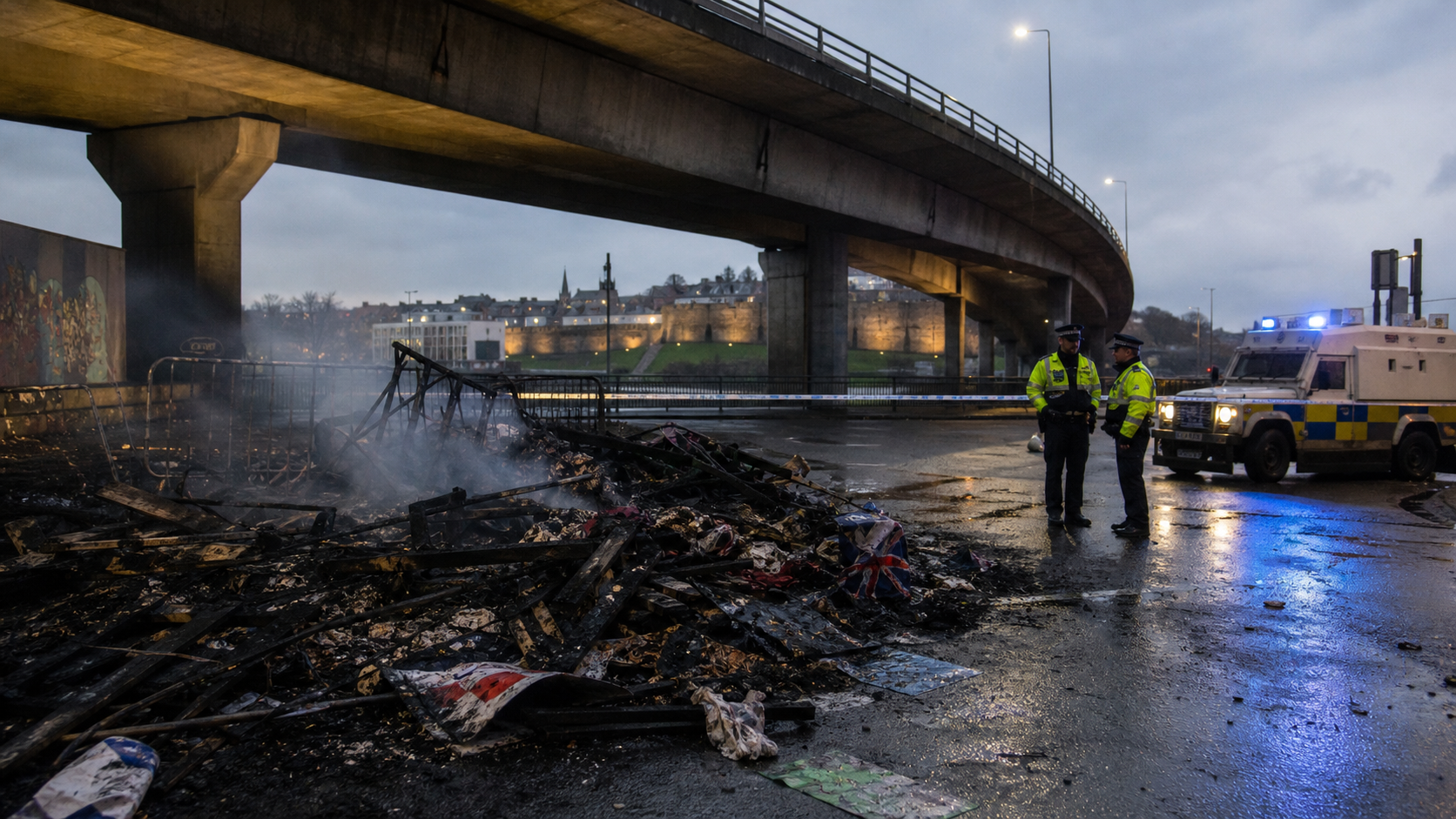
The Police Service of Northern Ireland is treating bonfires lit in nationalist areas of Derry on Saturday night as sectarian-motivated hate crimes, after pyres featuring images of First Minister Michelle O'Neill, union flags, Israeli flags, and poppy wreaths were ignited at multiple locations across the city, with the bonfire constructed on the Lecky Road flyover in the Bogside drawing particular condemnation for its reckless placement on a major public thoroughfare.
Background
The lighting of bonfires in nationalist areas of Derry on the anniversary of the introduction of internment without trial — which began on 9 August 1971 — and on the Feast of the Assumption on 15 August is a long-established tradition in parts of the city. The practice has its roots in the commemoration of internment, which saw hundreds of nationalist men arrested without trial in the early years of the Troubles and which remains a deeply painful memory in communities that bore the brunt of the policy.
In recent years, however, the tradition has become increasingly controversial, with bonfires at several locations featuring material that authorities and community leaders have characterised as sectarian, offensive, and dangerous. The placement of bonfires on public roads and beneath infrastructure such as the Lecky Road flyover has raised serious public safety concerns, while the burning of images of political figures and the display of flags and symbols associated with other communities has prompted calls for greater regulation.
The Department for Infrastructure, supported by the PSNI, attempted to mitigate the risks at the Lecky Road site on 13 August by removing approximately 500 wooden pallets from beneath the flyover. During that operation, workers discovered six poppy wreaths and a World War I commemoration banner among the materials. Despite these efforts, the bonfire was rebuilt and ignited on the night of 15 August.
Key Developments
The bonfires were lit at several locations across Derry on Saturday evening, including Bligh's Lane in Creggan, Corrody Road in the Waterside, and the Lecky Road flyover in the Bogside. The pyres featured an array of inflammatory items, including images of First Minister Michelle O'Neill, union flags, Israeli flags, poppy wreaths, banners, sashes, and football shirts.
Chief Superintendent Gillian Kearney of the PSNI condemned the material as "disgraceful" and confirmed that police inquiries into the ownership and placement of the items are ongoing. The PSNI is treating the display and burning of the material as sectarian-motivated hate crimes, a designation that carries significant legal implications for those responsible.
First Minister O'Neill, who was herself targeted by the burning of her image, stated she would not be intimidated and condemned the activity as the "very opposite of republicanism." Sinn Féin MP John Finucane and Infrastructure Minister Liz Kimmins also denounced the events as "anti-democratic" and a form of "hate-filled sectarianism." The Catholic Bishop of Derry, Donal McKeown, characterised the atmosphere surrounding the burning as a "hate fest."
Why It Matters
The Derry bonfire controversy sits at the intersection of several of Northern Ireland's most sensitive fault lines: the legacy of the Troubles, the regulation of cultural expression, and the challenge of building a shared society in communities that remain deeply divided. The PSNI's decision to treat the incidents as hate crimes is significant, representing a more assertive approach than has sometimes been taken in the past.
Ulster Unionist Party leader Jon Burrows described the fires as a "pyre of sectarian hatred" and called for more robust, early-year intervention by authorities, advocating for the establishment of "bonfire committees" to ensure future fires are safe, lawful, and respectful. This mirrors debates that have taken place in unionist communities about the regulation of loyalist bonfires, where similar concerns about safety and sectarian content have been raised.
The broader question of how Northern Ireland regulates bonfire culture — on both sides of the community divide — remains unresolved. The current approach, which relies primarily on reactive intervention rather than proactive regulation, has repeatedly failed to prevent incidents of this kind.
Local Impact
In the Bogside and Creggan areas of Derry, the bonfires are a source of genuine community division. Many residents support the tradition as a legitimate form of cultural commemoration, while others — including many within the nationalist community — are deeply uncomfortable with the sectarian content that has come to characterise some of the fires. The placement of a bonfire on the Lecky Road flyover, a major route through the city, caused significant disruption and raised serious concerns about structural damage to the infrastructure.
Derry City and Strabane District Council has faced calls to take a more active role in regulating bonfire sites within its area, but the political sensitivities involved have made decisive action difficult. The PSNI's hate crime investigation may provide a new impetus for a more structured approach.
What's Next
The PSNI investigation into the hate crime aspects of the incidents is ongoing, with officers appealing for information from the public. The Department for Infrastructure will assess any structural damage to the Lecky Road flyover. Political leaders across the spectrum have called for a broader conversation about bonfire regulation, and it is expected that the issue will be raised at Stormont in the autumn. The PSNI has indicated it will review its approach to future bonfire seasons in light of this year's events.