Depaul Reports 93% Spike in Mental Health Crises Among Homeless Families as Record 5,659 Children in Emergency Accommodation
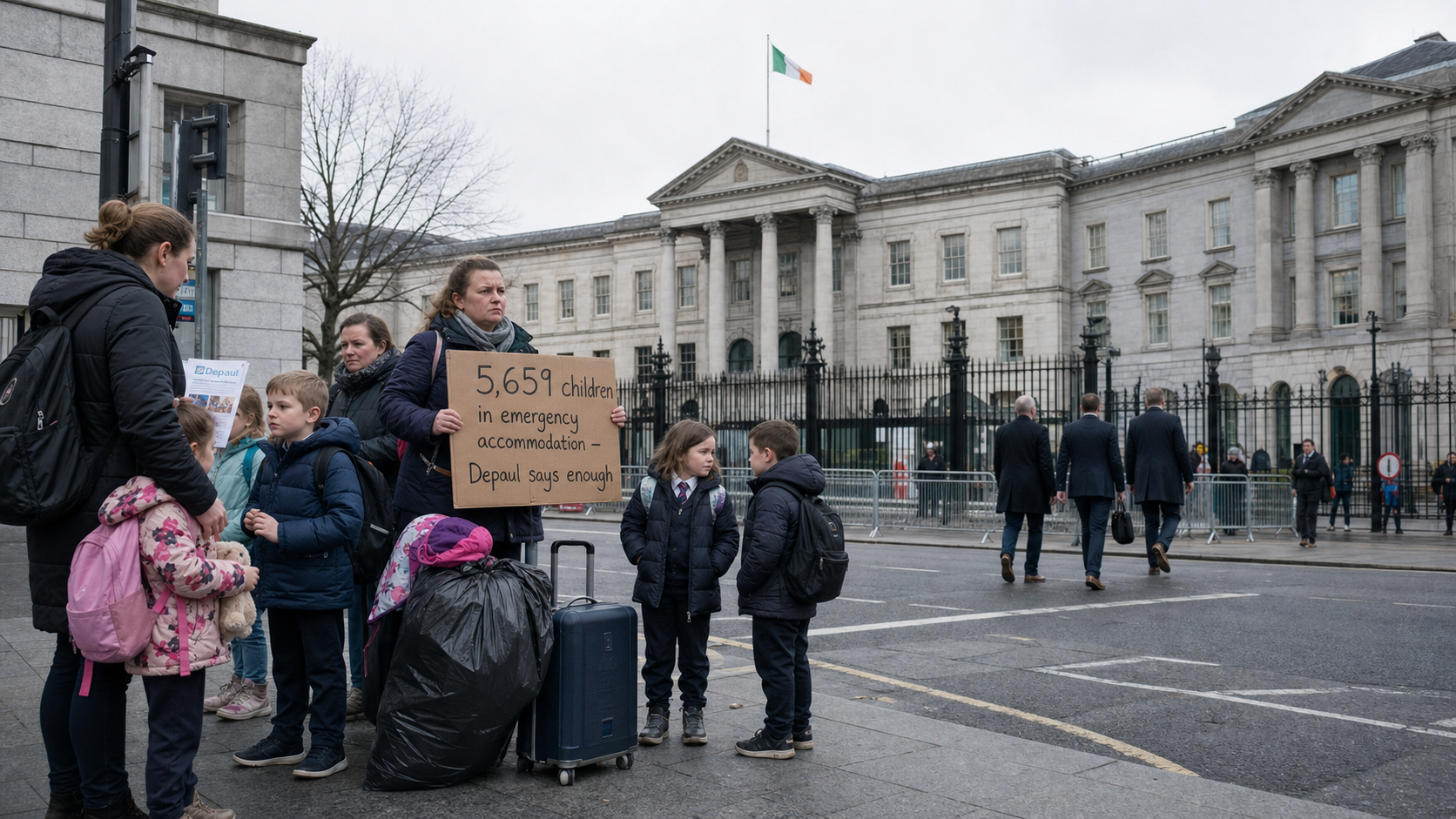
Depaul Ireland has reported a 93% spike in mental health challenges among homeless families, including 273 incidents of suicidal ideation and 129 incidents of self-harm in the past year, as government figures show a record 5,659 children are now living in emergency accommodation — the highest figure ever recorded. The charity is calling for earlier intervention, a shift to housing-led solutions, and sustained investment in mental health services ahead of Budget 2027.
Background
Ireland's homelessness crisis has been a persistent feature of the political landscape for more than a decade, but the scale of the problem has reached new and alarming levels in 2026. Department of Housing figures published in August showed that 17,527 people were living in emergency accommodation in July 2026, a 9% increase on the same period last year. The figure for children — 5,659 — is the highest ever recorded, and represents a profound failure of housing policy that has consequences not only for the families directly affected but for Irish society as a whole.
Depaul Ireland, a charity that provides accommodation and support services to homeless people across the island of Ireland, has been at the frontline of the crisis for many years. The organisation operates services in Dublin, Cork, Waterford, and Northern Ireland, providing emergency accommodation, transitional housing, and a range of support services to people experiencing homelessness. Its annual impact report, published on Tuesday, provides a detailed picture of the human cost of the crisis as experienced by those who depend on Depaul's services.
The mental health dimension of the homelessness crisis has been a growing concern for service providers and policymakers for several years. The stress of living in emergency accommodation — the lack of privacy, the uncertainty about the future, the disruption to children's education and social development — creates conditions that are profoundly damaging to mental health. The 93% spike in mental health challenges reported by Depaul is a stark indicator of how those conditions are affecting the people in its care.
Key Developments
Depaul Chief Executive David Carroll highlighted the organisation's data showing 273 incidents of suicidal ideation and 129 incidents of self-harm among its service users in the past year — figures that he described as reflecting a "wider fragility" within the population experiencing homelessness. The charity's staff provided a record 75,254 individual support sessions in the same period, a figure that reflects both the scale of the need and the intensity of the work required to address it.
In response to the mental health crisis, Depaul has introduced a specialised "mindset programme" that integrates therapy and recovery planning to assist individuals struggling with the psychological strain of homelessness. The organisation's Housing First initiative — which provides intensive, long-term support for individuals with complex mental health and addiction needs — successfully assisted 169 people in maintaining their rental tenancies in the most recent reporting period. The Headstrong programme, launched in 2024, has improved access to mental health and addiction supports for people experiencing homelessness.
Carroll has called for a fundamental shift in government policy, away from reliance on emergency accommodation and towards housing-led solutions that provide people with stable homes as the foundation for addressing other challenges. He has also called for sustained investment in mental health services for homeless people, arguing that the current level of provision is wholly inadequate to meet the need that Depaul's data documents.
Why It Matters
The record number of children in emergency accommodation is a moral and political crisis of the first order. Children who grow up in emergency accommodation face significant disadvantages in education, health, and social development that can affect them for the rest of their lives. The research evidence on the long-term consequences of childhood homelessness is clear and consistent: children who experience homelessness are more likely to have poor educational outcomes, more likely to experience mental health problems, and more likely to face homelessness themselves as adults. The 5,659 children currently in emergency accommodation in Ireland are not statistics — they are individuals whose life chances are being shaped, in profoundly negative ways, by the failure of housing policy.
For context, Ireland's homelessness figures are among the highest in the European Union relative to population size. The country's housing crisis — driven by a combination of insufficient supply, high construction costs, and a dysfunctional planning system — has been the subject of successive government strategies and action plans, none of which has succeeded in reversing the trend. The government's Housing for All plan, launched in 2021, set ambitious targets for housing delivery that have not been met, and the homelessness figures continue to rise.
The mental health dimension of the crisis documented by Depaul adds urgency to the call for policy change. The 93% spike in mental health challenges is not a marginal or peripheral issue — it is a central feature of what homelessness does to people, and it demands a response that goes beyond the provision of emergency beds.
Local Impact
In Dublin, where the majority of homeless families are concentrated, the impact of the crisis is visible in the city's hotels, B&Bs, and family hubs, which have been repurposed as emergency accommodation for families who cannot access social housing or the private rental market. In Cork, Waterford, and Limerick, the crisis is less visible but no less real, with families in emergency accommodation in all of Ireland's major cities. The HSE's mental health services are under significant pressure to respond to the needs of homeless people, and community mental health teams in Dublin and other cities have reported that the demand for their services from people experiencing homelessness has increased substantially in recent years. Depaul's call for earlier intervention — reaching people before they reach crisis point — reflects a growing consensus among service providers that the current reactive approach is insufficient.
What's Next
Budget 2027, scheduled for October 2026, will be a critical moment for housing and homelessness policy. Depaul and other homeless charities have submitted pre-budget submissions calling for increased investment in social housing, mental health services, and Housing First programmes. The government has indicated that housing will be a priority in the budget, but the scale of investment required to make a meaningful difference to the homelessness figures is substantial. The Oireachtas Committee on Housing is expected to hold hearings on the homelessness crisis in September, with Depaul and other service providers expected to give evidence.