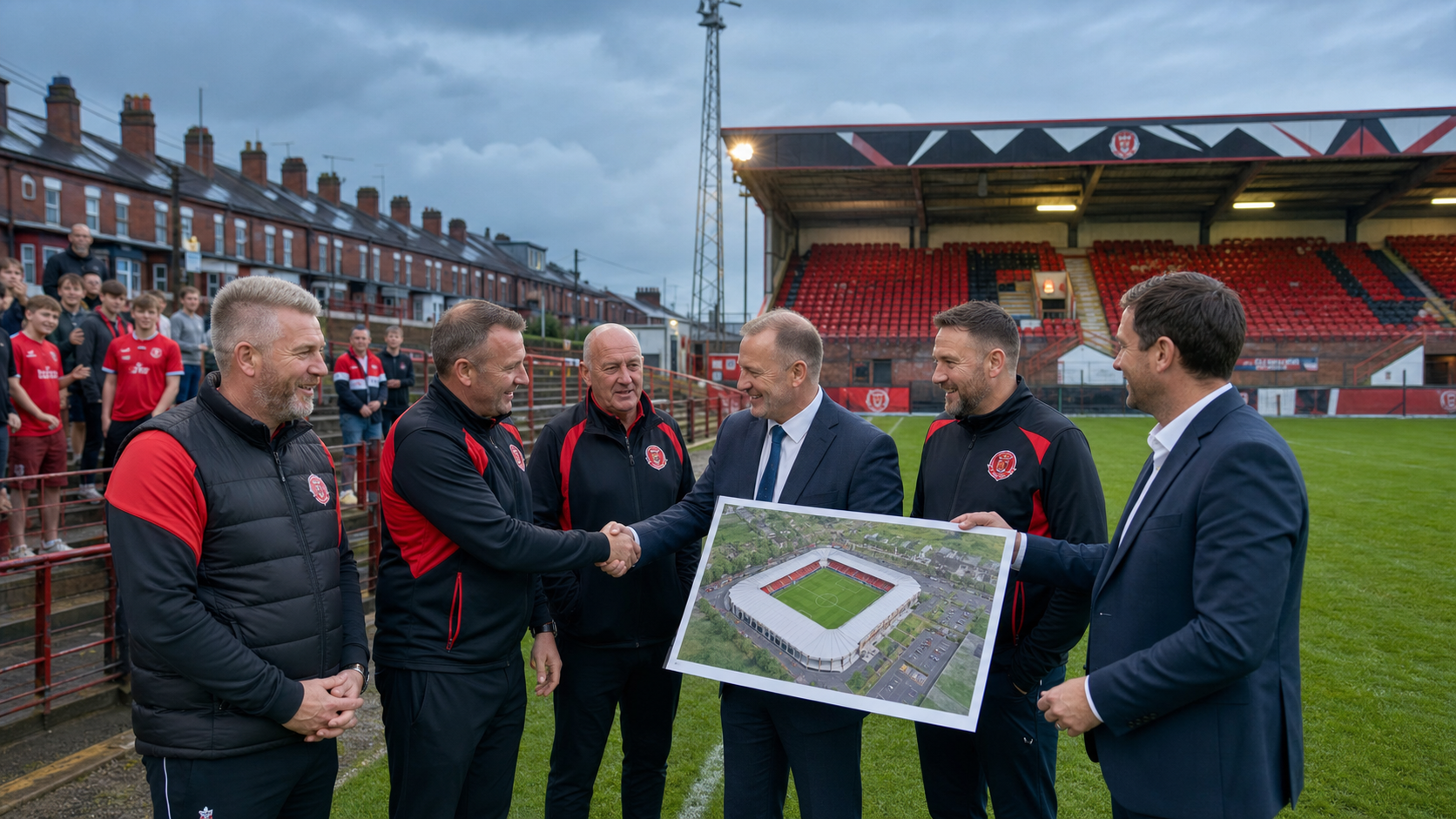
Cliftonville Members Back Toronto Takeover with 81% Vote as New Era Begins at Solitude
Cliftonville Football Club members have voted overwhelmingly in favour of a £3 million takeover by the Toronto Investment Group, with 81% of those who participated backing the deal at a meeting on Monday evening — a result that clears the 75% threshold required and brings to a close one of the most protracted and divisive ownership sagas in the history of the Irish Premiership.
Background
Cliftonville, founded in 1879 and one of the oldest football clubs in Ireland, has spent the past two years at the centre of a complex and at times acrimonious debate about its future direction. The Toronto Investment Group, a consortium led by entrepreneur and Canadian Elite Basketball League co-owner Drew Green, first approached the club in 2024 with a proposal to invest significantly in its infrastructure and transition it to a full-time professional model.
The initial approach generated considerable excitement among supporters who felt the club needed external investment to remain competitive in an Irish Premiership increasingly dominated by well-resourced clubs. However, the process stalled repeatedly, with TIG withdrawing its offer in January 2026 before the prospect of a deal was revived following an Extraordinary General Meeting in June 2026, where members authorised the management committee to resume formal negotiations.
The consortium is composed of four key individuals: Drew Green, former Cliftonville midfielder Conor Devine, chartered accountant John Muffolini, and corporate director Ron Davidson. The involvement of Devine, who played for the club and understands its culture and community significance, was seen by many supporters as an important reassurance that the new investors were not simply financial opportunists.
Key Developments
Monday's vote, which required a 75% supermajority to pass, was carried with 81% support — a margin that suggests the membership has moved decisively behind the deal despite the divisions of the preceding two years. The approved £3 million investment package includes a series of ambitious commitments from TIG.
The centrepiece of the infrastructure plan is the redevelopment of Solitude, the club's historic ground in north Belfast, into an all-seater stadium with a capacity of between 5,000 and 6,000, including a new main stand and seating at the Waterworks end. The proposal also includes the construction of a state-of-the-art training facility and the conversion of the historic "White House" pavilion into a club museum — a nod to the importance of preserving the club's heritage even as it modernises.
Crucially, the agreement includes a legally binding clause ensuring that Solitude will never be sold, along with protections for the club's traditional badge and colours. These provisions were central to winning over sceptical members who feared that external investment might ultimately lead to the club losing its identity or its home ground.
Why It Matters
The Cliftonville deal is the most significant ownership change in the Irish Premiership in recent memory and has implications that extend well beyond north Belfast. The Irish League has long operated on a semi-professional or amateur basis, with clubs relying on gate receipts, sponsorship, and the goodwill of volunteer committees to sustain themselves. The arrival of a £3 million investment package at one of the league's most prominent clubs represents a step-change in ambition.
If TIG delivers on its commitments — and the legally binding protections in the agreement suggest a degree of seriousness about the long-term project — Cliftonville could become a template for how Irish League clubs can attract external investment without sacrificing their community roots. The transition to full-time professionalism, if successful, would also raise the bar for player recruitment and development across the league.
The club approaches its 150th anniversary in 2029 with a new ownership structure and a clear vision for the future. Whether that vision can be realised will depend on the execution of the investment plan and the ability of the new owners to build trust with a fanbase that has been through a turbulent few years.
Local Impact
Solitude sits in the heart of north Belfast, a community that has experienced significant social and economic challenges over the decades. The club has long been a focal point for the local community, and the prospect of a redeveloped stadium with increased capacity and improved facilities is genuinely exciting for supporters and local residents alike. The planned training facility will also provide infrastructure that can benefit youth development programmes and community engagement initiatives.
Green Party councillor Brian Smyth, who had been a vocal advocate for the deal, described the vote as "essential to professionalise the club and prevent it from falling behind in the modern football landscape." The club's statement following the vote expressed gratitude to members for their "attentive examination" of the transaction and looked forward to a "long and prosperous association" with the new investors.
What's Next
The deal is now subject to formal completion, with legal and regulatory processes to be concluded in the coming weeks. TIG is expected to begin detailed planning for the Solitude redevelopment in the autumn, with planning applications likely to be submitted to Belfast City Council in early 2027. The transition to full-time professionalism is expected to be phased, with the club's management working with the new owners to develop a timeline that is realistic and sustainable. The club's next Irish Premiership fixture will be the first under the new ownership structure.