Casement Park Scaled Back as GAA Reviews Options for Phased Delivery Amid £90 Million Funding Gap
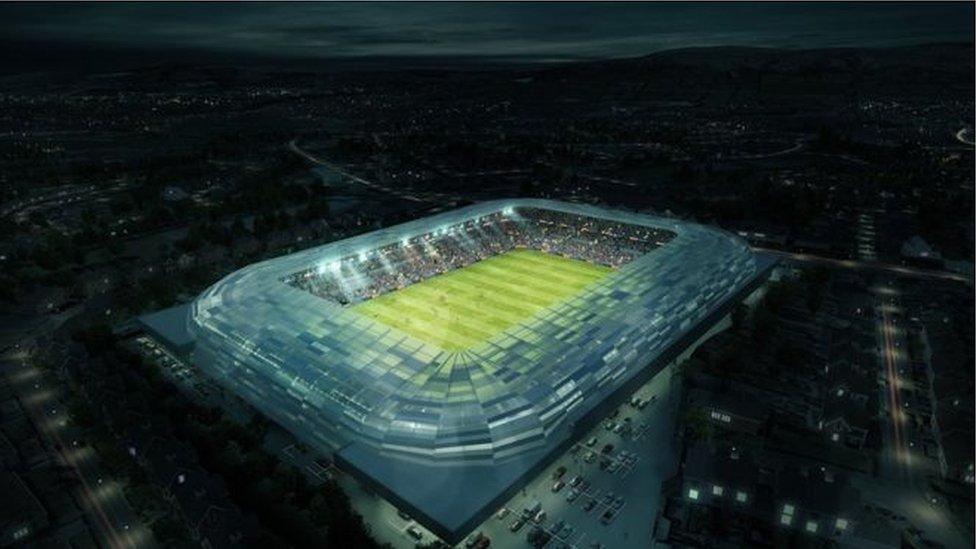
The long-delayed redevelopment of Casement Park in west Belfast has entered a new and difficult phase, with the GAA confirming that the original 34,500-capacity design is no longer viable and that it is reviewing options for a phased delivery of the stadium at a substantially reduced scale. The decision follows a funding shortfall of approximately £90 million — the project requires an estimated £260 million but has secured only £170 million from the UK Government, the Irish Government, and the Stormont Executive — and means that the redeveloped Casement Park will not be capable of hosting Ulster senior finals, fundamentally altering the stadium's role within the GAA's provincial infrastructure.
Background
Casement Park, the home ground of Antrim GAA in west Belfast, has been at the centre of one of the most protracted and contentious planning and funding disputes in Northern Ireland's recent history. The original proposal to redevelop the ground into a 34,500-capacity stadium was first mooted over a decade ago, driven by the GAA's ambition to create a flagship venue in Belfast that could host major provincial and national fixtures. The project was further complicated by its inclusion in the bid to host UEFA Euro 2028 matches, a proposal that was ultimately unsuccessful.
Planning permission for the original design was granted after a lengthy process that included a public inquiry, but the project was subsequently delayed by a series of legal challenges, rising construction costs, and difficulties in securing the full funding package. The decision not to proceed with the UEFA-compliant design removed one of the key arguments for the larger capacity, and the GAA has been reviewing its options for some time.
Demolition and site clearance work has been underway at the Casement Park site throughout the first half of 2026, following the completion of pre-enabling works. This physical activity on the site has been cited by supporters of the project as evidence that progress is being made, but the confirmation of the scaled-back design has cast a shadow over those claims.
Key Developments
The GAA confirmed this week that it is working with its funding partners to identify a viable path forward for the project at a reduced scale. While no specific capacity figure has been announced, it is understood that the revised design will be substantially smaller than the original 34,500-seat proposal, limiting the venue to smaller provincial fixtures and club matches rather than the major Ulster senior finals that were the original ambition.
First Minister Michelle O'Neill has publicly reaffirmed that the project remains an "absolute priority" for the Executive, and has emphasised that progress is being made despite what she described as "obstruction and delay." However, opposition figures have been less sanguine. The SDLP's Matthew O'Toole expressed frustration at the years of delay, while the Ulster Unionist Party suggested that the project should be redesigned to fit the available funding rather than seeking further taxpayer contributions.
Why It Matters
Casement Park matters to the GAA community in west Belfast and across Antrim in ways that go beyond sport. The ground is a focal point of community identity in an area that has historically been underserved by public investment, and the prospect of a modern, well-equipped stadium has been a source of genuine aspiration for the local community for many years. The scaling back of the project is therefore a significant disappointment, even if a smaller stadium is better than no stadium at all. The broader debate about Belfast's stadium infrastructure — with some business leaders now calling for a new multi-purpose national stadium in the city centre — adds a further layer of complexity to an already difficult situation. The GAA's challenge is to deliver something meaningful for the Casement Park community while navigating a funding environment that has proved far more constrained than originally anticipated.
Local Impact
In west Belfast, the reaction to the scaled-back plans has been one of disappointment tempered by a determination to see the project through in whatever form is achievable. Antrim GAA, which has been waiting for a modern home ground for many years, has expressed its continued support for the project while acknowledging the funding challenges. Local community groups in the Falls Road area, where Casement Park is located, have emphasised the importance of the stadium to the social and cultural life of the neighbourhood. The construction activity on the site has provided some employment for local workers, and the eventual completion of the project — even at a reduced scale — will represent a significant investment in an area that has historically received less than its share of public infrastructure spending.
What's Next
The GAA is expected to present revised plans for the Casement Park development to its funding partners in the coming months, with a view to agreeing a final design and a revised timeline for completion. The Stormont Executive's Infrastructure Committee is expected to scrutinise the revised proposals, and there may be further political debate about the appropriate level of public funding for the project. A decision on the final design is expected before the end of 2026, with construction of the main structure expected to begin in 2027 if funding is confirmed.