Budget 2027: Labour Proposes €100 Monthly Child Benefit Top-Up as Income Tax Package Could Exceed €1.5 Billion
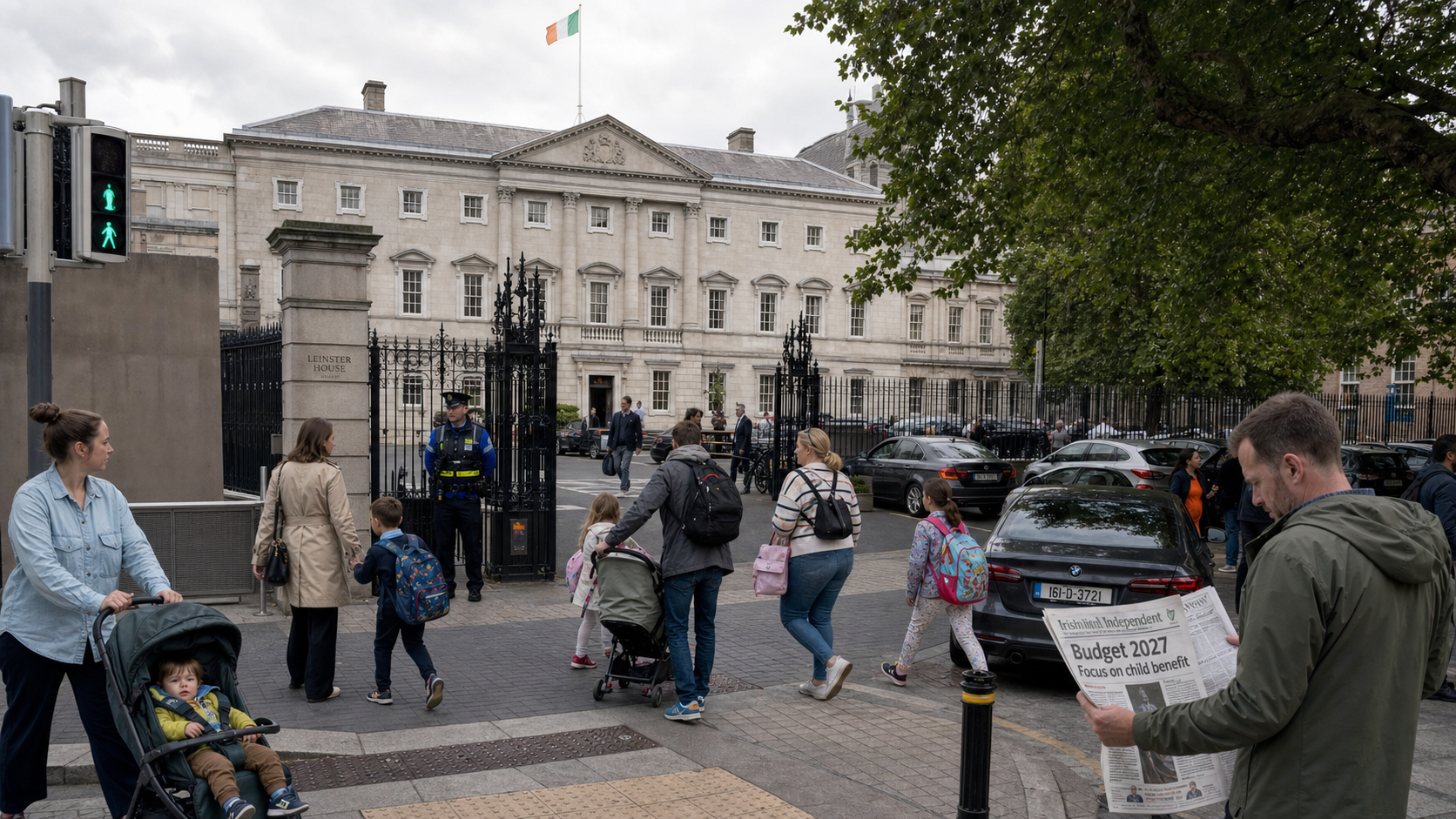
The Labour Party has proposed a €100 monthly child benefit top-up for families with children under 12 as part of its pre-Budget 2027 submission, arguing that the measure would provide targeted relief to families facing the combined pressures of housing costs, childcare fees, and rising public transport fares. Meanwhile, signals from within government suggest that the income tax package in Budget 2027 could exceed €1.5 billion if additional revenue streams are secured, as the government seeks to balance fiscal responsibility with the political imperative of delivering tangible benefits to voters ahead of the local elections in May 2027.
Background
Budget 2027, scheduled for presentation to the Dáil on 14 October, is being prepared against a backdrop of record tax receipts, rising public expenditure, and significant pressure from public sector unions whose members are seeking pay increases that keep pace with inflation. The government has committed to a budgetary framework that maintains a structural surplus while investing in housing, health, and infrastructure, but the specific allocation of resources between tax cuts, spending increases, and capital investment remains the subject of intense negotiation within the coalition.
The Labour Party, which is in opposition, has been developing its pre-Budget submission over the summer, focusing on measures that would provide relief to families with children — a demographic that the party believes has been underserved by recent budgets. The €100 monthly child benefit top-up proposal is designed to complement the existing child benefit payment of €140 per month per child, bringing the total to €240 per month for children under 12. Labour argues that the measure would be particularly valuable for families with multiple children and for those in the middle-income bracket who are not eligible for means-tested supports.
On the government side, the income tax package is shaping up to be one of the most significant elements of the Budget. The government has been under pressure from business groups and trade unions alike to reduce the income tax burden on workers, particularly those in the middle-income range who have seen their effective tax rates increase as wages have risen without corresponding adjustments to tax bands and credits.
Key Developments
Labour leader Ivana Bacik presented the party's pre-Budget submission on Thursday, with the €100 monthly child benefit top-up as the centrepiece. Bacik argued that the measure would cost approximately €400 million per year — a figure that she said was affordable given the record tax receipts — and that it would make a meaningful difference to the household budgets of families across Ireland. The party also called for an increase in the working family payment and for additional investment in affordable childcare.
On the government side, signals from the Department of Finance suggest that the income tax package could exceed €1.5 billion, with measures likely to include increases in the standard rate cut-off point, increases in tax credits, and adjustments to the Universal Social Charge. The precise shape of the package will depend on the final revenue forecasts, which will be published alongside the Budget on 14 October.
The government is also facing pressure on the public sector pay front, with Fórsa's 96.6% strike mandate — the largest in Irish trade union history — hanging over the Budget negotiations. The government has indicated that it is willing to engage in talks on a new public sector pay agreement, but has not yet tabled a specific offer. The outcome of those negotiations will have a significant impact on the overall expenditure envelope for 2027.
Why It Matters
Budget 2027 matters because it will set the fiscal direction for Ireland in the year before the local elections, and because the choices made in it will have real consequences for the households and communities that depend on public services. The Labour child benefit proposal reflects a genuine policy debate about the best way to support families: universal payments like child benefit are simple to administer and reach all eligible families, but they are expensive and provide the same benefit to wealthy families as to those in genuine need. Targeted measures, by contrast, can be more efficient but are more complex to administer and can create poverty traps.
The income tax package is equally significant. Ireland's income tax system has been criticised for imposing high marginal rates at relatively low income levels, creating disincentives to work and contributing to the difficulty of attracting and retaining skilled workers. The government's commitment to reducing the income tax burden is broadly supported across the political spectrum, but the specific design of the measures — which income levels benefit most, and how the cost is distributed — will be politically contentious.
Local Impact
The Budget will have direct implications for public services across Ireland. In Dublin, the HSE's budget overrun and the pressure on hospital services will be a key consideration in the health allocation. In Cork, Galway, and Limerick, local authorities are pressing for additional capital funding for housing and infrastructure. In rural Ireland, the NTA's fare increases and the pressure on Bus Éireann services will be a live issue, with communities in counties like Mayo, Roscommon, and Donegal particularly dependent on public transport. The public sector pay dispute, if unresolved by Budget day, could result in strike action in schools and hospitals in the weeks following the Budget — a scenario that the government is anxious to avoid.
What's Next
The government will publish its pre-Budget economic and fiscal outlook in early October, setting out the revenue and expenditure forecasts that will underpin the Budget. Pre-Budget submissions from civil society organisations, business groups, and trade unions are due to be submitted to the Department of Finance by the end of September. Budget 2027 will be presented to the Dáil on 14 October, with the Finance Bill to follow in November. The public sector pay negotiations are expected to intensify in the weeks before the Budget, with the government under pressure to reach an agreement before the Fórsa strike mandate is activated.