Budget 2027: Government Sets €8.5 Billion Package as Harris Pledges to Reward Work
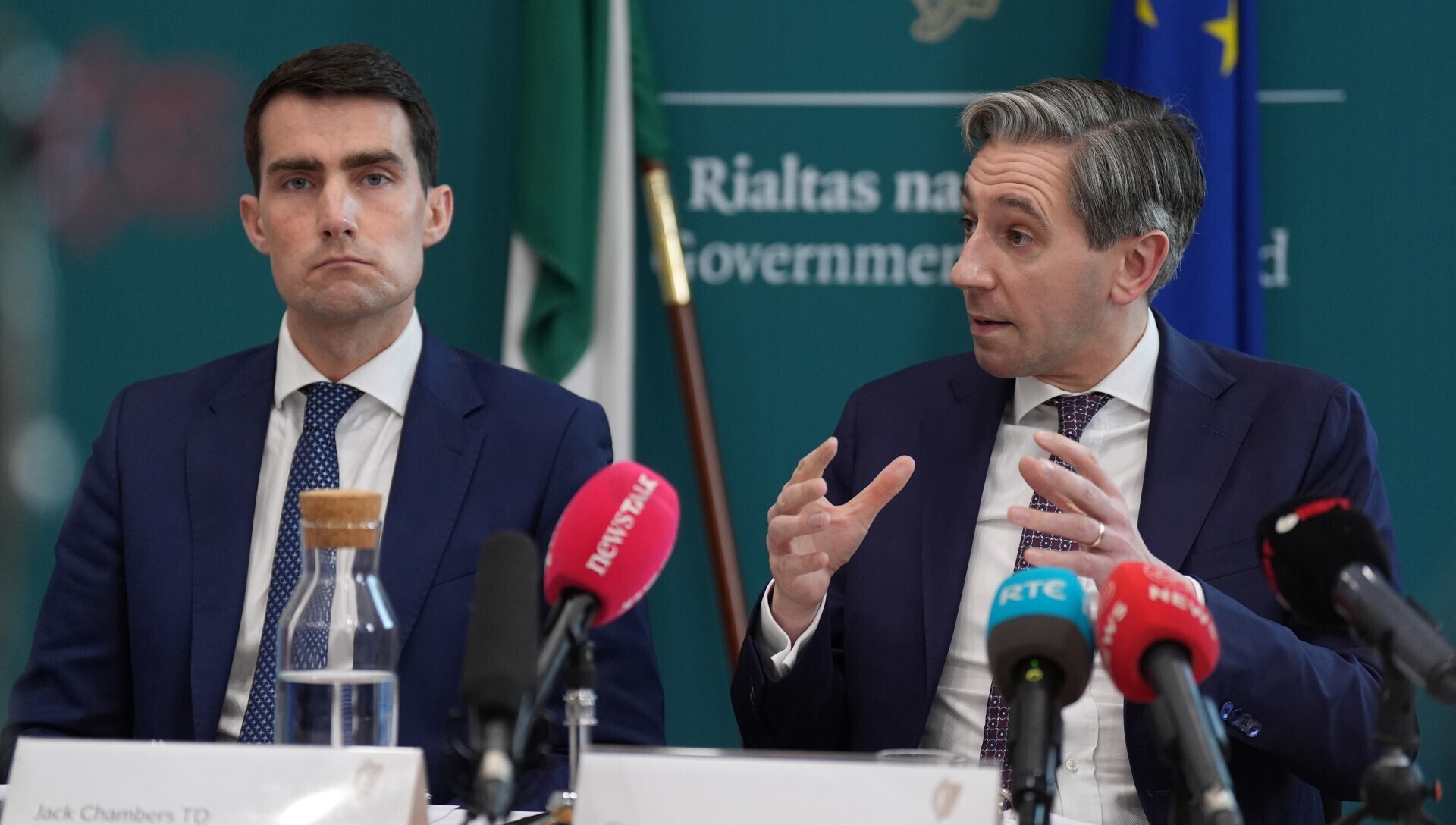
The Irish government has published its Summer Economic Statement, formally initiating the Budget 2027 process with an overall package of €8.5 billion — a reduction from the €9.4 billion allocated for Budget 2026. The budget is confirmed for October 6, 2026, with Tánaiste and Minister for Finance Simon Harris and Minister for Public Expenditure and Reform Jack Chambers emphasising that the package will prioritise rewarding work, improving public services, investing in critical infrastructure, and ensuring long-term economic resilience.
Background
The Summer Economic Statement is the annual document through which the Irish government sets the broad parameters for the following October's budget, providing businesses, households, and public services with an early indication of the fiscal space available and the government's spending priorities. It is not a budget in itself — the detailed measures will be announced on October 6 — but it establishes the ceiling within which those measures must fit.
Budget 2027 is being formulated against a backdrop of genuine economic uncertainty. Ireland's economy has performed strongly in recent years, driven by a buoyant multinational sector and robust domestic demand, but the government is acutely aware of the risks associated with over-reliance on corporation tax receipts from a small number of large companies. The Central Bank has cautioned that the current trajectory of state spending risks depleting fiscal buffers, and the government has signalled a more cautious approach than in recent years.
The €8.5 billion package is smaller than last year's €9.4 billion, reflecting both the government's desire to demonstrate fiscal discipline and the recognition that the extraordinary post-pandemic spending surge cannot be sustained indefinitely. The reduction is modest, but it signals a shift in tone from the expansionary budgets of 2024 and 2025.
Key Developments
The €7 billion in additional spending is earmarked for public services and infrastructure, with housing, roads, public transport, water services, and energy infrastructure identified as priority areas. Capital spending is projected to rise from €19.1 billion in 2026 to €20.3 billion in 2027, an increase of approximately €1.2 billion that reflects the government's commitment to addressing the infrastructure deficits that have accumulated over years of underinvestment.
The €1.5 billion taxation package is primarily aimed at supporting workers and countering fiscal drag — the phenomenon by which rising wages push individuals into higher tax bands without any deliberate policy decision. Harris has signalled that widening income tax bands will be a priority, with consideration being given to increasing the threshold at which the higher 40% rate begins, currently set at €44,000 for a single person. Simply adjusting tax bands for inflation would cost between €1.2 billion and €1.3 billion, leaving limited room for additional tax measures within the €1.5 billion envelope.
Harris described the budget as one that would focus on rewarding work, a formulation that echoes the language of previous Fine Gael budgets but carries particular resonance in a political environment where Sinn Féin's polling strength has been driven partly by perceptions that the current tax system is unfair to middle-income earners.
Why It Matters
The Summer Economic Statement matters because it sets the political as well as the fiscal context for the October budget. The decision to reduce the overall package from €9.4 billion to €8.5 billion is a signal that the government is taking the Central Bank's warnings about fiscal sustainability seriously — but it also creates political risk, since expectations among public sector workers, housing advocates, and social welfare recipients have been shaped by the more expansionary budgets of recent years.
The emphasis on rewarding work through tax cuts, rather than on expanding public services, reflects a political calculation about where the government's electoral vulnerabilities lie. With Sinn Féin leading in the polls at 19.9% and Fine Gael at 17.6%, the government is acutely aware that it needs to demonstrate tangible benefits for working households if it is to recover ground before the next general election, which must be held by January 2030. The Summer Economic Statement is as much a political document as an economic one.
Local Impact
For households across the Republic, the key question is what the October 6 budget will mean in practice. The income tax changes, if implemented as signalled, would benefit workers earning above €44,000 — a group that includes many public sector workers, teachers, nurses, and Garda members. The capital spending commitments will have a more diffuse impact, with housing, transport, and energy projects spread across all regions. Irish Rail's planned expansion of services on the Cork, Galway, and Limerick lines is among the infrastructure projects expected to benefit from the increased capital allocation. Bus Éireann's rural transport programme is also expected to receive additional funding.
What's Next
Budget 2027 will be announced on October 6, 2026. The Dáil will return from its summer recess in September, and the pre-budget period will be dominated by lobbying from public sector unions, housing advocates, business groups, and social welfare organisations. The government's economic forecasts, which underpin the Summer Economic Statement, will be updated in the October budget documentation. The next major economic indicator — the August exchequer returns — will be published in early September and will provide an early read on whether tax receipts are tracking in line with government projections.