Bryant Defends Burnham After Border Poll Row as NI Secretary Insists PM 'Fully Committed' to Good Friday Agreement
Northern Ireland Secretary Sir Chris Bryant has mounted a robust defence of Prime Minister Andy Burnham following the political storm generated by Burnham's declaration that a border poll on Irish unity is 'off the table', insisting that the Prime Minister is 'fully committed' to the entirety of the Good Friday Agreement and that his remarks were intended to reflect the current political situation rather than to undermine the Agreement's constitutional provisions — a distinction that Sinn Féin and other nationalist politicians have flatly rejected.
Background
The border poll controversy has its immediate origins in Andy Burnham's first visit to Belfast as Prime Minister, during which he made the declaration that a referendum on Irish unity is 'off the table'. The remark was widely interpreted as an attempt to reassure unionist opinion and to signal that the new Labour government would not be drawn into the constitutional debate that has dominated Northern Ireland politics for years. The intention may have been to project stability and to avoid the kind of inflammatory language that has sometimes characterised British government engagement with the Irish question.
The effect, however, was the opposite of what was intended. By using the phrase 'off the table', Burnham appeared to be claiming a power that the Good Friday Agreement does not give him — the power to unilaterally remove a constitutional provision from the political agenda. The Agreement is explicit that the Secretary of State for Northern Ireland must call a border poll if it appears likely that a majority of people in Northern Ireland would vote for a united Ireland. This is not a discretionary power — it is a legal obligation under the terms of an international agreement.
The political fallout was immediate and significant. Sinn Féin leader Mary Lou McDonald accused Burnham of attempting to 'high-handedly' override the Agreement, while the SDLP and Alliance Party also expressed concern about the implications of the Prime Minister's language. In the Republic, the Taoiseach's office issued a carefully worded statement reaffirming the Irish government's commitment to the Agreement's provisions, and former British Prime Minister Gordon Brown added to the pressure by declaring that Irish unity is 'inevitable in the long term'.
Key Developments
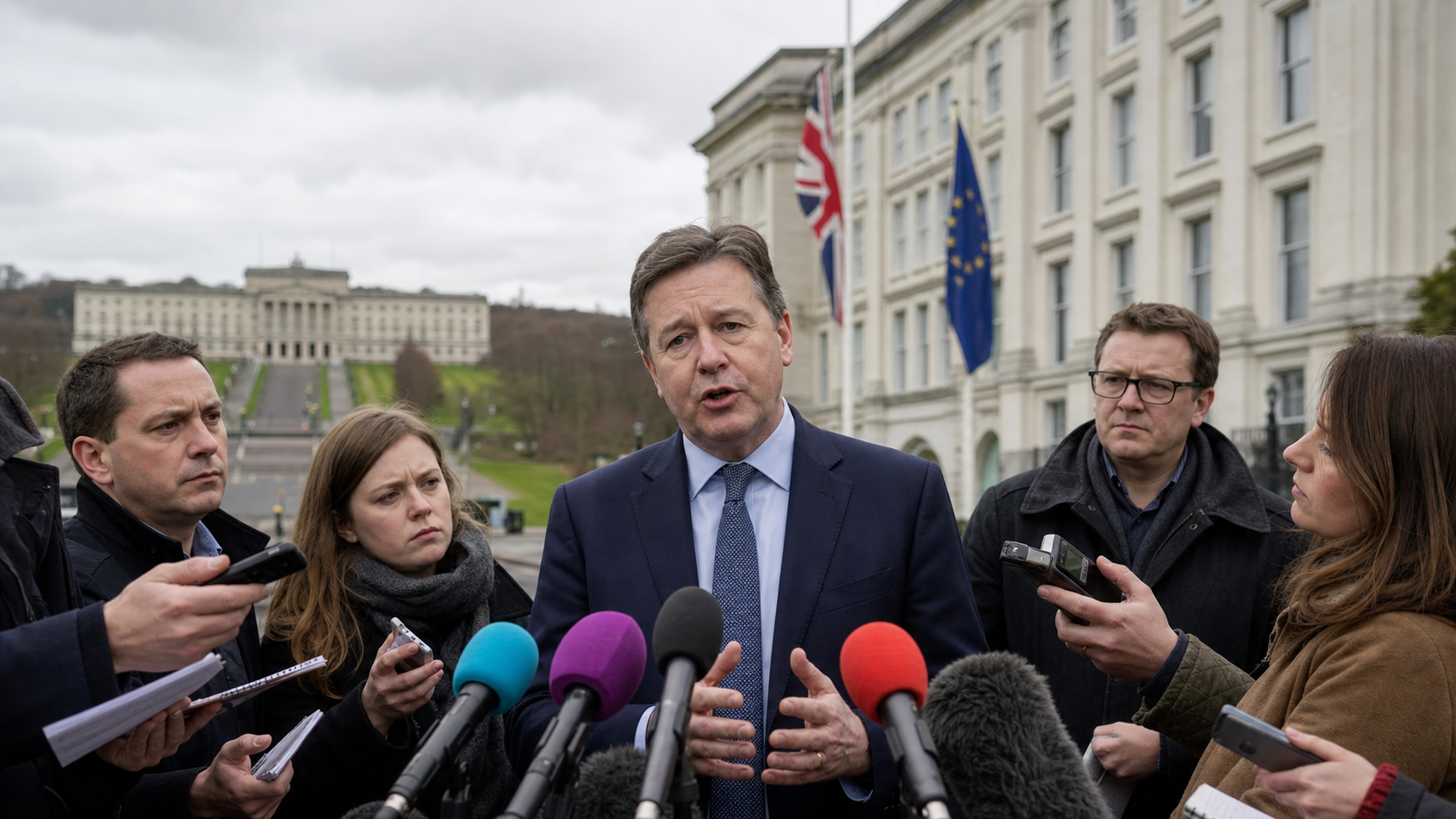
Bryant's defence of Burnham has been conducted on two fronts. In public statements, he has insisted that the Prime Minister's remarks were not a legal or constitutional claim but a political statement about the current situation — that the conditions for a border poll do not currently exist and that the government's focus is on making Northern Ireland work within the existing constitutional framework. In private, Bryant has been engaged in intensive diplomatic activity, speaking with political leaders across the spectrum in Northern Ireland and with his counterparts in Dublin.
Bryant confirmed that he had received a letter from the Parades Commission outlining its plans to restore public confidence — a separate but related issue that has added to the political pressure on the government's Northern Ireland policy. The Secretary of State is also dealing with the fallout from the Drumcree High Court ruling, which has called the Commission's future into question and created additional tensions with unionist leaders.
The Northern Ireland Office has been at pains to emphasise that the government's commitment to the Good Friday Agreement is absolute and that the border poll provision remains in place. Bryant has stated repeatedly that both he and the Prime Minister stand 'full square behind' the Agreement in its entirety, a formulation that is intended to reassure nationalist politicians without conceding that Burnham's original remarks were wrong.
Why It Matters
The border poll row matters because it goes to the heart of the constitutional framework that has underpinned peace in Northern Ireland for nearly three decades. The Good Friday Agreement is not merely a political document — it is an international treaty between the British and Irish governments, registered with the United Nations, that creates legally binding obligations on both states. Any suggestion that a British Prime Minister can unilaterally alter the terms of that treaty is constitutionally problematic and politically dangerous.
The row also matters because it has exposed a tension within the Labour government between its desire to project stability on Northern Ireland and its apparent uncertainty about how to handle the constitutional question. The Burnham government inherited a complex political situation — a Stormont Executive that is functioning but fragile, a Parades Commission in crisis, and a border poll debate that shows no sign of going away — and its handling of the first major test of its Northern Ireland policy has been less than assured.
For the unionist community, the row has provided a reminder that the constitutional question is never far from the surface of Northern Ireland politics, regardless of the preferences of any particular British government. For nationalists, it has reinforced the importance of holding the British government to its commitments under the Agreement.
Local Impact
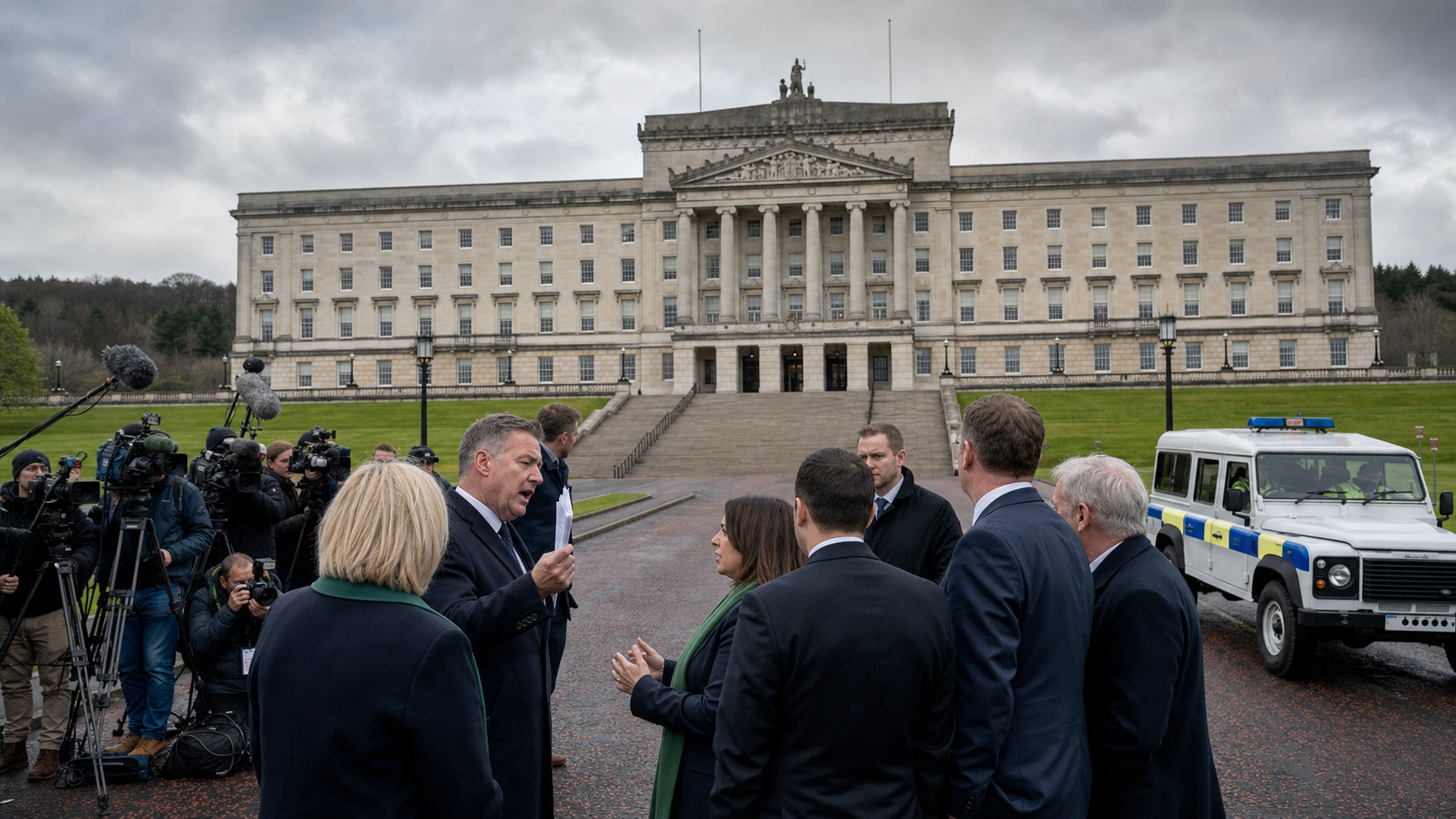
In Belfast, the political row has dominated the weekend's news cycle, with politicians from all parties making statements and counter-statements about the implications of Burnham's remarks. The Stormont Executive, which is due to return from summer recess in September, will face immediate pressure to address the constitutional question when it reconvenes. The First Minister and Deputy First Minister are expected to issue a joint statement on the matter in the coming days.
In Dublin, the Department of Foreign Affairs has been monitoring the situation closely, and the Taoiseach is expected to raise the matter with Bryant when the two meet in September. The Irish government's position — that the border poll provision of the Agreement must be respected — is unambiguous, and Dublin will be watching carefully to see whether the British government's clarifications are sufficient to restore confidence in its commitment to the Agreement.
What's Next
The political row is expected to continue into the autumn, with the Dáil and Stormont Assembly both due to return from recess in September. Sinn Féin has indicated that it will raise the matter at Westminster, and the Northern Ireland Affairs Committee is expected to examine the government's position on the border poll provision. Bryant is due to meet with the Stormont Executive parties in September, and the border poll question is certain to be on the agenda. The government's handling of the issue in the coming weeks will be a significant test of its Northern Ireland policy credentials.