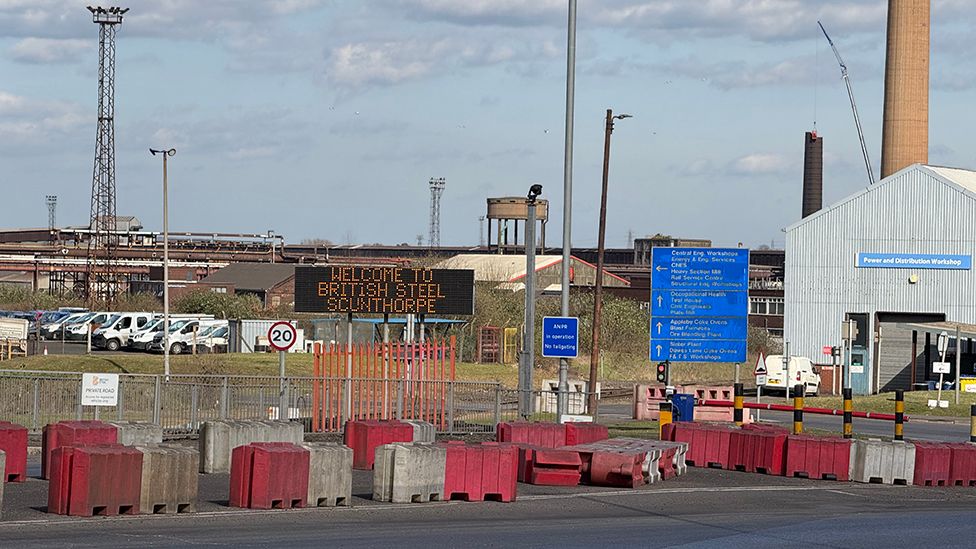
British Steel on Verge of Full Nationalisation as Government Deadline Looms
The UK government is on the verge of fully nationalising British Steel, with full economic control expected to transfer from its Chinese owner, Jingye, within weeks, as negotiations over the future of the country's last remaining blast furnaces reach a critical juncture — and the British taxpayer continues to foot a bill running at approximately £1.3 million per day.
The move would complete a process that began in April 2025, when the government used emergency legislation — the Steel Industry (Special Measures) Act 2025 — to take over the daily running of the loss-making steelmaker and prevent the closure of its Scunthorpe plant. Since then, the government has provided approximately £377 million in working capital, classified as a loan, to keep the furnaces burning. By June 2026, this spending is projected to reach £615 million, with the National Audit Office warning that costs could exceed £1.5 billion by 2028 if current rates continue.
Background
Jingye, the Chinese company that acquired British Steel out of insolvency in early 2020, has retained economic ownership even as the UK government has managed day-to-day operations. The government reportedly offered £100 million to Jingye for the business, but this was rejected; Jingye had originally demanded over £1 billion — a valuation ministers believe is grossly inflated. The impasse has made full nationalisation all but inevitable.
The Scunthorpe plant is the site of the UK's last two operational blast furnaces, making it the only facility capable of producing virgin steel from raw iron ore in Britain. Its closure would end primary steelmaking in the UK — a capability deemed vital for national security and industrial sovereignty. Network Rail sources around 95% of its steel track from the Scunthorpe plant, illustrating the profound disruption that any closure would cause to critical national infrastructure.
The plant directly employs 3,500 workers and supports tens of thousands more jobs within its supply chain. The UK steel industry as a whole employs over 33,700 people and contributes billions of pounds to the country's Gross Value Added. Losing primary steelmaking capacity would leave the UK as the only G20 nation without this capability — a strategic vulnerability that ministers have been determined to avoid.
Key Developments
Ministers have recently designated the steel industry as vital to national security, which provides a legal basis for full nationalisation. The government has also announced plans to double tariffs on imported steel and cut import quotas, particularly targeting cheap Chinese imports, to protect the domestic industry. UK Steel, the trade body, strongly supports nationalisation, emphasising the importance of maintaining domestic steel production for economic growth, national security, and resilience. The government aims to increase the proportion of steel used in the UK that is domestically produced from 30% to 50%.
At the heart of the long-term vision for British Steel is a transition to green steel production. British Steel has a £1.25 billion plan to install Electric Arc Furnaces (EAFs) at the Scunthorpe site, supported by the government's Green Steel Strategy. EAFs are significantly less carbon-intensive than traditional blast furnaces, but the technology is also less labour-intensive — meaning substantial job losses are an almost inevitable consequence of the transition, creating significant anxiety among the workforce and the wider Scunthorpe community.
Why It Matters
The fate of British Steel is not merely a question of industrial policy — it is a question of national identity, economic security, and the future of communities that have depended on steelmaking for generations. For Scunthorpe, the plant has been the lifeblood of the town for decades, and the prospect of its decline casts a long shadow. The government's intervention in 2025 prevented the immediate loss of 2,700 jobs, but the long-term threat of redundancies due to the EAF transition means the town's future remains precarious. Any new owner or nationalised entity will have a moral and economic obligation to manage this transition carefully, providing support for displaced workers and investing in new opportunities to ensure that Scunthorpe is not left behind.
Local Impact
For workers and communities across the UK's steel heartlands, the outcome of these negotiations will be defining. The Scunthorpe plant's supply chain stretches across the country, touching manufacturers, logistics firms, and service providers in every region. A managed nationalisation that secures the plant's future — even in a transformed, lower-carbon form — is widely seen as preferable to the alternative. Trade unions have called for a just transition, demanding that any job losses be offset by investment in retraining and new industrial opportunities for affected workers and their families.
What's Next
The government is expected to set a formal deadline for Jingye to reach a deal in the coming days. Several potential private buyers have expressed early interest in acquiring the business once nationalisation is complete. The success of the EAF transition will depend on securing affordable electricity and a reliable supply of high-quality scrap steel — two challenges the government has pledged to address as part of its broader industrial strategy.
Full details at The Guardian. Further background is available from the House of Commons Library.