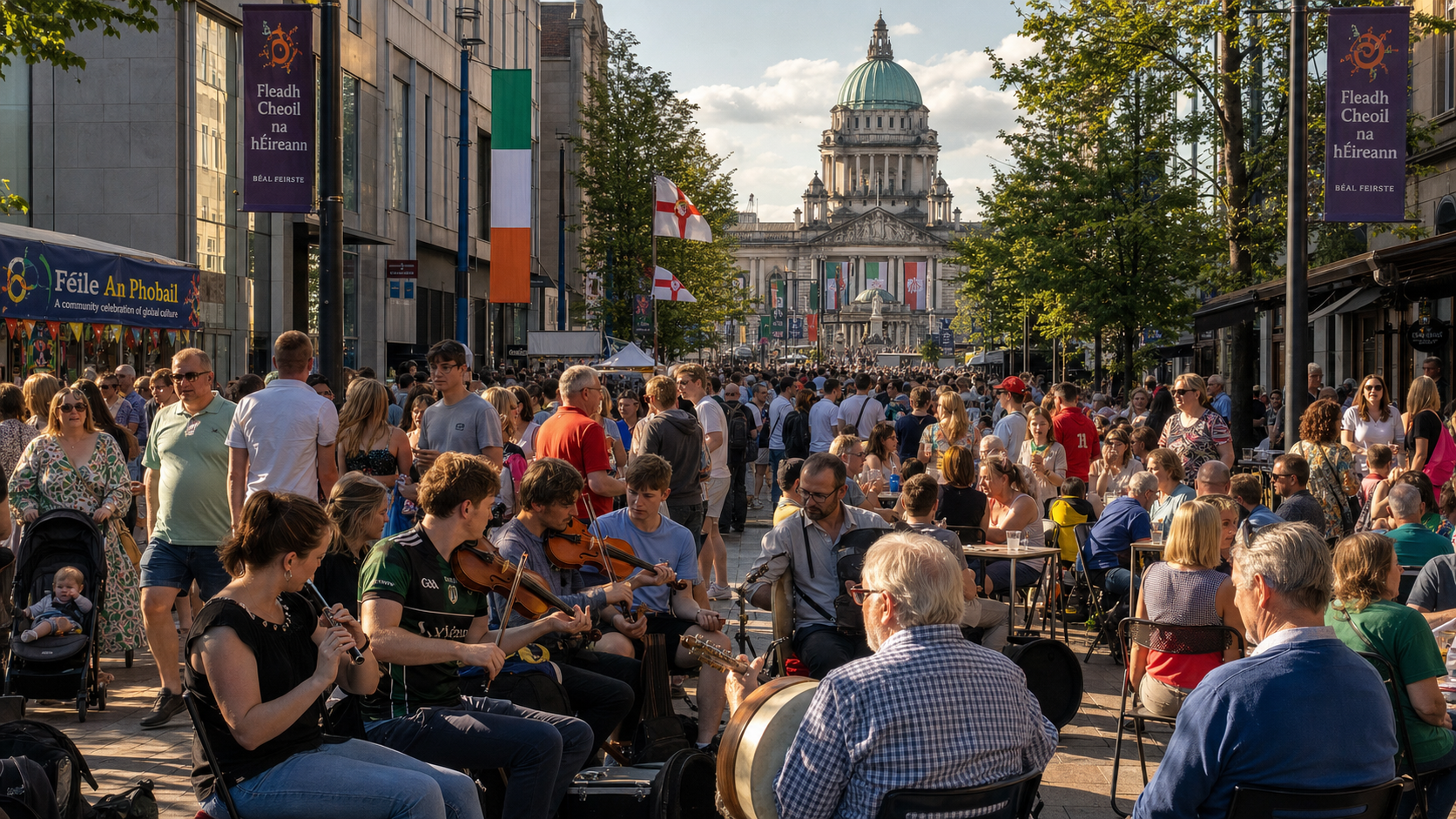
Belfast's First Fleadh Cheoil Draws 1.65 Million Visitors and £53 Million Economic Boost as City Transformed
Belfast's historic first hosting of Fleadh Cheoil na hÉireann has been declared a transformational success, with final figures confirming that 1.65 million visitors attended the festival between 2 and 9 August — more than double the initial estimate of 800,000 — generating an estimated £53 million for the local economy and prompting immediate confirmation that the Fleadh will return to the city in 2027.
Background
The decision to bring Fleadh Cheoil na hÉireann to Belfast for the first time in the festival's 75-year history was itself a statement of intent. The Fleadh, organised annually by Comhaltas Ceoltóirí Éireann, is the world's largest traditional Irish music festival, drawing competitors and visitors from across Ireland, Britain, North America, and the wider Irish diaspora. Previous host cities have included Derry in 2013 — the only other Northern Ireland hosting — and a succession of towns and cities across the Republic, from Ennis to Drogheda to Mullingar.
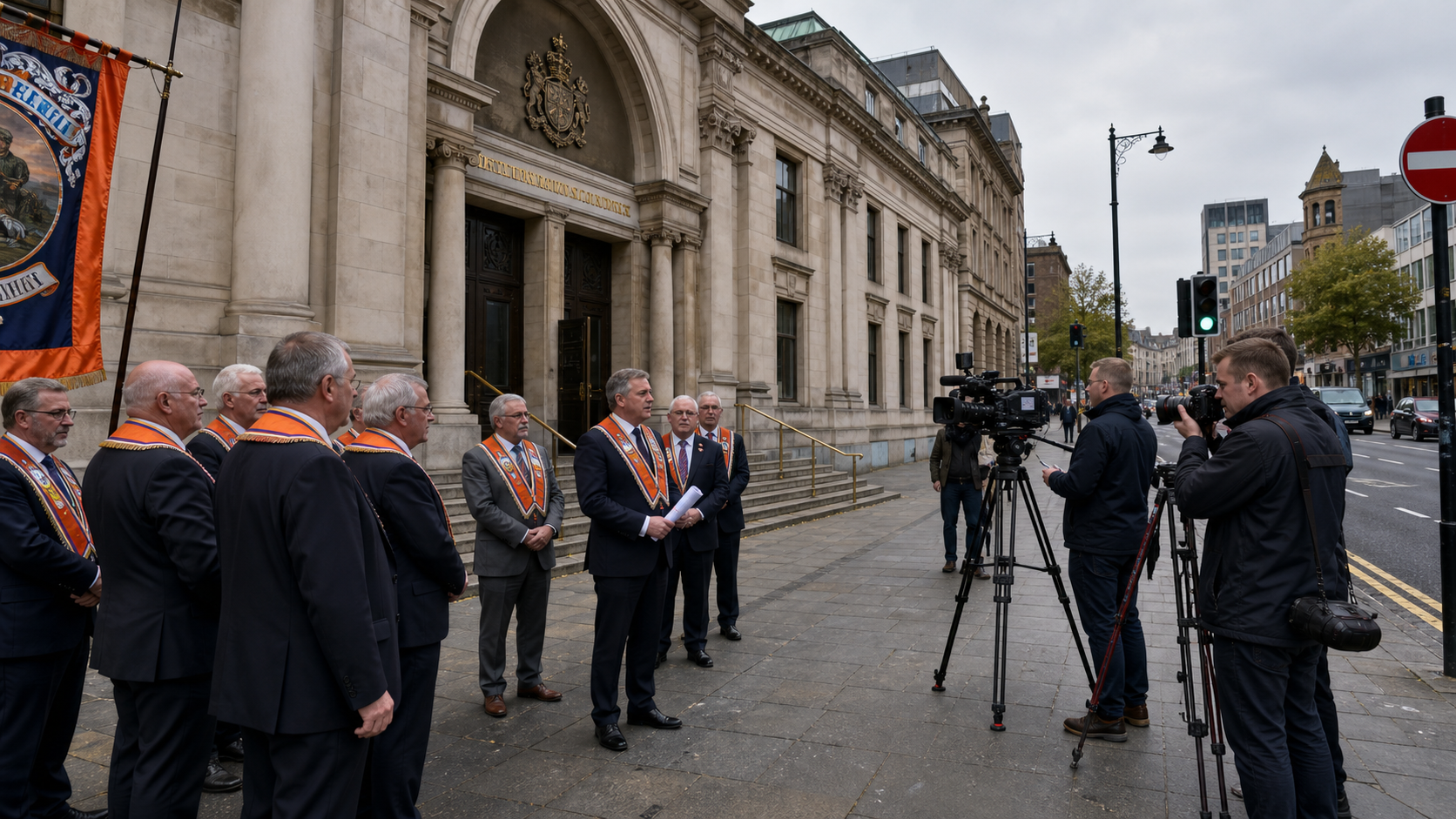
Belfast's bid was driven by a coalition of Belfast City Council, Tourism NI, Fáilte Ireland, and the Department for Communities, with Economy Minister Caoimhe Archibald playing a central role in securing the political and financial backing necessary to bring the event north. The city's designation as a UNESCO City of Music provided an important credential, and the organisers were at pains to emphasise that the 2026 Fleadh would be a genuinely cross-community event, featuring collaborations between Irish traditional ensembles, Ulster-Scots groups, and international artists.
The festival's programme encompassed more than 200 events and 180 competitions, ranging from the formal All-Ireland competitions in singing, dancing, and instrumental performance to informal sessions in pubs, community centres, and public spaces across the city. The Cathedral Quarter, the Gaeltacht Quarter, and the city centre all hosted major events, and the Titanic Quarter was the site of a series of large outdoor concerts that drew tens of thousands of people each evening.
Key Developments
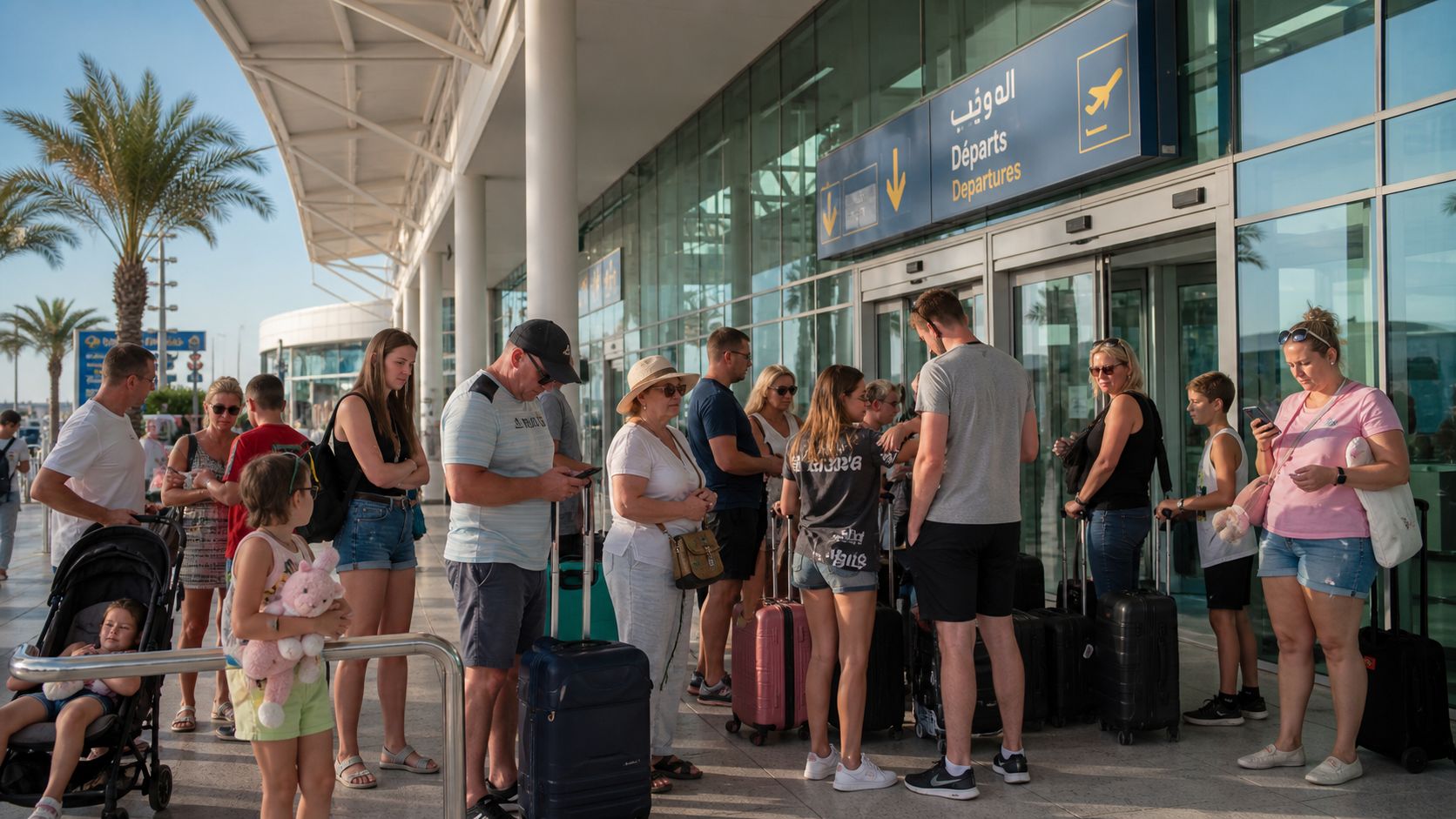
The scale of the public response exceeded even the most optimistic projections. Belfast One BID cameras recorded a 95 per cent increase in city centre footfall on the opening Sunday compared to the same date in 2025. Hotels across the city were fully booked for the entire week, with some accommodation providers reporting that rooms had been reserved as far as eighteen months in advance. Restaurants, bars, and cafés reported record trading figures, and the city's public transport network — including Translink's Metro and Glider services — carried significantly higher passenger numbers than on a typical August week.
Economy Minister Archibald confirmed the £53 million economic impact figure at a post-festival briefing at Stormont, describing the event as "a once-in-a-generation opportunity that Belfast seized with both hands." She added that the decision to confirm a 2027 return had been taken within days of the festival's conclusion, reflecting the strength of the partnership between Comhaltas, the city council, and the tourism agencies.
Participants and observers were equally effusive. "I've been to Fleadhs all over Ireland," said one Comhaltas official, "but there was something different about Belfast. The city felt genuinely transformed. You could hear music on every corner, in every pub, in the parks. It was extraordinary."
Why It Matters
The 2026 Fleadh is significant not just as an economic event but as a cultural and political one. Belfast has spent the past three decades rebuilding its reputation as a place of welcome, creativity, and cross-community engagement, and the Fleadh provided the most visible demonstration yet of how far that journey has progressed. The festival's emphasis on inclusivity — its programming explicitly sought to represent the full diversity of Belfast's communities, including its growing migrant population — was widely praised as a model for how major cultural events can serve as instruments of social cohesion.
For the Irish traditional music community, the Belfast Fleadh also carried symbolic weight. The six counties of Northern Ireland have a rich and deep tradition of traditional music, from the fiddle traditions of Fermanagh and Tyrone to the uilleann piping heritage of Antrim, and hosting the Fleadh in Belfast gave that tradition a visibility and a platform it has not always enjoyed. Unlike the Republic's approach, where traditional music has long been embedded in the national cultural infrastructure, Northern Ireland's traditional music scene has sometimes had to fight harder for recognition and resources.
Local Impact
The impact was felt across Belfast's neighbourhoods. The Gaeltacht Quarter around Falls Road saw a significant influx of visitors, many of them Irish language learners and enthusiasts who combined the Fleadh with visits to the area's Irish language schools and cultural centres. The Cathedral Quarter's bars and music venues reported their busiest week in living memory. In east Belfast, community organisations that had been involved in the cross-community programming reported a surge in interest from residents who had not previously engaged with traditional music.
What's Next
Planning for the 2027 Fleadh is already under way, with Belfast City Council and Comhaltas Ceoltóirí Éireann having agreed a framework for the return event. Some Belfast hotels are already selling rooms for next August at more than double their normal rates, reflecting the extraordinary demand generated by this year's festival. Tourism NI has indicated that the 2027 event will build on the 2026 infrastructure improvements, including enhanced wayfinding, expanded park-and-ride services, and a dedicated Fleadh app that proved popular with visitors this year.