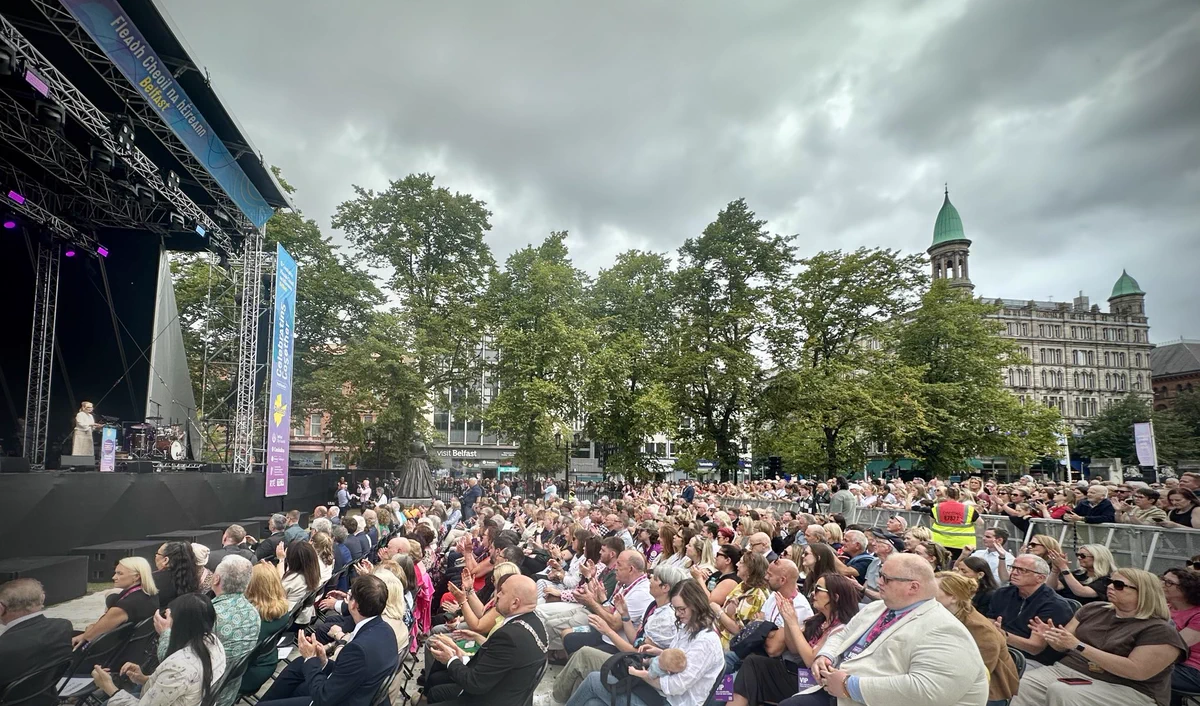
Belfast Sunday Trading Pilot Draws Mixed Reaction as Fleadh Crowds Test City Centre Retail Capacity
Belfast City Council's decision to allow larger retailers to open from 11am on the two Sundays of Fleadh Cheoil na hÉireann has generated a sharp debate about the future of Sunday trading in Northern Ireland, with business groups and hospitality operators welcoming the extended hours as a long-overdue modernisation while trade unions warn of the impact on workers' family time and the risk of normalising what they describe as a commercially driven erosion of Sunday protections.
Background
Sunday trading in Northern Ireland is governed by the Shops (Sunday Trading &c.) (Northern Ireland) Order 1997, legislation that predates the Good Friday Agreement and reflects a social and commercial landscape that has changed almost beyond recognition in the intervening three decades. Under the existing rules, large retail stores — those exceeding 280 square metres — are restricted to operating between 1pm and 6pm on Sundays, a constraint that smaller shops do not face. The legislation has long been a source of frustration for retailers, hospitality operators, and tourism bodies who argue that it places Belfast at a competitive disadvantage relative to cities in the Republic of Ireland and Great Britain, where Sunday trading restrictions are either absent or significantly more permissive.
Belfast City Council has been exploring options for reform for several years, and the Fleadh Cheoil na hÉireann — which brings hundreds of thousands of visitors to the city over eight days — provided an opportunity to test a limited pilot scheme under existing legislative provisions. Article 6 of the 1997 Order allows councils to designate areas as "holiday resorts," permitting larger retailers to open earlier on Sundays. The council utilised this provision to allow large retailers to open at 11am on August 2 and August 9, the two Sundays of the festival.
An eight-week public consultation conducted earlier in 2026 found that 82% of the general public favoured extending Sunday trading hours, though retail workers were more evenly divided, with 48% in favour and 47% opposed — a split that reflects the genuine tension between consumer convenience and workers' rights that lies at the heart of the debate.
Key Developments
The pilot scheme on Sunday, August 2, coincided with the opening weekend of the Fleadh and the bank holiday, producing a significant surge in footfall in the city centre from mid-morning. Retailers who opted into the scheme reported strong trading from 11am, with the additional two hours of opening generating meaningful additional revenue. The Belfast Chamber and the Hotel Federation, both of which had lobbied for the pilot, described the early results as encouraging and called for the council to consider a permanent city-wide holiday resort designation.
The Union of Shop, Distributive and Allied Workers (USDAW) maintained its opposition to the scheme, arguing that the pilot primarily benefits large multinational retailers at the expense of workers who value Sunday as protected family time. The union has called for any future reform of Sunday trading legislation to be accompanied by robust protections for workers, including the right to refuse Sunday work without penalty and enhanced pay rates for those who do work on Sundays.
Translink faced considerable pressure managing passenger numbers on the opening Sunday, with some services operating at capacity and reports of passengers being turned away at busy stops. The transport operator has urged visitors to plan journeys in advance and to use the dedicated Fleadh shuttle services where possible.
Why It Matters
The Sunday trading debate in Belfast is a microcosm of a broader tension between economic modernisation and the protection of social norms that have historically defined the rhythm of life in Northern Ireland. The province's Sunday trading restrictions are among the most restrictive in the UK, and the argument that they place Belfast at a disadvantage relative to Dublin — where Sunday trading is largely unrestricted — has gained traction in recent years as cross-border retail competition has intensified. However, the counter-argument — that Sunday should remain a day with a different character from the rest of the week, and that workers should not be pressured into giving it up — reflects values that remain deeply held in significant sections of Northern Irish society. The pilot's outcome will inform a wider debate about whether the 1997 legislation requires fundamental reform or whether targeted, event-specific flexibility is sufficient.
Local Impact
In Belfast city centre, the pilot has been broadly welcomed by the hospitality and retail sectors, which have experienced a challenging few years. The additional footfall generated by the Fleadh, combined with the extended trading hours, has provided a significant boost to businesses in the Victoria Square, CastleCourt, and Cathedral Quarter areas. For workers in those businesses, the picture is more complex: some have welcomed the additional hours and the associated earnings, while others have expressed concern about the pressure to work on a day they had previously been able to protect. The council has indicated that it will publish a full assessment of the pilot's economic and social impact before making any decision about permanent changes to Sunday trading arrangements.
What's Next
The second Sunday of the pilot takes place on August 9, the final day of the Fleadh. Belfast City Council will then commission an independent assessment of the pilot's economic impact, drawing on data from retailers, hospitality operators, and transport providers. The results of that assessment are expected to be presented to the council's City Growth and Regeneration Committee in October, at which point a decision will be made about whether to pursue a permanent holiday resort designation or to seek legislative reform through the Northern Ireland Assembly. Any change to the primary legislation would require the support of the Executive and a majority in the Assembly.