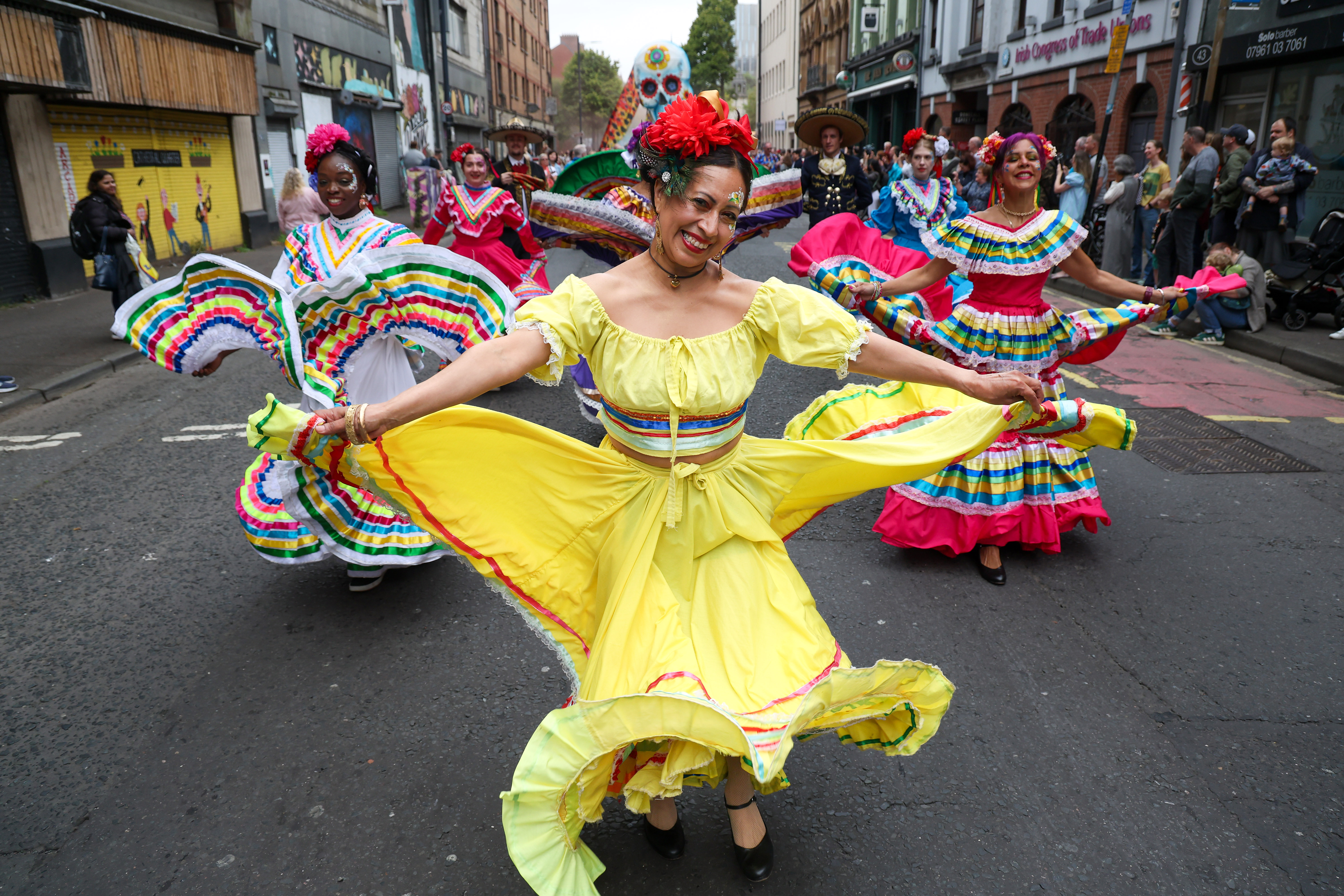
Belfast Mela Marks 20th Anniversary with Spectacular Carnival Parade Through City Centre
The Belfast Mela has launched its landmark 20th anniversary celebrations today with a spectacular carnival parade through Belfast city centre, featuring over 800 performers representing cultures from across the globe, as the island of Ireland's largest multicultural festival opens a nine-day programme that organisers expect will draw 65,000 attendees and generate over £1.5 million for the local economy.
Background
The Belfast Mela was founded in 2006 by Nisha Tandon, CEO of ArtsEkta, as a small community gathering designed to celebrate the growing cultural diversity of Belfast in the years following the Good Friday Agreement. What began as a modest event in a city still finding its post-conflict identity has grown, over two decades, into one of the most significant multicultural festivals in these islands — a transformation that mirrors Belfast's own remarkable journey from a city defined by division to one that increasingly presents itself to the world as a confident, outward-looking European capital.
The festival's growth has tracked the changing demographics of Northern Ireland. The 2021 census revealed that Northern Ireland's population had become significantly more diverse, with substantial communities from Eastern Europe, South Asia, Africa, and the Middle East now established across Belfast and beyond. The Mela has served as both a celebration of that diversity and a practical mechanism for building cross-community relationships in a society where sectarian divisions, while diminished, remain a feature of daily life.
Over its twenty years, the festival has received support from the Arts Council of Northern Ireland, Belfast City Council, Tourism NI, and a range of private sponsors. This year's event received £30,000 from Tourism NI's International Tourism Events Fund, reflecting the festival's growing significance as an international draw for visitors to the city.
Key Developments
Today's carnival parade departed from Writers Square at 12:30pm, winding through the city centre before concluding at City Hall. The procession featured more than 800 participants — musicians, dancers, drummers, circus artists, and giant puppets — representing cultural traditions from Africa, India, South America, Eastern Europe, and beyond. The Cathedral Quarter then hosted a global party that continued into the evening, with live music stages, street food, and performance art filling the area's laneways and squares.
Economy Minister Dr. Caoimhe Archibald and First Minister Michelle O'Neill both attended the opening events, with the First Minister describing the Mela as "a catalyst for understanding and a powerful statement of what Belfast has become." ArtsEkta CEO Nisha Tandon said the 20th anniversary represented "not just a celebration of what we have built, but a commitment to what Belfast can be — a city where every culture is welcomed and every voice is heard."
Tomorrow's programme includes "Earth Child," a centrepiece aerial performance at the Titanic Slipways featuring performers suspended 35 metres in the air from cranes, incorporating storytelling, live music, and pyrotechnics. The festival concludes on 30 August with Mela Day at the Botanic Gardens, featuring five stages of live performance and a Global Village of international cuisine and artisan crafts.
Why It Matters
The Belfast Mela's 20th anniversary is a significant cultural milestone for Northern Ireland. The festival has survived and thrived through periods of political instability, economic uncertainty, and the social disruptions of the pandemic — a testament to the depth of community support it has built over two decades. Its economic impact is substantial: £1.5 million generated over nine days, with 15% of attendees travelling from outside Northern Ireland, represents a meaningful contribution to Belfast's tourism economy at a time when the city is competing aggressively for international visitors.
More broadly, the Mela represents a model of cultural integration that has relevance beyond Belfast. In a period when Northern Ireland has experienced racially motivated attacks — including a series of incidents in the summer of 2026 — the festival's message of welcome and inclusion carries particular weight. The contrast between the violence of those incidents and the joyful diversity on display in the city centre today is stark, and deliberately so.
Local Impact
For Belfast's Cathedral Quarter, the Mela brings a significant economic boost, with restaurants, bars, and hotels in the area reporting strong bookings throughout the festival period. The Titanic Quarter, which hosts the Earth Child performance tomorrow, will also benefit from increased footfall. For the city's diverse communities — including the substantial South Asian, African, and Eastern European populations concentrated in areas such as the lower Ormeau Road, the Markets, and parts of North Belfast — the festival provides a rare opportunity for mainstream visibility and celebration. Community organisations working with minority ethnic groups in Belfast have praised the Mela as one of the few events in the city's calendar that genuinely centres their experiences and contributions.
What's Next
The Belfast Mela runs until 30 August, with a full programme of events including the Earth Child aerial performance at the Titanic Slipways on 23 August, the "Marking Time: ArtsEkta at 20" exhibition at Ulster University, the Mela Laughs comedy event, and the Silk Road Supper Club at Banana Block. The festival concludes with Mela Day at the Botanic Gardens on 30 August. Tickets for individual events are available through the ArtsEkta website, with many events free to attend.