Average Northern Ireland House Price Breaks £200,000 Barrier for First Time Since Pre-Crash Peak
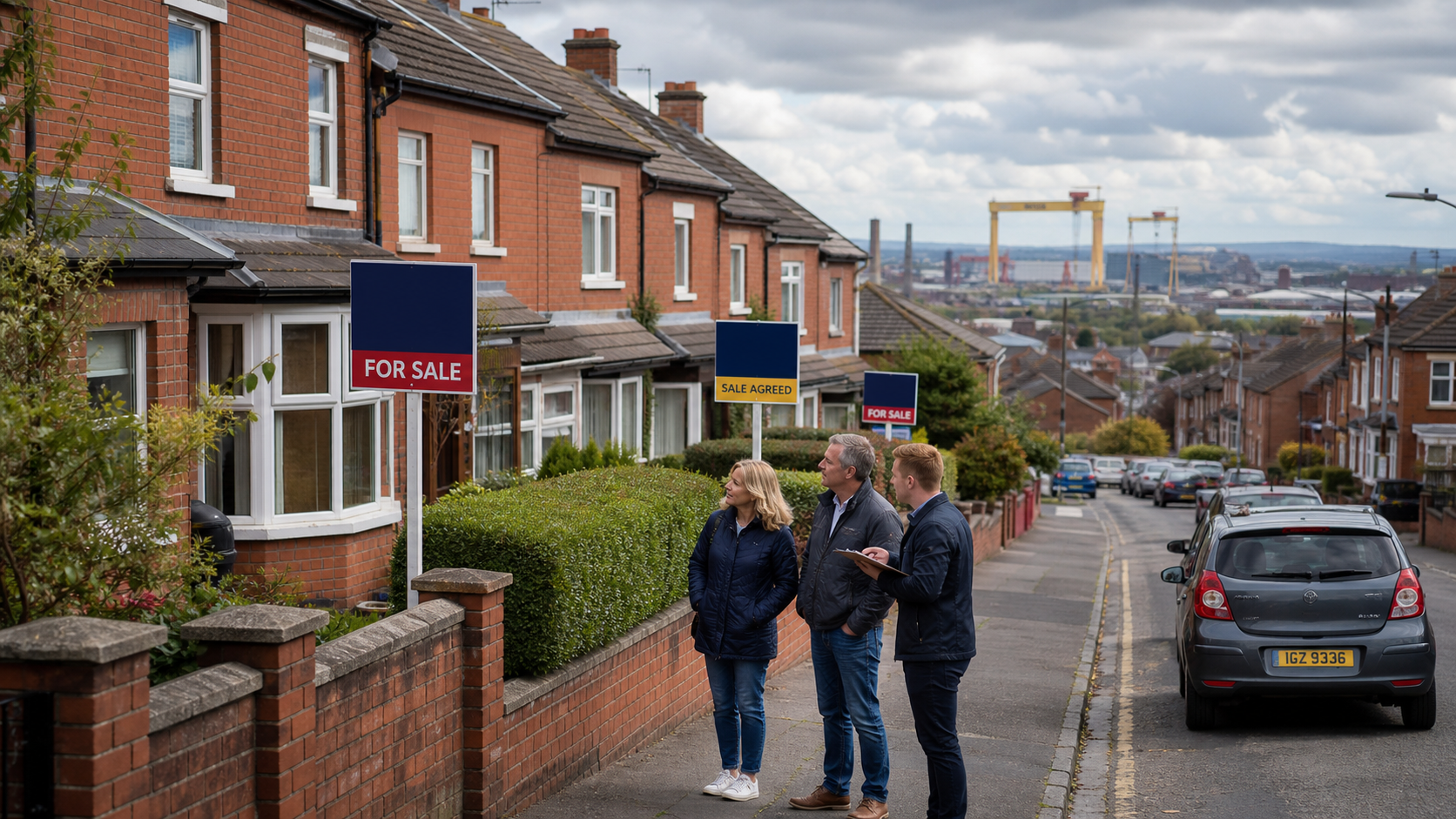
The average house price in Northern Ireland has risen above £200,000 for the first time since the property market crash of the late 2000s, according to official figures from the Northern Ireland Statistics and Research Agency, with the second quarter of 2026 recording an average price of £202,500 — a 9.2 per cent increase on the same period last year and a milestone that will be felt acutely by first-time buyers across the six counties.
Background
Northern Ireland's property market has had a turbulent history over the past two decades. The boom years of the mid-2000s saw prices rise to levels that, in retrospect, were clearly unsustainable — driven by easy credit, speculative investment, and a construction industry that was building at a pace the underlying economy could not support. When the crash came in 2007 and 2008, Northern Ireland was among the worst-affected regions in the United Kingdom, with prices falling by more than 50 per cent from their peak in some areas. The recovery was slow and uneven, and it was not until the mid-2010s that the market began to show consistent signs of stabilisation.
The current milestone — an average price of £202,500 — is almost identical to the levels recorded in the final quarter of 2007, just before the bubble burst. But analysts are quick to note that the comparison is misleading in important respects. When adjusted for inflation, housing in Northern Ireland today is substantially more affordable in real terms than it was at the 2007 peak. The economic conditions underpinning the current market are also fundamentally different: the growth is driven by genuine demand from owner-occupiers rather than speculative investment, and the lending environment is considerably more regulated than it was in the pre-crash era.
Nevertheless, the crossing of the £200,000 threshold is a significant psychological and practical milestone. For first-time buyers — particularly those without access to the Bank of Mum and Dad — it represents a further tightening of affordability in a market that was already challenging.
Key Developments
The NISRA figures for the second quarter of 2026 show a 2.1 per cent increase from the first quarter and a 9.2 per cent increase year-on-year. The data reveals significant variation across local council areas. Lisburn and Castlereagh is currently the most expensive area, with average prices exceeding £240,000 — reflecting the strong demand for family homes in the commuter belt south of Belfast. Mid and East Antrim remains the most affordable council area, with an average price of just under £178,000.
By property type, detached houses have seen their average price reach £312,000, having surpassed the £300,000 mark in mid-2025. Semi-detached homes averaged £204,000 in the second quarter, while apartments experienced the most significant quarterly growth, rising nearly 6 per cent to reach £148,000 — a figure that reflects strong demand from young professionals in Belfast city centre and the surrounding areas.
Analysts attribute the sustained growth to two primary factors: a relatively strong jobs market, particularly in the technology, financial services, and public sectors; and a chronic undersupply of new housing. New housing completions are currently well below pre-pandemic levels, hindered by infrastructure bottlenecks — specifically, constraints on wastewater network capacity that have prevented planning permission from being granted for large-scale residential developments in many areas.
Why It Matters
The £200,000 milestone matters for several reasons beyond its symbolic significance. For first-time buyers, it means that the deposit required to purchase an average home — typically 10 per cent under standard mortgage products — has now risen to £20,000, a sum that is beyond the reach of many young people without family support. The monthly mortgage repayment on a £202,500 property, at current interest rates, is approximately £1,100 — a figure that represents a significant proportion of the take-home pay of a median earner in Northern Ireland.
The contrast with the Republic of Ireland is instructive. Average house prices in the Republic have been above €300,000 for several years, and the affordability crisis there is considerably more acute. But Northern Ireland's housing market has historically been one of the more affordable in the United Kingdom, and the erosion of that relative affordability is a genuine concern for policymakers and housing advocates.
The wastewater infrastructure constraint is particularly significant. Northern Ireland Water has identified dozens of areas across the province where the existing sewerage network cannot accommodate additional housing development, effectively creating a planning blockage that no amount of political will can easily overcome. Resolving that constraint will require substantial capital investment — investment that the Stormont Executive has struggled to fund given the pressures on the block grant.
Local Impact
In Belfast, the price increase is felt most acutely in the south and east of the city, where demand from young professionals and families has driven prices well above the provincial average. In areas like Stranmillis, Malone, and Ballyhackamore, average prices for semi-detached homes now exceed £300,000. In north and west Belfast, prices remain lower, but the gap is narrowing as buyers priced out of more expensive areas look further afield.
In Derry/Londonderry, the market has been more subdued, with average prices still below the provincial average. But even there, the pace of increase has accelerated in recent quarters, driven by demand from buyers relocating from more expensive areas and from the growing student and graduate population associated with Ulster University's Magee campus.
What's Next
The NISRA will publish its next quarterly house price index in November 2026, covering the third quarter of the year. Analysts expect prices to continue rising, though the pace of increase may moderate slightly as affordability constraints begin to bite. The Stormont Executive's housing strategy, which sets a target of 100,000 new homes by 2037, will need to address the wastewater infrastructure bottleneck if it is to have any realistic prospect of meeting that ambition.