Aughinish Alumina Investigation Puts Ireland's EU Presidency to Its First Test as Zelenskyy Presses for Swift Action
Ireland's EU Presidency faces its first significant diplomatic test as the investigation into the Aughinish Alumina refinery in Limerick — controlled by a Russian-linked company and alleged to be supplying materials to Russian arms manufacturers — comes under intense international scrutiny, with Ukrainian President Volodymyr Zelenskyy raising the issue directly with Taoiseach Micheál Martin at the Dublin Castle Presidency launch and the European Parliament preparing to vote on a resolution calling for a ban on exports from the plant.
Background
The Aughinish Alumina refinery, located on the Shannon Estuary near Askeaton in County Limerick, is one of the largest alumina refineries in Europe. It processes bauxite ore into alumina — the intermediate product used to produce aluminium — and has been a significant employer in the Limerick region for decades. The plant is controlled by Rusal, the Russian aluminium giant, through a complex corporate structure that has been the subject of international scrutiny since Russia's invasion of Ukraine in 2022.
The allegations at the centre of the current investigation are serious. Reports have suggested that alumina produced at the Aughinish plant has been finding its way into the Russian arms manufacturing supply chain, potentially contributing to the production of weapons being used in Ukraine. If proven, this would place Ireland in the deeply uncomfortable position of hosting a facility that is, however indirectly, contributing to a war that the Irish government has consistently condemned.
The issue is complicated by the plant's economic importance. Aughinish employs several hundred people directly and supports a significant number of indirect jobs in the Limerick region. It is also a major contributor to the European aluminium supply chain — alumina from Aughinish is processed into aluminium at smelters across Europe, and any disruption to its output would have consequences for European industry that extend well beyond Ireland.
Key Developments
The timing of the Aughinish investigation — coinciding with Ireland's assumption of the EU Presidency — has created a diplomatic situation of considerable delicacy. The Presidency requires Ireland to act as an impartial chair of Council meetings and to represent the collective interests of all EU member states, while simultaneously managing a domestic issue that has direct implications for the EU's relationship with Russia and its support for Ukraine.
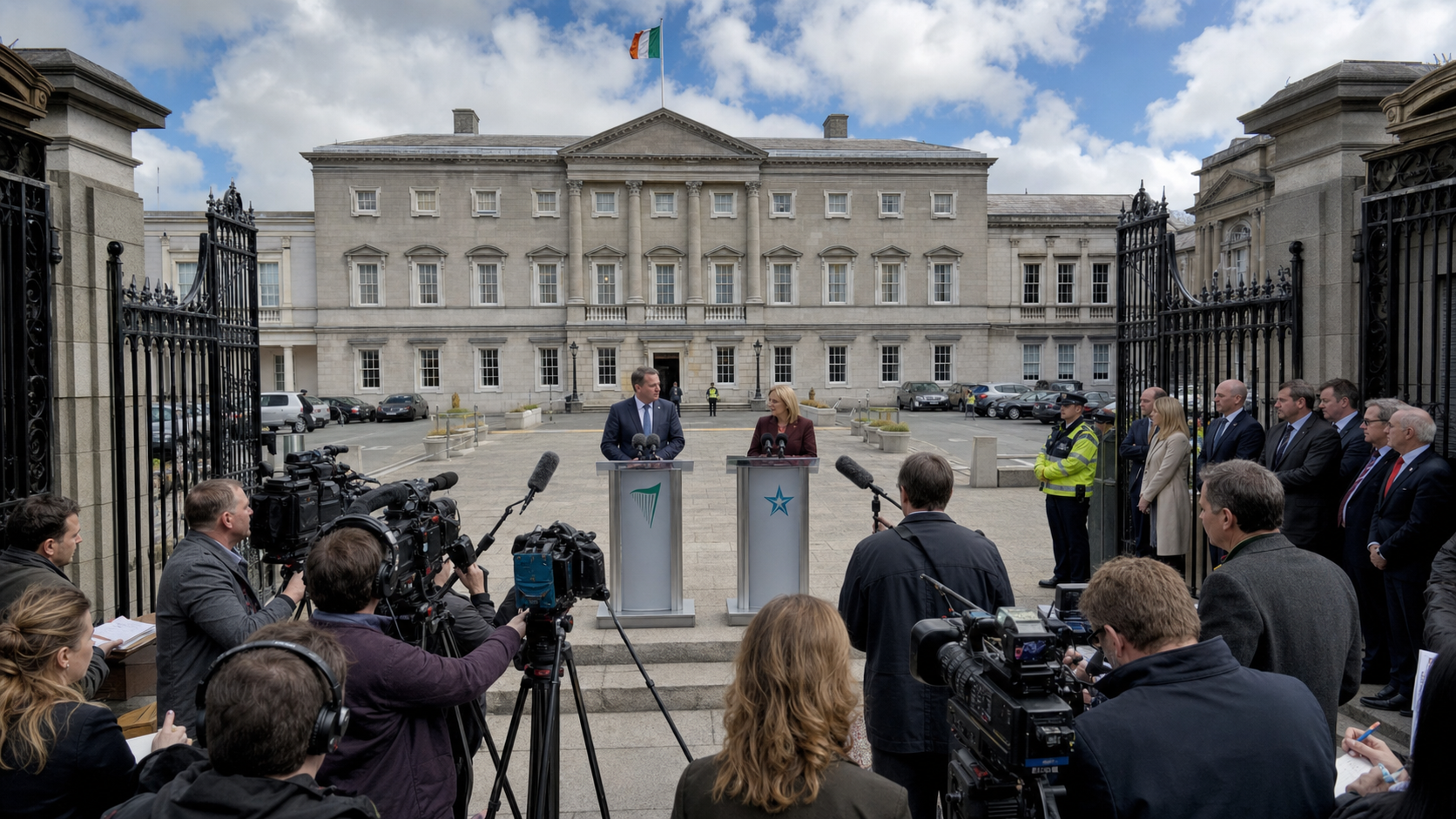
Ukrainian President Zelenskyy's decision to raise the issue directly with Taoiseach Martin at the Dublin Castle ceremony was a deliberate and calculated move. By doing so publicly, at the launch of Ireland's Presidency, Zelenskyy ensured that the Aughinish issue would be front and centre in the international coverage of the event, and that Ireland's handling of it would be seen as a test of its commitment to the values it has articulated as the basis for its Presidency.
Zelenskyy expressed hope for a "positive result without significant delays" from the Irish investigation — language that was polite but pointed. The implication was clear: Ukraine expects Ireland to act decisively, and it will be watching closely to see whether the investigation produces meaningful consequences or is used as a mechanism for indefinite delay.
Taoiseach Martin's response has been carefully calibrated. He has confirmed that the investigation is ongoing and should conclude within weeks, and he has acknowledged the seriousness of the allegations. But he has also been explicit about the economic complexity of the situation, stating that sanctioning Aughinish "would harm Europe more than Russia" — a reference to the plant's importance in the European aluminium supply chain. This comment has been criticised by some European partners and by Ukrainian officials, who argue that it prioritises economic interests over moral clarity.
European Commission President von der Leyen's statement that the investigation is "for Ireland to lead" was both an expression of confidence in Ireland's capacity to handle the matter and a clear signal that the Commission expects Ireland to take responsibility for the outcome. It also, implicitly, places the reputational consequences of any failure to act squarely on Ireland's shoulders.
Why It Matters
The Aughinish case is a microcosm of the broader challenge facing Ireland as it navigates the intersection of its economic interests, its EU obligations, and its stated commitment to supporting Ukraine. It is a challenge that is not unique to Ireland — other EU member states have faced similar dilemmas in relation to Russian-linked economic activity — but it is one that Ireland must now manage in the full glare of the Presidency spotlight.
The case also raises fundamental questions about the effectiveness of EU sanctions on Russia. If a Russian-linked company can continue to operate a major industrial facility in an EU member state, processing materials that may be contributing to the Russian war effort, it suggests that the sanctions regime has significant gaps. The Aughinish investigation may therefore have implications that extend well beyond Ireland, potentially prompting a broader review of how EU sanctions are implemented and enforced.
For Ireland's reputation as a reliable and principled EU partner, the handling of the Aughinish case will be closely watched. A swift, decisive investigation that produces clear findings and appropriate consequences would enhance Ireland's credibility as a Presidency holder. A prolonged, inconclusive process that appears to prioritise economic interests over European values would damage it.
Local Impact
In Limerick, the Aughinish investigation has generated significant anxiety among the plant's workforce and the broader community that depends on it economically. The prospect of sanctions or closure — however remote it may seem — is a source of genuine concern for the hundreds of workers employed at the facility and for the businesses and services that depend on their spending power.
Local politicians, including Limerick TDs from across the political spectrum, have been careful to acknowledge the seriousness of the allegations while also emphasising the economic importance of the plant to the region. This is a difficult balance to strike — it risks appearing to prioritise local economic interests over national and European obligations — but it reflects the genuine complexity of the situation for communities that have built their economic lives around the facility.
The Shannon Estuary, on which the plant is located, is also the focus of significant renewable energy development, with several offshore wind projects planned for the area. The future of the Aughinish site — whether it continues to operate, is repurposed, or is closed — will have implications for the broader economic development of the estuary region.
What's Next
The Irish government's investigation is expected to conclude within weeks, with the findings to be shared with the European Commission and, presumably, made public. The nature of those findings — and the action that follows — will determine whether the Aughinish issue becomes a defining moment of Ireland's EU Presidency or a problem that is managed and moved on from.
The European Parliament vote on a resolution calling for a ban on exports from the plant will be another significant moment. If the Parliament passes such a resolution, it will increase the political pressure on the Irish government to act, even if the resolution is not legally binding. The vote is expected in the coming weeks.
In the longer term, the Aughinish case may prompt a broader review of the ownership structures of major industrial facilities in EU member states, with a view to identifying other cases where Russian-linked companies have significant economic interests that may be incompatible with EU sanctions policy. Ireland's handling of the Aughinish investigation will set a precedent — for better or worse — for how such cases are managed across the EU.