Andy Burnham Says United Ireland Border Poll Is 'Off the Table' as UK Prime Minister Seeks to Draw Line Under Controversy
UK Prime Minister Andy Burnham has declared that a referendum on a united Ireland is "off the table," citing the divisive legacy of Brexit and the Scottish independence referendum as reasons to avoid further constitutional upheaval — a statement designed to end a controversy that has been running for weeks and that has tested relations between London, Dublin, and Belfast.
Background
The border poll controversy has its roots in comments made by Burnham in the weeks before he became Prime Minister, when he was still serving as Greater Manchester Mayor. In those comments, Burnham was interpreted by some as expressing sympathy for the idea of a border poll on Irish unity — a position that, while not unprecedented among senior Labour figures, was seen as politically significant given his imminent elevation to the highest office in the land.
The Good Friday Agreement, which provides the legal framework for a border poll, specifies that the Secretary of State for Northern Ireland must call a poll if it appears likely that a majority of those voting would express a wish for Northern Ireland to cease to be part of the United Kingdom and form part of a united Ireland. The decision on when — or whether — to call such a poll rests with the Secretary of State, and successive UK governments have been careful to avoid any suggestion that they are actively considering doing so.
Burnham's comments, however interpreted, broke with that tradition of studied neutrality and triggered a significant political reaction. Unionist parties in Northern Ireland — the DUP, UUP, and TUV — demanded clarification and expressed alarm at what they saw as a shift in the UK government's position. The Irish government, while careful not to be seen as pushing for a poll, was also watching developments closely, aware that any suggestion of UK government sympathy for Irish unity could have significant implications for the political dynamics in Northern Ireland.
Key Developments
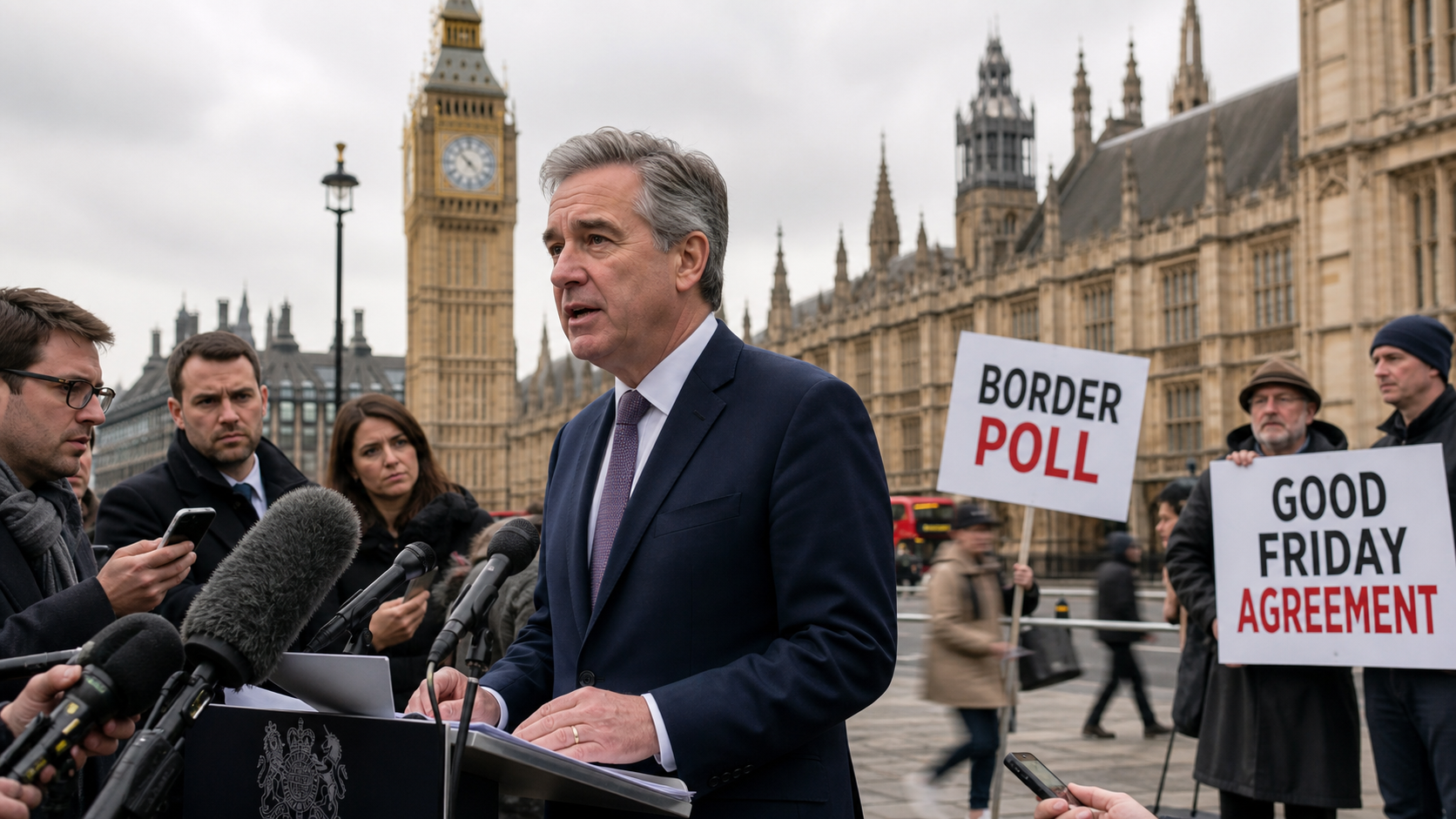
Burnham's statement that a border poll is "off the table" was delivered in response to questions from journalists during a visit to Belfast, and was intended to be unambiguous. "I have been clear about this," he said. "We have seen what referendums do to societies. Brexit divided this country. The Scottish independence referendum divided Scotland. I am not going to add to that division by putting a border poll on the agenda. It is off the table."
Northern Ireland Secretary Chris Bryant sought to reinforce the message, insisting that the UK government is "full square behind" the Good Friday Agreement and that there is no question of the government taking any action that would destabilise the political settlement in Northern Ireland. "The Good Friday Agreement is the foundation of peace and stability in Northern Ireland," Bryant said. "This government is committed to it, fully and without reservation."
The reaction from Northern Ireland's political parties was predictably divided. DUP leader Gavin Robinson welcomed Burnham's statement as "a necessary clarification," while expressing continued scepticism about the government's commitment to the union. Sinn Féin's Michelle O'Neill described the statement as "disappointing" and argued that the question of Irish unity is one for the people of Ireland to decide, not for the British Prime Minister to take off the table. Alliance Party leader Naomi Long called for a focus on the practical issues facing Northern Ireland rather than constitutional debates.
In Dublin, Taoiseach Micheál Martin welcomed the clarification while reiterating the Irish government's position that any change in the constitutional status of Northern Ireland must be achieved through democratic means and with the consent of the people of Northern Ireland.
Why It Matters
The border poll controversy matters because it touches on the most fundamental question in Irish and British politics: the constitutional future of Northern Ireland. The Good Friday Agreement created a framework for managing that question — one that is based on consent, democratic process, and the principle that change can only come through peaceful means. Any suggestion that the UK government is departing from that framework, in either direction, has the potential to destabilise the political settlement that has underpinned peace in Northern Ireland for nearly three decades.
Burnham's statement is, in one sense, a return to the status quo — a reaffirmation of the UK government's traditional position of studied neutrality on the constitutional question. But the fact that such a reaffirmation was necessary at all is itself significant. It suggests that the political consensus around the Good Friday Agreement framework is less stable than it might appear, and that the question of Irish unity is becoming more, not less, politically salient.
For context, polling in Northern Ireland has consistently shown that support for a united Ireland has grown in recent years, driven in part by the demographic changes that have reduced the unionist majority and in part by the impact of Brexit, which many in Northern Ireland — including many who would not describe themselves as nationalists — regard as a damaging imposition. The political dynamics around the border poll question are, in other words, genuinely complex, and Burnham's attempt to take it "off the table" may prove more difficult to sustain than his statement suggests.
Local Impact
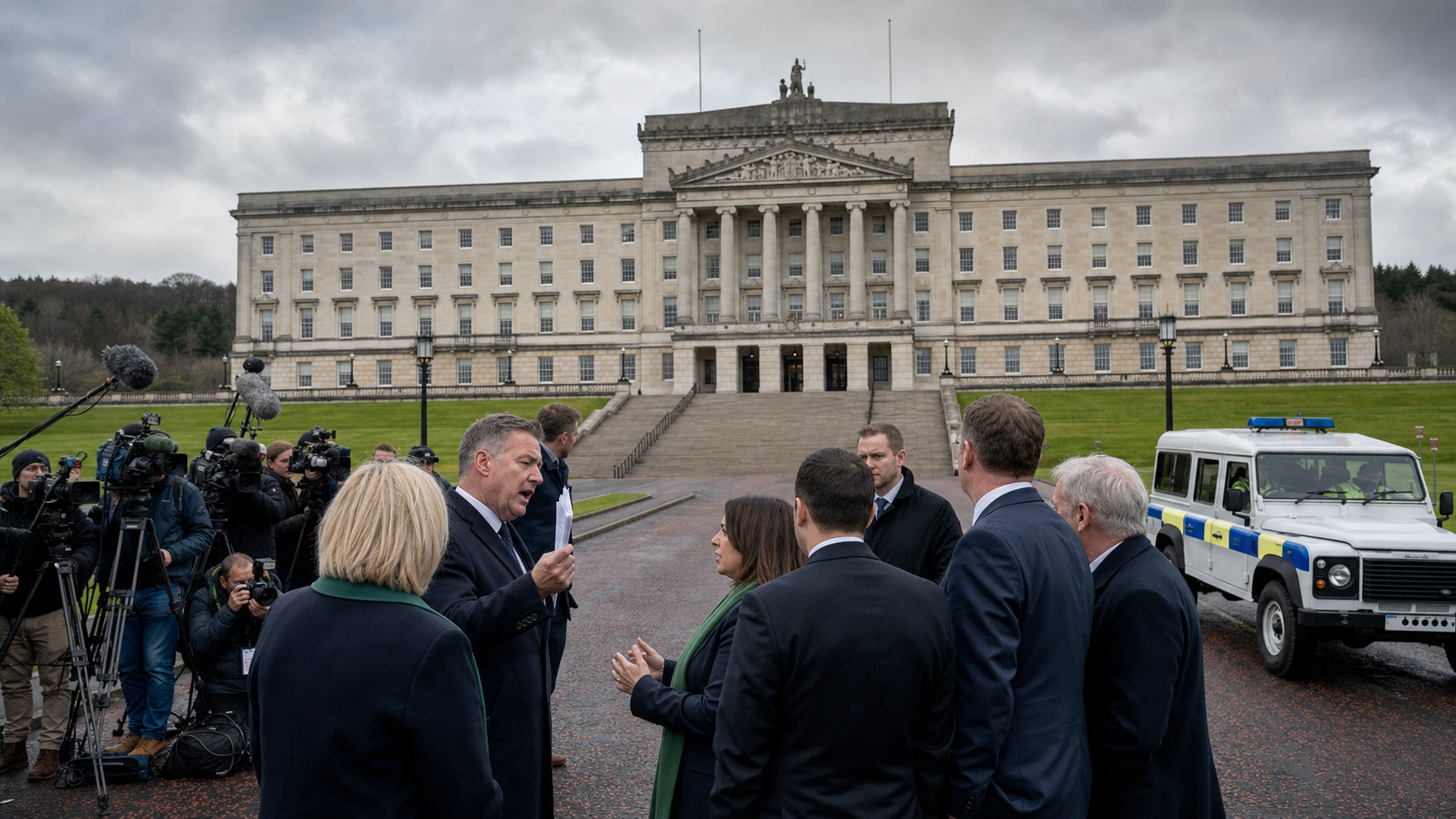
In Northern Ireland, the controversy has played out against the backdrop of the ongoing challenges facing the Stormont Executive. The Assembly and Executive are already under pressure from the budget crisis, the teachers' dispute, and the Parades Commission controversy, and the border poll row has added another layer of political tension to an already fraught environment. Unionist politicians have used the controversy to reinforce their arguments about the importance of maintaining the union, while nationalist and republican politicians have used it to highlight what they see as the inevitability of Irish unity.
In the Republic, the controversy has been followed with considerable interest, particularly among those who have been advocating for a more active government approach to planning for Irish unity. The Citizens' Assembly on Irish Unity, which reported in 2023, recommended that the government develop a detailed plan for unity; the border poll controversy has given renewed impetus to those who argue that such planning should be accelerated.
What's Next
Burnham's statement is unlikely to end the debate about a border poll, but it may succeed in reducing its immediate political salience. The focus in Northern Ireland is expected to return to the more immediate challenges facing the Executive — the budget, the teachers' dispute, and the Parades Commission review — in the coming weeks. The question of Irish unity will, however, remain a live issue in both Northern Ireland and the Republic, and it is likely to feature prominently in the run-up to the May 2027 Assembly election.