Zelenskyy Puts Taoiseach on the Spot Over Russian-Owned Limerick Plant at EU Presidency Launch
Ukrainian President Volodymyr Zelenskyy used his visit to Dublin Castle on Tuesday, July 1, to publicly and directly challenge Taoiseach Micheál Martin over the continued operation of Aughinish Alumina — a refinery in County Limerick owned by Russian company Rusal — in a diplomatic exchange that exposed the tension between Ireland's stated commitment to Ukraine and its economic interests in one of the Limerick region's largest employers.
Background
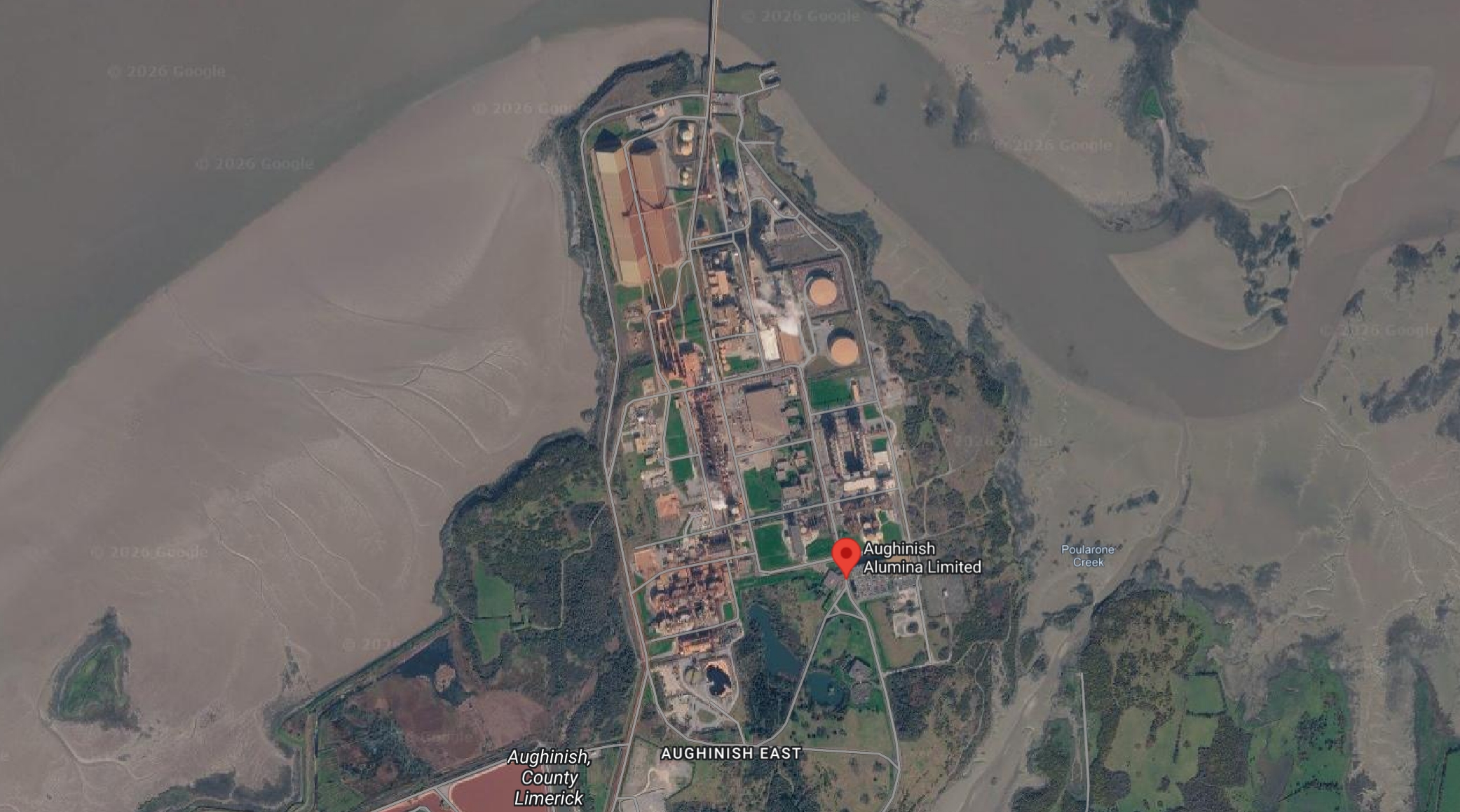
The Aughinish Alumina refinery, located on the Shannon Estuary near Askeaton in County Limerick, is one of the largest alumina refineries in Europe. It employs approximately 450 people directly and supports hundreds more in the local supply chain and service economy. The plant is owned by Rusal, the Russian aluminium giant, which is in turn linked to Oleg Deripaska, a Russian oligarch who has been subject to EU and UK sanctions since 2018.
When the EU imposed sanctions on Deripaska following Russia's invasion of Ukraine in 2022, the Irish government successfully lobbied for a temporary exemption for Aughinish Alumina, arguing that the plant's closure would cause severe economic damage to the Limerick region and that the exemption was necessary to protect Irish jobs. The exemption has been renewed on several occasions, but it has consistently attracted criticism from Ukraine and from some EU member states who argue that it undermines the integrity of the sanctions regime.
The political sensitivity of the issue is acute. The plant is a significant employer in a region that has historically struggled with unemployment, and any suggestion that the government might allow it to close — even in the context of a sanctions regime — generates immediate and intense political pressure from local politicians across all parties. At the same time, Ireland's credibility as a committed supporter of Ukraine depends in part on its willingness to apply the sanctions regime consistently and without carve-outs that benefit Russian interests.
Key Developments
Zelenskyy's remarks at Dublin Castle were carefully calibrated to maximise diplomatic pressure without crossing the line into outright confrontation. He stated that Ukraine is "really interested in the results" of the Irish government's investigation into the plant, and expressed the hope that the process would not take "months" to conclude. His argument — that every tonne of raw material reaching Russia from anywhere in the world contributes to the war effort — was a direct challenge to the Irish government's position that the exemption is justified on economic grounds.
Taoiseach Micheál Martin's response was equally carefully worded. He rejected any suggestion that Ireland's handling of the Aughinish issue compromised its commitment to Ukraine, pointing to the country's financial contributions, its hosting of Ukrainian refugees, and its consistent support for EU sanctions as evidence of its bona fides. He confirmed that the government is working to establish the "full facts" before engaging with the European Commission, but declined to give a specific timeline for the conclusion of the investigation.
The exchange was observed closely by EU officials and by other member state governments, several of whom have their own sensitive economic relationships with Russian-linked entities. The Irish presidency's handling of the Aughinish question will be seen as a test of its willingness to apply the principles it espouses in its presidency programme to its own domestic situation.
Why It Matters
The Aughinish controversy sits at the intersection of several of the most important political fault lines in contemporary Irish politics: the relationship between economic interests and ethical obligations, the tension between national sovereignty and EU solidarity, and the question of how Ireland balances its traditional policy of military neutrality with its increasingly active engagement in European security affairs.
Ireland's EU Presidency gives the country an unusual degree of influence over the EU's legislative and diplomatic agenda for the next six months. If the Aughinish question is not resolved quickly and credibly, it risks becoming a distraction that undermines Ireland's ability to exercise that influence effectively. Zelenskyy's public pressure is a calculated attempt to ensure that the issue remains on the agenda and that the Irish government cannot quietly allow the investigation to drag on indefinitely.
The political dynamics within the coalition government are also relevant. Fianna Fáil, Fine Gael, and the Green Party have different instincts on the question of economic versus ethical considerations, and the Aughinish issue has the potential to expose those differences in a way that is uncomfortable for the government's internal cohesion.
Local Impact
In Limerick city and county, the Aughinish controversy is followed with intense interest by workers, trade unions, and local politicians. The plant's workforce — represented primarily by SIPTU — has consistently argued that the sanctions exemption is justified and that the plant's closure would be economically devastating for the region. Local politicians from all parties have supported the exemption, and any move by the government to withdraw it would generate significant political backlash in the Limerick constituency.
The Shannon Estuary, on which the plant is located, is also the focus of significant renewable energy development, with several offshore wind projects in planning. The long-term economic future of the estuary is therefore not solely dependent on Aughinish, but the plant remains by far the largest single employer in the immediate area, and its closure would be a severe blow to the local economy in the short to medium term.
What's Next
The government has indicated that the investigation into Aughinish Alumina will be completed in the coming weeks. The findings will be shared with the European Commission, which will then determine whether the existing sanctions exemption should be maintained, modified, or withdrawn. The Commission's decision will be subject to review by the Council of the EU — which Ireland currently chairs — creating an unusual situation in which Ireland will be presiding over a process that directly affects its own national interests. The outcome of this process will be one of the most closely watched decisions of Ireland's EU Presidency.