UK Government Grants PSNI £4 Million Emergency Funding as Riot Investigation Continues
The UK government has released £4 million in emergency funding to the Police Service of Northern Ireland to cover the exceptional operational costs incurred during the recent wave of racist disorder, as the force continues a large-scale criminal investigation that has already resulted in 19 arrests and 12 charges across multiple locations.
Background
The PSNI has been under sustained financial pressure for several years, operating with a budget that senior officers have repeatedly described as inadequate for the demands placed upon the service. The force polices a jurisdiction of approximately 1.9 million people with a workforce that has been reduced through a combination of budget constraints and the ongoing challenge of recruiting officers who meet the statutory requirement for a 50:50 Catholic/Protestant intake — a requirement introduced under the Patten reforms to address the historical imbalance in the RUC.
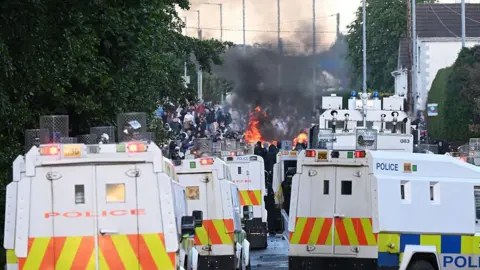
Against that backdrop, the riots that erupted following the north Belfast stabbing on 8 June placed extraordinary demands on PSNI resources. Officers were deployed in large numbers across multiple locations simultaneously, requiring significant overtime expenditure and the cancellation of leave. Specialist units, including public order officers and the PSNI's intelligence branch, were engaged in sustained operations over several nights. The force also had to manage the immediate welfare needs of the 27 people rendered homeless by the violence, coordinating with housing authorities and community organisations.
Emergency funding mechanisms exist precisely for situations of this kind — where a policing body faces costs that could not have been anticipated in its annual budget and that would, if unaddressed, create serious operational difficulties. The PSNI applied for emergency support from the Northern Ireland Office and the Home Office, and the £4 million allocation represents the government's response to that application.
Key Developments
Chief Constable Jon Boutcher welcomed the emergency funding, describing it as essential for maintaining the PSNI's capacity to conduct a thorough investigation into the disorder while continuing to deliver normal policing services across Northern Ireland. The investigation has already resulted in 19 arrests and 12 charges, with further arrests expected as the inquiry progresses.
The PSNI has established a dedicated investigation team to examine the riots, drawing on CCTV footage, social media evidence, and witness accounts to identify those responsible for the most serious offences, including arson, assault, and racially aggravated criminal damage. The force has also been working with the National Crime Agency on the intelligence dimension of the investigation, particularly in relation to the alleged coordination of the disorder.
The £4 million allocation covers operational costs including overtime, specialist equipment, and the costs of the ongoing investigation. It does not address the PSNI's underlying budget pressures, which remain a source of significant concern for the force's leadership and for the Policing Board.
Why It Matters
The emergency funding is significant not just as a financial measure but as a statement of the UK government's recognition that the riots represented an exceptional event requiring an exceptional response. The allocation signals that Westminster is prepared to support the PSNI in circumstances where the normal budget cannot absorb the costs of major disorder — a reassurance that will be noted by the force's leadership and by the Stormont Executive.
It also raises questions about the adequacy of the PSNI's baseline funding. If the force is operating so close to the margin that a single major incident requires emergency central government support, that suggests a structural underfunding that emergency allocations cannot address. The Policing Board has been making this argument for several years, and the riots have given it renewed urgency.
For the communities affected by the disorder — particularly those from minority ethnic backgrounds who were targeted — the investigation's progress will be closely watched. The credibility of the PSNI's response to racially motivated violence is a matter of significant importance for community relations in Northern Ireland.
Local Impact
Across north and east Belfast, where much of the disorder was concentrated, community relations remain fragile in the aftermath of the riots. Interface areas that had seen years of relative calm have experienced a resurgence of tension, and community workers report that residents from minority ethnic backgrounds are reluctant to return to normal routines. The PSNI has increased patrols in affected areas and has established a dedicated community liaison function to maintain contact with those most directly impacted.
In Antrim town and other locations outside Belfast where disorder occurred, local councils and community organisations are working to repair the damage — both physical and social — caused by the violence. The emergency funding will help ensure that the PSNI can maintain a visible presence in these areas while the investigation continues.
What's Next
The PSNI has indicated that further arrests are expected in the coming weeks as the investigation progresses. The force has appealed to the public for information and has set up a dedicated online portal for submitting evidence. A review of the PSNI's overall budget position is expected to be conducted by the Policing Board in the autumn, with the riots likely to feature prominently in that discussion. The Northern Ireland Office has indicated it will consider the PSNI's longer-term funding needs as part of the next spending review.