Children's Commissioner: Loyalist Paramilitaries Forced Young People into Racist Riots to Clear Drug Debts
Northern Ireland's Commissioner for Children and Young People has made the alarming claim that loyalist paramilitary organisations coerced children into participating in the recent wave of racist disorder that swept across the North, threatening young people with violence against themselves or their families if they refused to comply — a claim that has intensified demands for a full investigation into the organised nature of the unrest.
Background
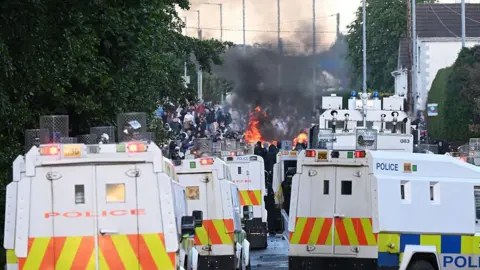
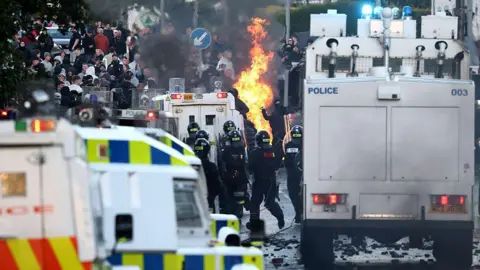
The riots that erupted across Northern Ireland in the days following a stabbing in north Belfast on 8 June 2026 represented some of the most serious civil disorder the region has experienced in years. Homes, vehicles, and businesses were attacked, with properties suspected of housing immigrants specifically targeted. Twenty-seven people were rendered homeless during the violence, and the PSNI declared a critical incident as it struggled to contain disorder that spread from Belfast to towns across Antrim, Down, and beyond.
From the outset, observers noted features of the disorder that suggested a degree of organisation beyond spontaneous community anger. The violence appeared to start and stop with unusual abruptness, as if controlled by a coordinating hand. Specific addresses were targeted with a precision that implied prior intelligence. And the involvement of young people — some of them clearly teenagers — raised immediate questions about how and why they had come to be on the front lines of what was, in effect, a campaign of racially motivated intimidation.
The Commissioner for Children and Young People, Chris Quinn, has a statutory responsibility to promote and safeguard the rights and interests of children in Northern Ireland. His office has been monitoring the situation closely since the disorder began, gathering accounts from community workers, youth organisations, and individuals with direct knowledge of what happened on the ground.
Key Developments
Quinn stated publicly on 19 June that loyalist paramilitary groups had pressured children to take part in the riots, using threats of violence as leverage. Children were allegedly told they must participate to clear drug debts or loans they owed to paramilitary-linked individuals, with explicit threats made against them or their family members if they refused. "These children were reportedly threatened with violence against themselves or their families if they refused to comply," Quinn said, describing the situation as a serious child protection concern that demands an urgent response.
Quinn also noted that the violence appeared to have been halted abruptly, as if by a "switch" — an observation that aligns with accounts from community workers who described the disorder as having a coordinated quality that distinguished it from purely spontaneous unrest. The Commissioner called for a full investigation into the exploitation of children during the riots, separate from the PSNI's broader criminal investigation into the disorder itself.
The PSNI, for its part, stated that it had seen no evidence of paramilitary involvement in the riots at the time of the disorder. That position has been questioned by a number of community figures and political representatives, who argue that the organised nature of the violence is difficult to explain without some form of coordination.
Why It Matters
The exploitation of children by paramilitary organisations is not a new phenomenon in Northern Ireland, but it is one that the post-Good Friday Agreement era was supposed to have consigned to history. The claim that young people were coerced into participating in racist violence to clear debts to criminal organisations represents a deeply troubling intersection of paramilitarism, organised crime, and racial hatred.
If the Commissioner's account is accurate, it raises profound questions about the continued influence of loyalist paramilitary groups in certain communities, and about the adequacy of the state's response to that influence. It also raises questions about the safeguarding systems that should be protecting vulnerable young people from exploitation — systems that, in this case, appear to have failed.
The riots themselves have already prompted significant political and policy responses, including emergency PSNI funding and a cross-party review of community relations. The child exploitation dimension adds a further layer of urgency and complexity to that response.
Local Impact
The communities most directly affected by the riots — areas of north and east Belfast, parts of Antrim town, and other locations where disorder occurred — are now dealing with the aftermath of violence that has damaged community relations and left some residents, particularly those from minority ethnic backgrounds, feeling unsafe in their own neighbourhoods. For the young people who were allegedly coerced into participating, the consequences may be long-lasting: criminal records, trauma, and continued exposure to the paramilitary networks that exploited them.
Youth workers and community organisations across Belfast have reported a significant increase in demand for support services in the weeks since the riots, with young people presenting with anxiety, fear, and confusion about what they witnessed or were involved in. The Commissioner's office has indicated it will work with the Department of Education and the Health and Social Care trusts to ensure appropriate support is available.
What's Next
Chris Quinn has called for a dedicated child protection investigation into the exploitation of young people during the riots, to run alongside the PSNI's criminal inquiry. He has written to the Justice Minister and the Minister for Communities requesting an urgent meeting to discuss the findings. The PSNI has said it will consider the Commissioner's account as part of its ongoing investigation. A Stormont debate on the riots and their aftermath is expected before the Assembly rises for its summer recess.