Trump's September Ireland Visit Raises Economic Hopes and Security Headaches for Doonbeg and Dublin
US President Donald Trump's confirmed visit to Ireland in September — centred on the Irish Open golf tournament at his Doonbeg resort in County Clare and engagements in Dublin — is expected to generate significant economic activity for the west of Ireland and the capital while presenting substantial security and logistical challenges for the authorities responsible for managing one of the most high-profile visits to the country in years.
Background
Donald Trump's relationship with Ireland is long-standing and commercially rooted. His Doonbeg resort in County Clare, which he acquired in 2014, has been a significant investment in the west of Ireland, providing employment and attracting visitors to a part of the country that has historically struggled to compete with the more established tourist destinations of Kerry and Galway. Trump has visited Doonbeg on several occasions, both before and during his first presidency, and his attachment to the property is genuine.
The Irish Open, which is scheduled to take place at Doonbeg from September 9 to September 13, provides the primary occasion for the visit. Trump has expressed a personal interest in attending the tournament to watch professional golfers, including Rory McIlroy, and the timing of his arrival — September 12 — has been chosen to allow him to return to the United States for the 25th anniversary commemorations of the September 11 terrorist attacks before heading to Clare for the conclusion of the tournament.
The visit is not classified as a formal State visit, which means that the full ceremonial apparatus of a presidential reception — including an address to the Dáil or Seanad — will not be deployed. The Oireachtas is in summer recess until September 16, which makes a parliamentary address logistically impossible in any case. The visit is expected to include a meeting with Taoiseach Micheál Martin in Dublin, and there is a possibility of a meeting with President Catherine Connolly, who has indicated she would consider any such request.
Key Developments
The economic impact of the visit is expected to be significant, particularly for County Clare and the surrounding region. The Irish Open itself is one of the most prestigious events on the DP World Tour, attracting top-ranked professional golfers and thousands of spectators from across Ireland and internationally. The addition of a presidential visit will amplify the media attention on the event and is likely to generate additional visitor numbers beyond those who would normally attend the tournament.
Hotels and accommodation providers across Clare, Limerick, and the wider Munster region are already reporting strong bookings for the week of the Irish Open, and the Trump visit is expected to further boost demand. Local businesses in Doonbeg and the surrounding villages are anticipating a significant uplift in trade, though the security arrangements that will accompany a presidential visit will inevitably restrict access to some areas.
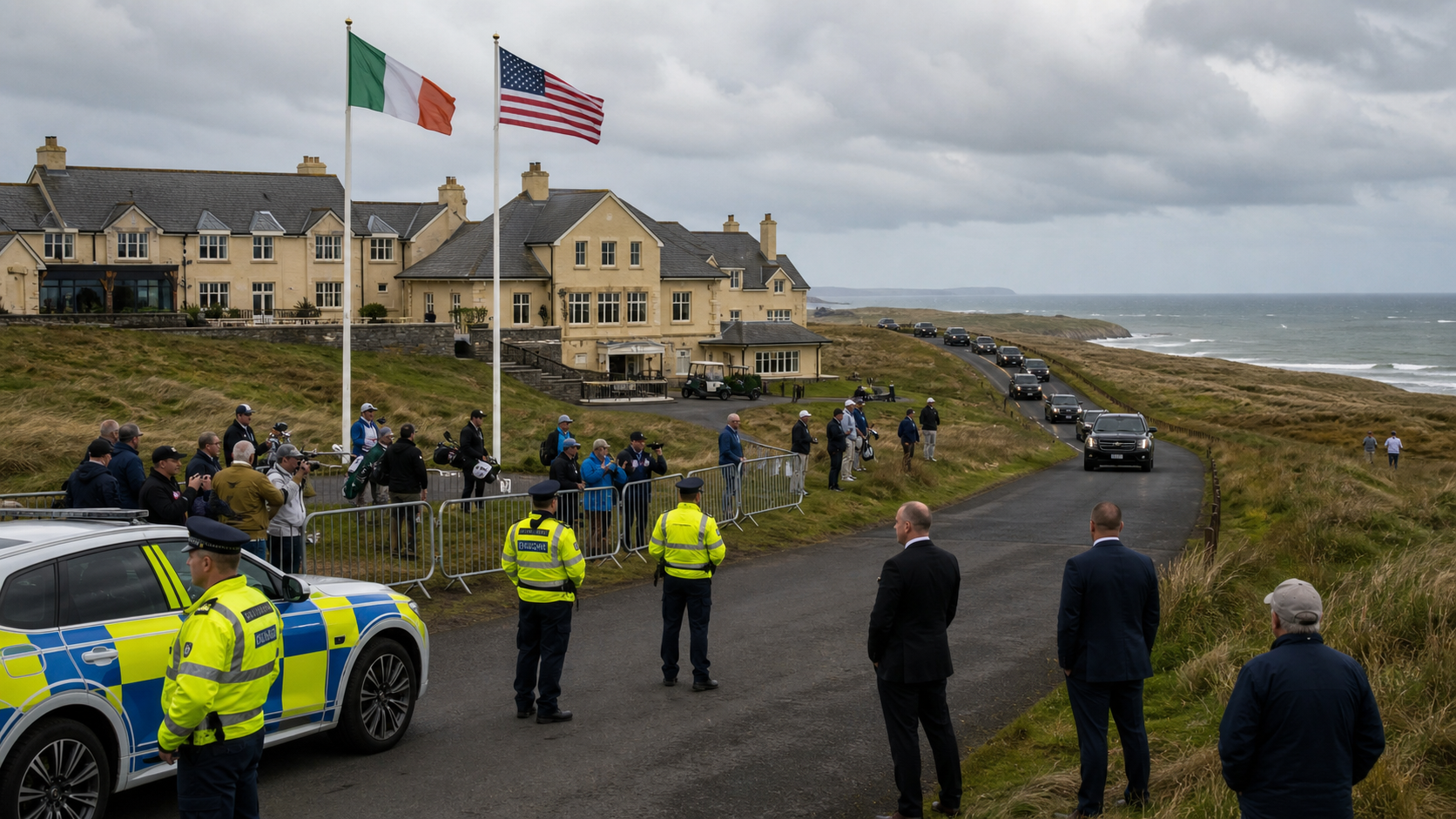
The security operation for the visit is expected to be substantial. Trump's visits to Ireland during his first presidency were accompanied by significant Garda and Defence Forces deployments, and the security requirements for a sitting president are even more demanding. The Garda Commissioner has been in contact with the US Secret Service about the logistics of the visit, and planning is understood to be well advanced.
Why It Matters
The Trump visit is significant for the Irish economy at a moment when the relationship between Ireland and the United States is under some strain. The Trump administration's tariff policies have created uncertainty for Irish exporters, particularly in the pharmaceutical and technology sectors, and the deportation of undocumented Irish citizens has been a source of tension between the two governments. The visit provides an opportunity for Taoiseach Martin to raise these issues directly with the President, though the diplomatic context — a visit centred on a golf tournament rather than a formal state occasion — limits the scope for substantive policy discussions.
The visit also has implications for Ireland's tourism sector, which has been working to attract high-value visitors from the United States. A presidential visit generates the kind of global media coverage that money cannot buy, and the images of Trump at Doonbeg will be seen by audiences across the world. Whether that coverage translates into increased tourist interest in County Clare and the west of Ireland will depend on how the visit is managed and how it is received by the Irish public.
The political reception for the visit in Ireland is likely to be mixed. Labour MEP Aodhán Ó Ríordáin has already stated that the "red carpet should not be rolled out," citing the President's policies on Gaza, the EU, and immigration. Protests are expected in Dublin and possibly in Clare, similar to those that occurred during Trump's 2019 visit.
Local Impact
For Doonbeg and the surrounding area of west Clare, the Trump visit is primarily an economic event. The village, which has a population of a few hundred people, is transformed during the Irish Open into a hub of activity, and the presidential visit will add an additional layer of intensity to that transformation. Local businesses have been preparing for the influx of visitors, and the security arrangements — while disruptive — are seen as a manageable price to pay for the economic benefits that the visit will bring.
What's Next
Trump is expected to arrive in Ireland on September 12, with his itinerary including time at Doonbeg for the conclusion of the Irish Open on September 13 and engagements in Dublin. The precise details of the Dublin programme — including the meeting with the Taoiseach and the potential sod-turning ceremony at the site of the new US embassy in Ballsbridge — are still being finalised. The Garda Commissioner is expected to brief the Cabinet on the security arrangements in the coming weeks.