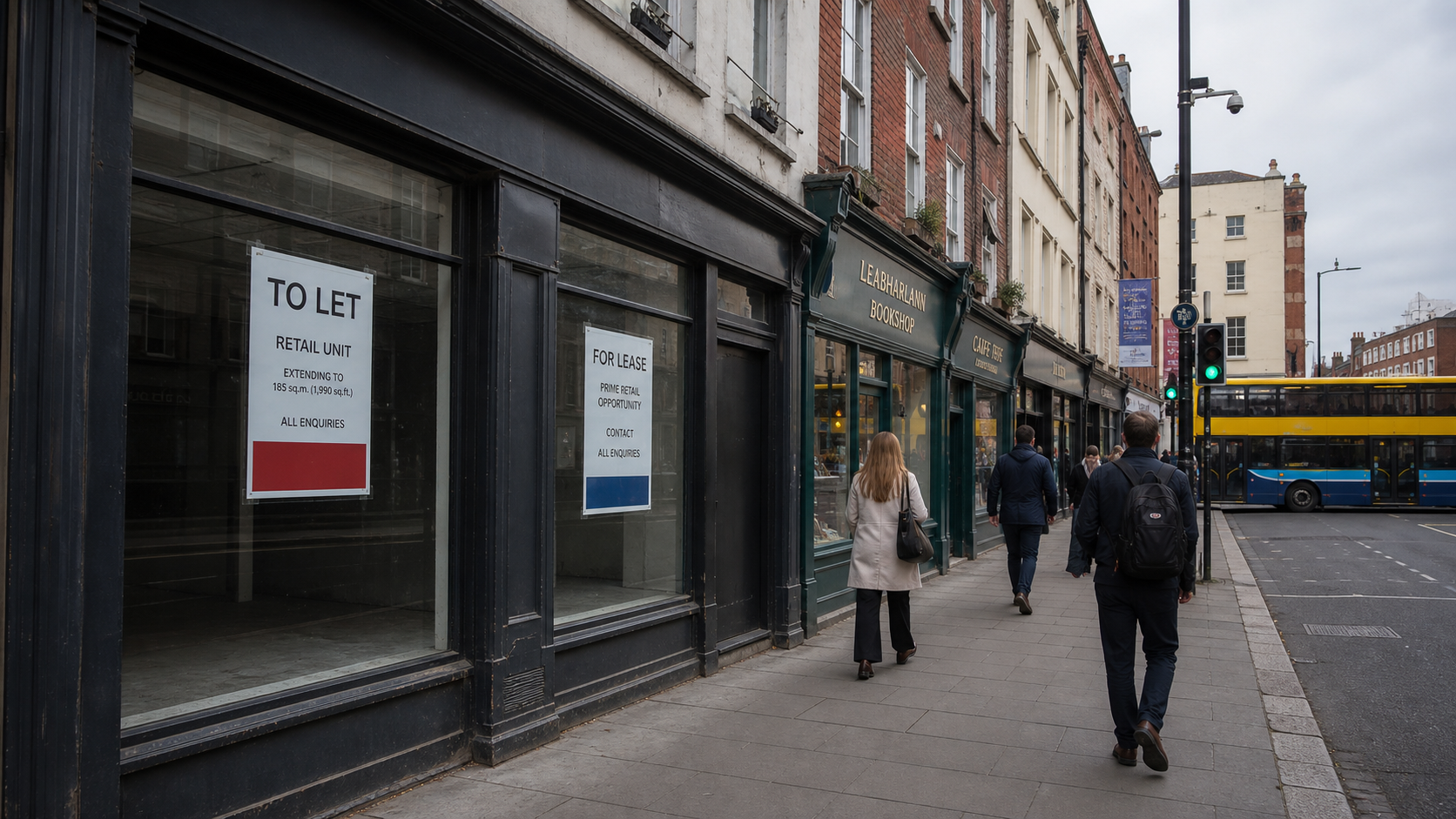
Almost One in Seven Commercial Properties in Republic Lies Vacant as Market Shifts
Almost one in seven commercial properties in the Republic of Ireland currently lies vacant, according to new data published this week, as the commercial property market continues to adjust to the structural changes wrought by remote working, e-commerce, and shifting retail patterns — a vacancy rate that poses significant challenges for town centres, local economies, and the government's ambitions for urban regeneration.
Background
The commercial property market in Ireland has been undergoing a period of profound structural change since the Covid-19 pandemic accelerated trends that were already beginning to reshape how businesses use physical space. The shift to remote and hybrid working has reduced demand for office space in city centres, while the growth of online retail has hollowed out the customer base for traditional high street shops. These trends have combined with the legacy of the 2008 financial crisis — which left a significant overhang of commercial property in many Irish towns — to create a vacancy problem that is both economically significant and visually striking.
The government has introduced a range of measures to address commercial vacancy, including the Vacant Property Refurbishment Grant, the Croí Cónaithe scheme for urban regeneration, and the Derelict Sites Levy, which imposes a financial penalty on owners of vacant and derelict properties. However, the effectiveness of these measures has been limited by a combination of factors including the complexity of the planning system, the difficulty of converting commercial properties to residential use, and the reluctance of some property owners to sell or develop their holdings at current market prices.
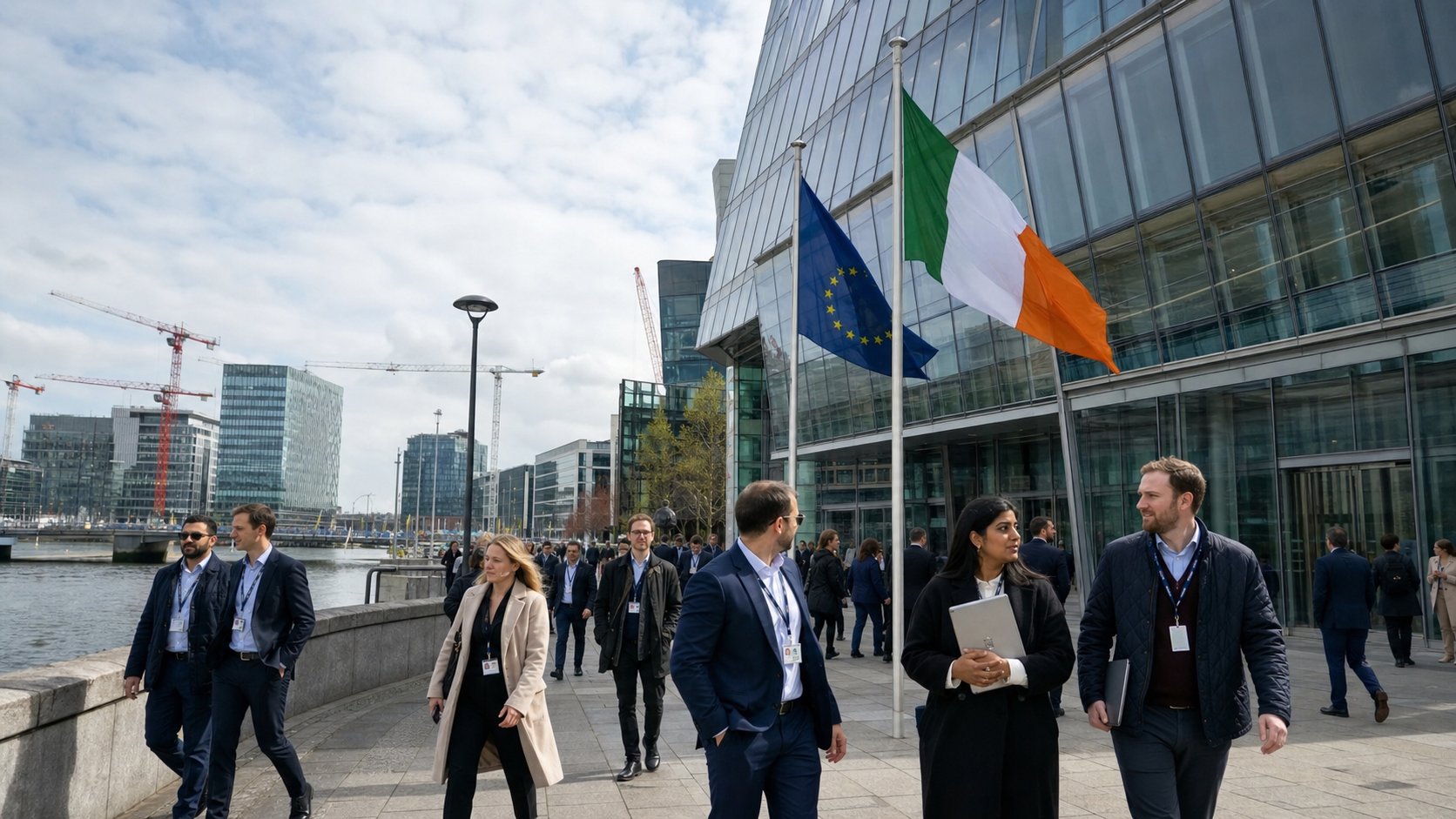
The vacancy rate varies significantly by location and property type. Prime office space in Dublin's central business district remains in strong demand, with vacancy rates well below the national average. Retail vacancy is highest in smaller towns and rural areas, where the combination of population decline, reduced footfall, and competition from online retail has made it difficult for landlords to find tenants willing to pay rents that justify the cost of maintaining and upgrading their properties.
Key Developments
The new data, which covers all commercial property types including retail, office, industrial, and hospitality, shows a national vacancy rate of approximately 14% — equivalent to almost one in seven commercial properties lying empty. The rate is highest in the midlands and the north-west, where towns like Longford, Roscommon, and Ballina have vacancy rates significantly above the national average. In contrast, Dublin's commercial vacancy rate is below 10%, reflecting the continued strength of demand in the capital's prime commercial areas.
The data also highlights a growing divergence between the fortunes of different types of commercial property. Industrial and logistics properties — driven by the growth of e-commerce and the need for distribution centres — have vacancy rates below 5% and are experiencing strong rental growth. Office properties in Dublin's docklands and city centre are also performing well, with demand from technology and financial services companies keeping vacancy rates low. Retail properties, particularly in secondary locations and smaller towns, are experiencing the highest vacancy rates and the most significant rental declines.
The government's Town Centre First policy, which aims to prioritise the regeneration of town centres over greenfield development on the urban periphery, has been welcomed by urban planners and local authorities but has been slow to deliver tangible results. The policy requires a coordinated approach across multiple government departments and agencies, and the complexity of that coordination has limited its effectiveness in the short term.
Why It Matters
A commercial vacancy rate of almost 14% is not just an economic problem — it is a social and aesthetic one. Empty shops and offices create a sense of decline and abandonment that affects the confidence of residents, businesses, and investors in the affected areas. Town centres that are visibly struggling to fill their commercial stock find it harder to attract new businesses, creating a negative feedback loop that can be difficult to break without significant public intervention.
The vacancy problem also represents a significant opportunity cost. Empty commercial properties that could be converted to residential use — addressing Ireland's acute housing shortage — are instead sitting idle, generating no economic activity and contributing to the visual blight of town centres. The planning and regulatory barriers to commercial-to-residential conversion have been identified as a key obstacle, and the government has indicated it will introduce further measures to streamline the conversion process in the upcoming planning reform legislation.
Local Impact
For towns across the Republic — from Athlone and Tullamore in the midlands to Tralee and Ennis in Munster — the commercial vacancy problem is a daily reality that affects the quality of life of residents and the viability of local businesses. Local authorities have been given additional powers and resources to address vacancy through the Vacant Homes Officer programme, but the scale of the problem in many areas exceeds the capacity of local government to address it without significant central government support. The upcoming Budget 2027 is expected to include additional measures targeting commercial vacancy, with the Derelict Sites Levy potentially being extended and strengthened.
What's Next
The Department of Housing is expected to publish a comprehensive review of commercial vacancy policy in September, ahead of Budget 2027. The review will examine the effectiveness of existing measures and identify additional interventions that could accelerate the reduction of vacancy rates in the most affected areas. The government has indicated that Budget 2027 will include a specific package of measures targeting commercial vacancy and town centre regeneration, with details to be announced on October 6.