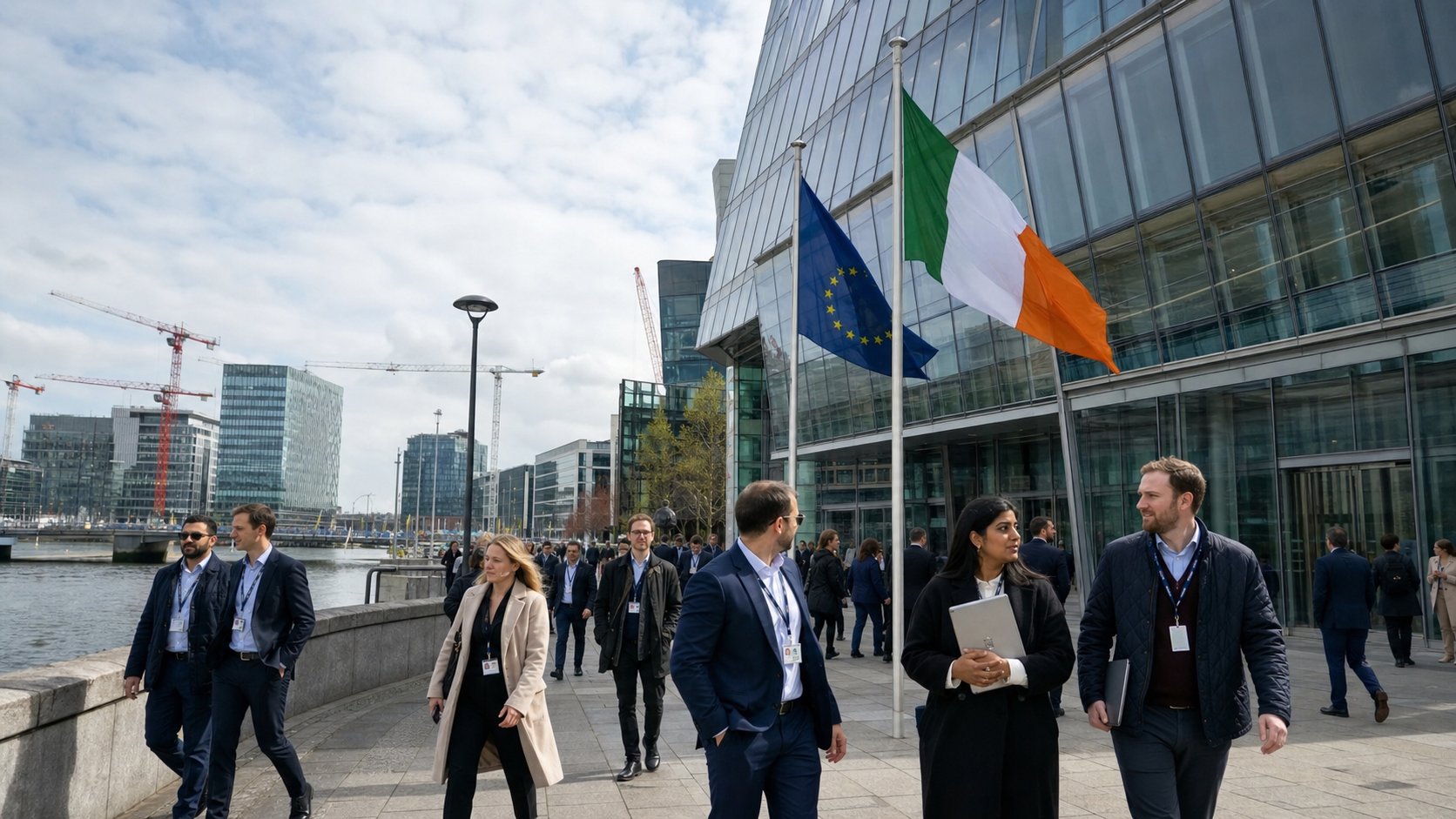
More Than $250m Invested in Irish AI Firms in First Half of 2026 as Sector Booms
More than $250 million was invested in Irish artificial intelligence companies in the first half of 2026, according to new data published this week, as Ireland cements its position as one of Europe's leading hubs for AI development and deployment — a surge in investment that reflects both the strength of the country's technology ecosystem and the growing global appetite for AI solutions across every sector of the economy.
Background
Ireland's technology sector has been one of the most dynamic components of the country's economy for the past three decades, built on a foundation of multinational investment that has made Dublin and its surrounding counties home to the European headquarters of companies including Google, Meta, Microsoft, Apple, and Amazon. The presence of these technology giants has created a deep pool of engineering and commercial talent, a sophisticated venture capital ecosystem, and a regulatory environment that has attracted significant investment in emerging technology sectors.
The artificial intelligence sector has emerged as one of the most significant growth areas within Irish technology in recent years, driven by the global explosion of interest in large language models, machine learning applications, and AI-powered business tools. Irish companies are active across a wide range of AI applications, from healthcare diagnostics and financial services to agriculture, education, and creative industries. The country's universities — particularly Trinity College Dublin, University College Dublin, and the University of Galway — have invested heavily in AI research, producing graduates and research outputs that feed directly into the commercial sector.
Enterprise Ireland and IDA Ireland have both identified AI as a priority sector for investment and development, with dedicated programmes to support Irish AI startups and to attract international AI companies to establish or expand their Irish operations. The government's National AI Strategy, published in 2021 and updated in 2024, sets out a framework for Ireland's ambitions in the sector, including targets for research investment, talent development, and the adoption of AI across the public sector.
Key Developments
The $250 million investment figure for the first half of 2026 represents a significant increase on the equivalent period in 2025, reflecting both the maturation of the Irish AI ecosystem and the broader global trend of increased investment in AI companies. The investment has been spread across a range of companies and stages, from early-stage seed funding for startups to growth-stage rounds for more established companies that are scaling their operations internationally.
Among the sectors attracting the most investment are healthcare AI — where Irish companies are developing diagnostic tools, drug discovery platforms, and patient management systems — and financial services AI, where Dublin's position as a major European financial centre provides a natural market for AI-powered compliance, risk management, and customer service solutions. The agriculture sector, which is of particular importance to the Irish economy, is also seeing significant AI investment, with companies developing precision farming tools and supply chain optimisation systems.
The investment surge is being supported by a favourable regulatory environment. Ireland's position within the European Union means that Irish AI companies can access the EU's single market of 450 million consumers, while the country's relatively pragmatic approach to technology regulation — compared to some other EU member states — has made it an attractive location for companies that want to develop and test AI applications in a supportive environment.
Why It Matters
The $250 million investment figure is significant not only for what it represents in terms of capital flowing into the Irish economy but for what it signals about Ireland's competitive position in the global AI landscape. The country is competing with the UK, Germany, France, and the Netherlands for AI investment, and the ability to attract more than a quarter of a billion dollars in a single half-year period suggests that Ireland's value proposition — skilled workforce, favourable tax environment, EU market access, and strong research base — remains compelling for international investors.
The investment also has important implications for employment. AI companies tend to create high-value, well-paid jobs that contribute significantly to the tax base and to the broader knowledge economy. The growth of the Irish AI sector is expected to generate thousands of new jobs over the next five years, with Enterprise Ireland projecting that the sector could employ 50,000 people in Ireland by 2030 if current growth trends continue.
Local Impact
The AI investment boom is concentrated primarily in Dublin, where the majority of Irish technology companies are headquartered, but its effects are being felt across the country. Cork, Galway, and Limerick all have growing AI clusters, supported by their universities and by the presence of multinational technology companies that provide both talent and commercial partnerships for local startups. The government's Regional Enterprise Plans include specific provisions for AI development outside Dublin, with funding for regional technology hubs and innovation centres that can support AI companies in areas that have historically been less well-served by the technology investment ecosystem.
What's Next
Enterprise Ireland is expected to publish its annual technology investment report in October, which will provide a comprehensive picture of investment trends across the Irish technology sector for the full year. The government's review of the National AI Strategy is due to be completed by the end of 2026, with updated targets and policy commitments expected to be announced in early 2027. IDA Ireland has indicated it is in advanced discussions with several major international AI companies about establishing or expanding their Irish operations, with announcements expected in the coming months.