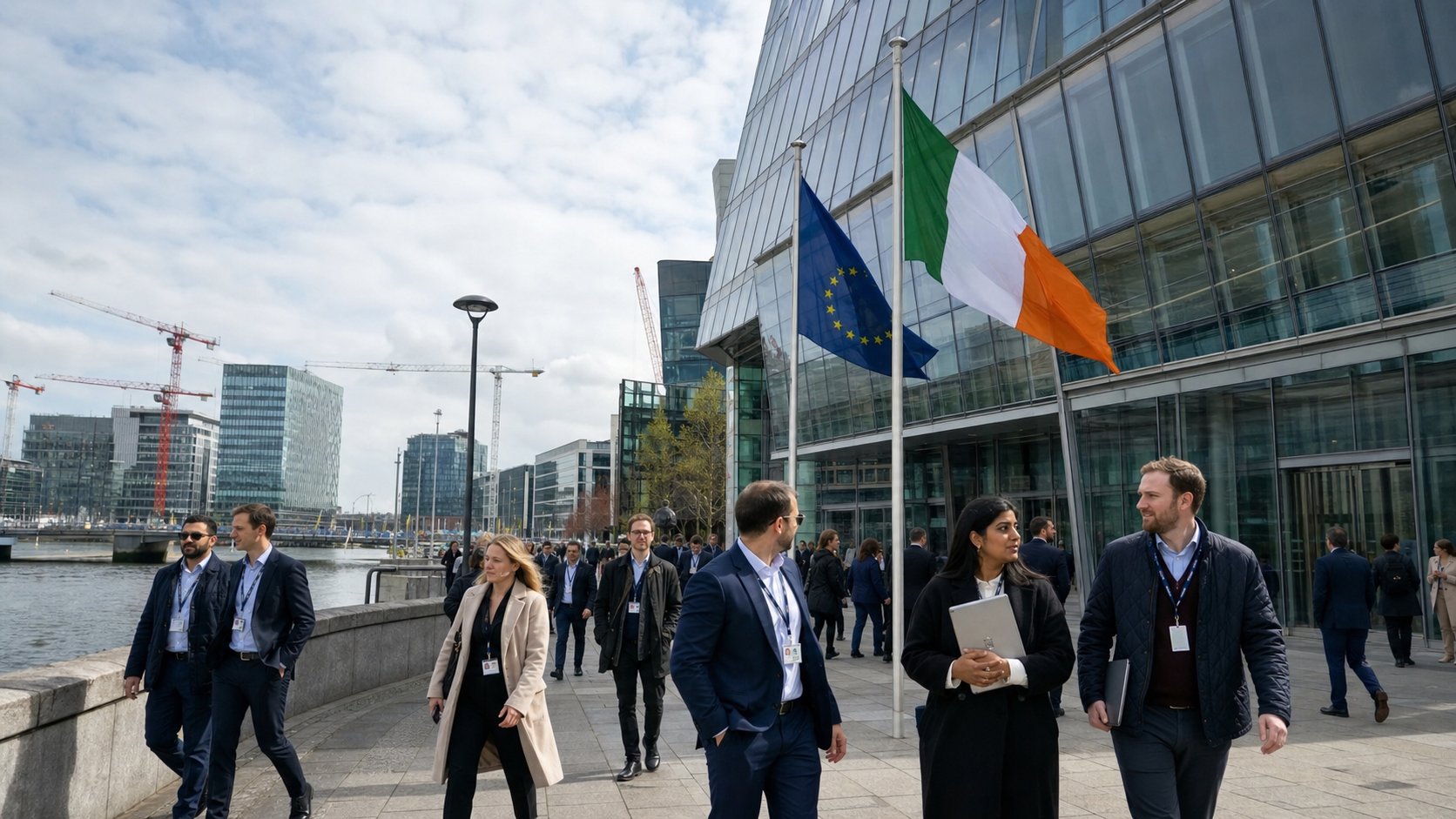
Ireland Targets 70,000 Financial Services Jobs by 2030 in New Government Strategy
The Irish government has launched a new "Ireland for Finance" strategy targeting 70,000 jobs in the international financial services sector by 2030 — up from approximately 61,000 currently across 600 firms — with 31 specific actions focused on digital assets, artificial intelligence, and regional development, and a commitment to ensuring that one in four financial services jobs is located outside Dublin.
Background
Ireland's international financial services sector has been one of the most remarkable success stories in the country's economic history. From the establishment of the International Financial Services Centre in Dublin's docklands in 1987 — a development that transformed a derelict industrial area into one of Europe's leading financial hubs — the sector has grown to encompass a vast range of activities including funds administration, asset management, insurance, banking, aviation finance, and, increasingly, fintech and digital finance.
The sector's growth has been driven by a combination of factors: Ireland's membership of the European Union, which provides access to the single market; its English-speaking workforce; its competitive corporate tax rate; and the presence of a deep pool of financial services talent developed over four decades of sector growth. Ireland is now the fourth-largest exporter of financial services in the EU, a position that reflects the extraordinary concentration of international financial activity in a country of just five million people.
The previous "Ireland for Finance" strategy, which ran from 2019 to 2025, successfully met its employment targets and established Ireland as a leading location for a range of financial services activities. The new strategy, launched on 25 August 2026, builds on that foundation and sets out an ambitious agenda for the next phase of the sector's development, with a particular focus on the opportunities presented by digital transformation and the growing importance of sustainable finance.
Key Developments
The new strategy contains 31 specific actions designed to reduce administrative burdens, bolster Ireland's international competitiveness, and foster innovation in the financial services sector. Among the most significant commitments is the establishment of a new Digital Assets Industry Group, which will bring together government, regulators, and industry to develop Ireland's position as a leading location for digital asset activities — including cryptocurrency, tokenised funds, and blockchain-based financial services.
The strategy also commits to reviewing legislation to facilitate the development of tokenised investment funds, a rapidly growing area of financial innovation that has the potential to transform the funds industry. Ireland is already the largest domicile for UCITS funds in the world, and the development of tokenised fund structures could reinforce that position in the digital era.
The regional development dimension of the strategy is significant. The commitment to ensuring that one in four financial services jobs is located outside Dublin reflects a recognition that the concentration of the sector in the capital has created regional imbalances and that the growth of remote and hybrid working has created new opportunities to develop financial services employment in cities including Cork, Galway, Limerick, and Waterford. Financial Services Ireland, the Ibec group that represents the sector, has published a complementary five-year roadmap that supports the government's regional ambitions.
Why It Matters
The financial services sector is one of the most important pillars of the Irish economy, contributing significantly to tax revenues, employment, and the country's international economic profile. The new strategy matters because it sets out a clear ambition for the sector's continued growth and identifies the specific actions that will be taken to achieve it. In a global environment where competition for financial services investment is intensifying — with London, Luxembourg, Frankfurt, and Amsterdam all competing for business that might otherwise come to Dublin — a clear and credible strategy is essential to maintaining Ireland's competitive position.
The focus on digital assets and AI is particularly timely. The financial services sector is undergoing a profound technological transformation, and countries that position themselves effectively in the digital finance space will have a significant advantage in attracting investment and talent over the coming decade. Ireland's existing strengths in technology — it is home to the European headquarters of Google, Meta, Apple, and many other major technology companies — provide a natural foundation for the development of digital finance activities.
Local Impact
The regional development dimension of the strategy will be felt most directly in cities outside Dublin. Cork, which already has a significant financial services presence including major operations from Apple, Fidelity, and a range of insurance companies, is well positioned to benefit from the strategy's regional focus. Galway, Limerick, and Waterford are also identified as priority locations for financial services growth, and the strategy's commitment to infrastructure investment — including housing, transport, and energy — in these cities is a recognition that talent attraction requires more than just competitive salaries. For workers in the financial services sector across Ireland, the strategy's ambition to grow employment to 70,000 by 2030 represents a positive signal about the sector's long-term prospects.
What's Next
The implementation of the 31 actions in the new strategy will be overseen by a cross-departmental steering group, with progress reported annually. The establishment of the Digital Assets Industry Group is expected to be one of the first actions to be implemented, with the group likely to be operational by the end of 2026. The strategy will be reviewed at the mid-point of its implementation in 2028, with adjustments made as necessary to reflect changes in the global financial services landscape.