Troubles Legacy Bill Faces Mounting Opposition as UK-Ireland Relations Remain Strained
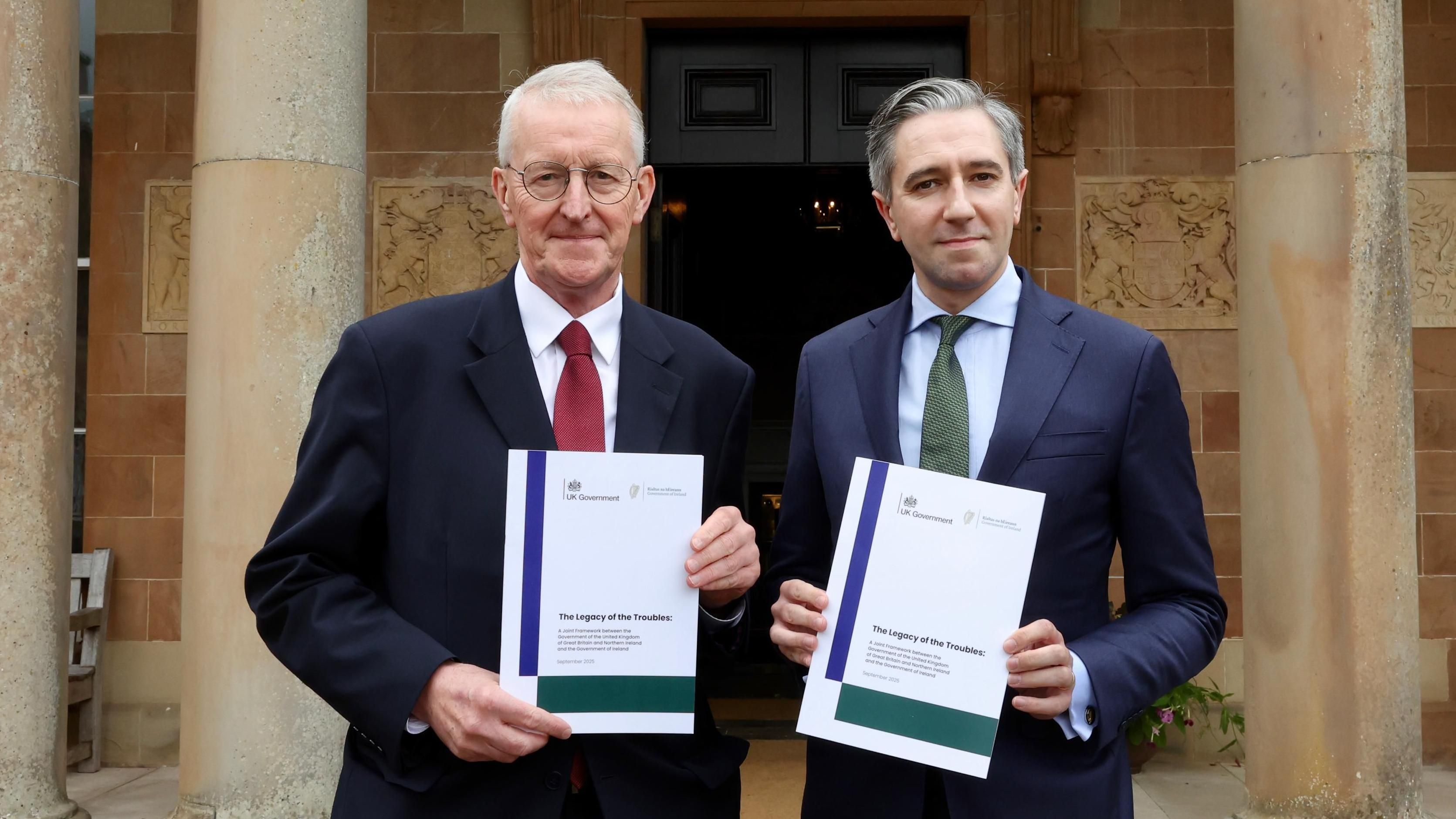
The British government's latest attempt to address the legacy of the Northern Ireland Troubles is facing a furious backlash from victims' groups, nationalist parties, and the Irish government, threatening to plunge UK-Ireland relations to a new low. A new Legacy Bill, introduced by Northern Ireland Secretary Hilary Benn, has been roundly criticised as insufficient and morally bankrupt. The legislation comes as Prime Minister Keir Starmer visited Belfast ahead of a crucial UK-Ireland Summit in Cork, where the contentious bill is set to dominate discussions with Taoiseach Micheál Martin. With Dublin maintaining its legal challenge against the UK at the European Court of Human Rights and the cost of legacy-related litigation spiralling towards an estimated £3 billion, the issue has become a festering sore on the body politic of both nations.
Background
The roots of the current crisis lie in the 2023 Legacy Act, a piece of legislation passed by the previous Conservative government that offered a conditional amnesty to former paramilitaries and British soldiers in exchange for cooperation with a new truth recovery body. That act was met with universal condemnation from victims' families and all major political parties in Northern Ireland, who viewed it as a cynical attempt to draw a line under the past and deny justice. In a landmark ruling late last year, the UK's own courts declared that key parts of the 2023 Act were incompatible with the European Convention on Human Rights, specifically Article 2's requirement for effective investigations into deaths. This legal defeat forced the new Labour government back to the drawing board.
The result is the Northern Ireland (Legacy and Reconciliation) Bill 2026, introduced by Secretary of State Hilary Benn. The government has presented the bill as a good-faith effort to rectify the flaws of the previous act while still trying to find a way to end the cycle of costly and often fruitless historical legal cases. The bill removes the most controversial elements of the 2023 Act, but its core proposals have failed to win support. The political context is incredibly delicate; Prime Minister Starmer's government is already struggling with domestic crises and can ill-afford a protracted and bitter dispute with Dublin and Washington, both of whom act as guarantors of the Good Friday Agreement.
Starmer's visit to Belfast on the eve of the summit was intended as a gesture of goodwill, a signal that his government is committed to upholding its obligations under the peace accords. However, his meetings with local party leaders were reportedly tense, with Sinn Féin and the SDLP making their profound opposition to the new bill clear. The issue casts a long shadow over the upcoming summit in Cork on March 13th, which was meant to celebrate the strength of British-Irish ties but is now set to be a forum for tense and difficult negotiations.
Key Developments
The new Troubles Bill, while removing the explicit amnesty, proposes a new Independent Commission for Reconciliation and Information Recovery (ICRIR) that would take the lead on historical investigations. However, critics argue that the commission lacks the powers and independence to conduct meaningful inquiries. The bill also includes six specific protections for military veterans, a measure designed to appease Conservative backbenchers, but one that has been slammed by victims' groups as creating a hierarchy of victims. As one commentator noted, the bill seems to be "causing trouble over the Troubles" by trying to please everyone and satisfying no one.
The Irish government's reaction has been swift and unambiguous. Dublin has confirmed it will not drop its interstate legal case against the United Kingdom at the European Court of Human Rights in Strasbourg. The case, initiated in response to the 2023 Act, argues that the UK's approach is a unilateral breach of its international human rights obligations. The Taoiseach, Micheál Martin, is expected to tell Mr. Starmer in Cork that the new bill does not go far enough to address Ireland's concerns and that the legal challenge will proceed. This stance has been publicly supported by all major parties in the Dáil.
Meanwhile, the financial cost of failing to agree on a workable legacy process continues to escalate alarmingly. Official figures reveal that legacy-related legal costs are already approaching £2 billion, with a further £1 billion estimated to be required to deal with the current caseload. There are currently 966 legacy-related civil claims lodged with the courts in Northern Ireland, with an estimated cost of nearly £50 million to litigate. As reported by The Critic, this ongoing "lawfare" places a significant financial burden on the state.
Why It Matters
The failure to find a just and sustainable way to deal with the past has profound implications for the present and future of Northern Ireland. For thousands of families, the wounds of the Troubles remain open, and the constant political wrangling over legacy is a source of immense pain and frustration. The perception that the British government is prioritising the protection of its own soldiers over the pursuit of justice for all victims is deeply corrosive to trust and reconciliation. It undermines the very foundations of the peace process, which was built on the principles of equality, justice, and mutual respect. Unlike Scotland's devolution settlement, which has largely been resolved through political negotiation, the Northern Ireland legacy issue remains a live legal and diplomatic battleground with no clear resolution in sight. The ongoing dispute is causing significant damage to UK-Ireland relations, creating a diplomatic rift that can be exploited by those who wish to destabilise the political institutions in Northern Ireland.
Local Impact
In communities across Northern Ireland, the legacy debate is not an abstract political issue; it is a daily reality. The failure to deliver a mechanism that commands cross-community confidence means that victims and survivors are left in a painful limbo, unable to get answers about the deaths of their loved ones. The focus on legal challenges and the enormous costs involved also diverts resources and political energy away from pressing contemporary issues like healthcare, education, and the economy. The constant reopening of old wounds makes it harder for a new generation to move forward and build a shared future, perpetuating the cycle of division and mistrust that the Good Friday Agreement was designed to end.
What's Next
The immediate focus is the UK-Ireland Summit in Cork. The meeting between Keir Starmer and Micheál Martin will be critical. If no breakthrough is achieved, the relationship is likely to deteriorate further as the Irish government's case proceeds in Strasbourg. The Benn Bill will continue its passage through Parliament, where it is likely to face a barrage of amendments in the House of Lords. Victims' groups and nationalist parties will continue their campaign of opposition, both in Belfast and on the international stage. Further analysis can be found in publications like The Irish Examiner which frequently covers Anglo-Irish relations.