Irish Government Under Fire Over Cost-of-Living Crisis and Controversial Immigration Bill
The coalition government led by Taoiseach Micheál Martin is facing a torrent of criticism on multiple fronts, as it struggles to contain a worsening cost-of-living crisis, pushes through a highly controversial immigration bill, and fends off accusations of incompetence. The Labour Party has lambasted the government's economic strategy as an "incoherent, whack-a-mole" approach, demanding an emergency mini-budget to provide relief for struggling families. This call has been flatly rejected by the Taoiseach, even as new projections warn that inflation could surge to 6.7% this year. Simultaneously, the government is pressing ahead with its International Protection Bill 2026, a plan to withdraw state accommodation from thousands of Ukrainian refugees, a move that has sparked outrage and a potential constitutional crisis.
Background
The current Fianna Fáil, Fine Gael, and Green Party coalition has been walking a political tightrope for months. Public anger over the soaring cost of living has been steadily growing, with households squeezed by rampant inflation in energy, food, and housing. The government's response has been a series of targeted support packages, but critics argue these have been piecemeal and have failed to address the systemic nature of the crisis. The political opposition, sensing blood in the water, has been relentless in its attacks, accusing the government of being out of touch with the reality faced by ordinary people. The latest economic forecasts, suggesting inflation could remain stubbornly high throughout 2026, have only added fuel to the fire.
This economic pressure is now compounded by a self-inflicted political wound in the form of the International Protection Bill 2026. The legislation is designed to manage the significant pressure on state accommodation, a system that has been overwhelmed by the arrival of those fleeing the war in Ukraine and other international protection applicants. The most contentious clause in the bill proposes to withdraw state-provided accommodation and financial support from approximately 16,000 Ukrainians who arrived in Ireland before March 2024. The government argues this is a necessary measure to ensure the sustainability of the system, but it has been condemned by human rights organisations and opposition parties as cruel and inhumane.
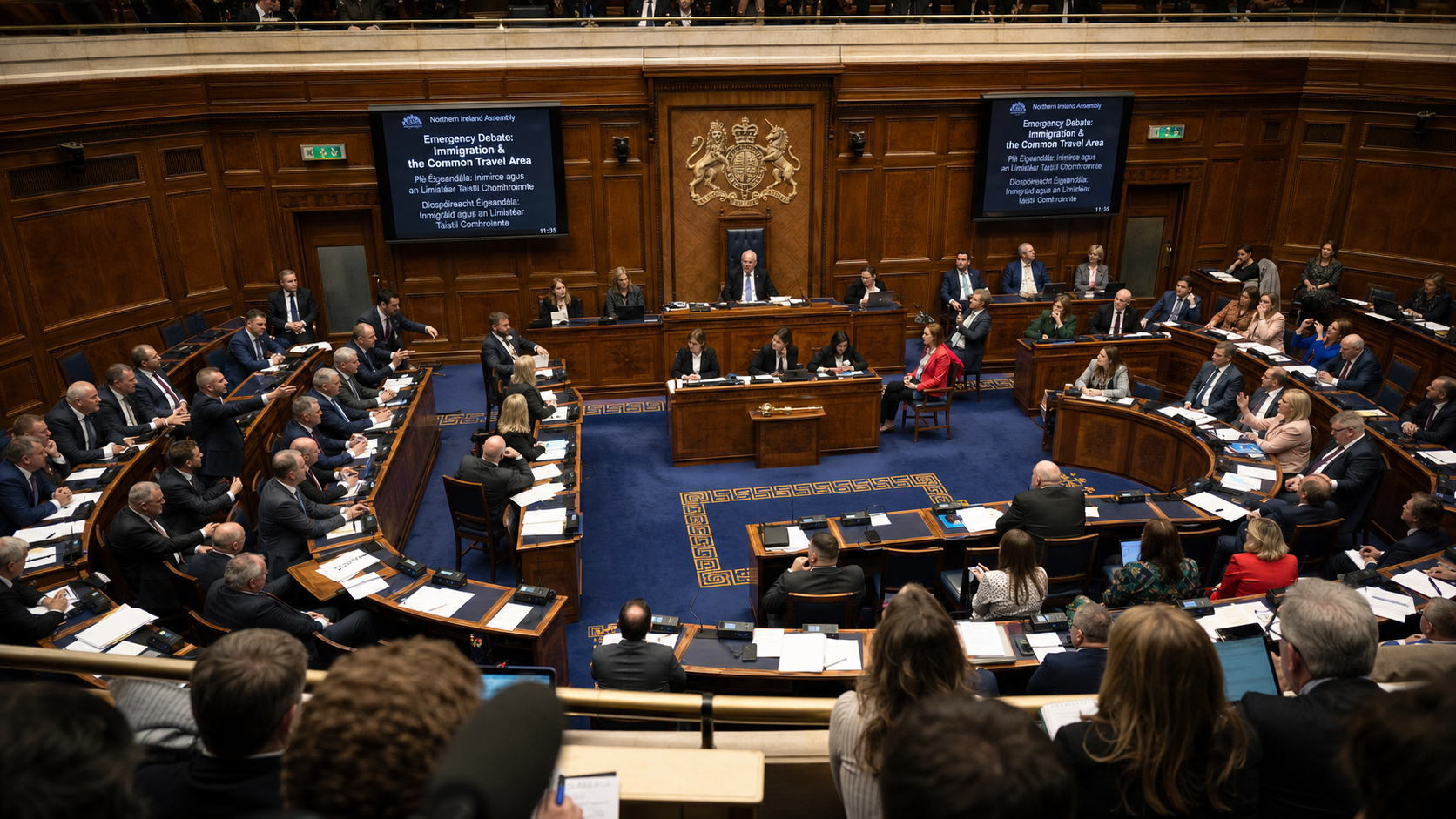
The situation has created a febrile atmosphere in Leinster House. Taoiseach Micheál Martin, whose personal approval ratings have been sliding, finds himself assailed from all sides. His leadership has been questioned, not just by the opposition, but also by nervous backbenchers within his own Fianna Fáil party who fear a backlash at the ballot box.
Key Developments
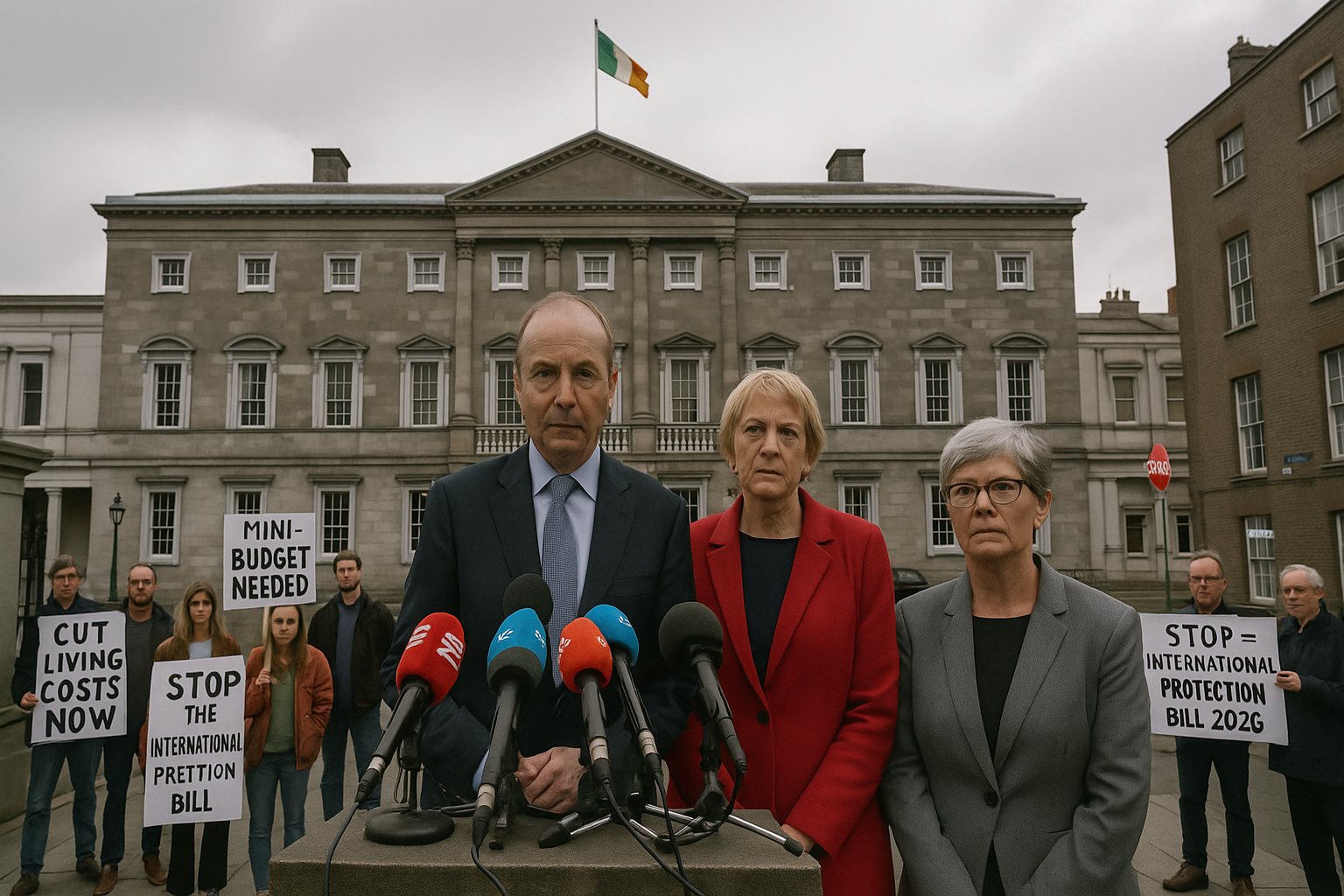
The sharpest political attack has come from Labour leader Ivana Bacik, who used a recent Dáil debate to demand the government introduce a mini-budget before the summer recess. She argued that families and workers could not wait until the main budget in October for further help. "The government's incoherent, whack-a-mole approach is simply not working," she declared. Sinn Féin leader Mary Lou McDonald has echoed this call, demanding an "emergency budget" to tackle what she termed a "social emergency."
The Taoiseach has forcefully dismissed these demands. Speaking to journalists, Micheál Martin insisted that the "bulk" of the state's budget surplus for the year has already been allocated through previous support schemes and departmental budgets. "There will be no mini-budget," he stated unequivocally, arguing that a pre-budget spending spree would be fiscally irresponsible and could further fuel inflation.
Meanwhile, the controversial immigration bill is moving towards a major constitutional showdown. President Catherine Connolly is reportedly giving "active consideration" to referring the bill to the Supreme Court for a constitutional review before signing it into law, a move that would be a significant political embarrassment for the government. As reported by the Irish Examiner, this has created a tense standoff between the government and Áras an Uachtaráin. Legal scholars have raised questions about whether the retrospective removal of support for Ukrainian refugees is compatible with the Irish constitution and international law.
Why It Matters
The government's twin crises on the economy and immigration expose a deeper vulnerability. The refusal to consider a mini-budget, while perhaps fiscally prudent in the eyes of the Department of Finance, appears politically tone-deaf. It allows the opposition to paint the coalition as a government that is indifferent to the suffering of its citizens. In a country with a deep-seated cultural memory of poverty and emigration, this is a potent and dangerous narrative. If inflation does indeed hit the upper projection of 6.7%, the pressure on the government could become unbearable, forcing a humiliating U-turn. The immigration bill is equally perilous. It has alienated the progressive, human-rights-focused wing of the electorate that the Green Party, and to some extent Fianna Fáil, needs to retain. A Supreme Court referral would not only delay the legislation but would also represent a public rebuke of the government's legal judgment and moral compass. Unlike the UK's approach to immigration, which has faced its own controversies, Ireland's situation is complicated by its specific obligations to Ukrainian refugees under EU temporary protection directives.
Local Impact
The cost-of-living crisis is having a severe impact on communities nationwide. Small businesses are struggling with rising energy costs and reduced consumer spending. Families are cutting back on essentials, and food banks are reporting unprecedented demand. In rural Ireland, the high cost of fuel is a particularly acute burden. The government's refusal to provide more immediate support is felt directly in the pockets of ordinary people, breeding resentment and a sense of abandonment. The immigration bill, meanwhile, creates uncertainty for the 16,000 Ukrainians who have been living in towns and villages across Ireland for over two years, as well as for the local community groups and schools that have integrated them.
What's Next
The political temperature is set to rise further in the coming weeks. The opposition will continue to hammer the government on the cost of living, using every available parliamentary opportunity to highlight the issue. The fate of the International Protection Bill 2026 now rests with President Connolly. Her decision on whether to sign it, or refer it to the Supreme Court, is expected shortly after it completes its final stage in the Seanad. A referral would trigger a major legal and political battle. The Taoiseach, meanwhile, must navigate these treacherous waters while also dealing with internal party pressures and preparing for a budget in October that will be seen as a make-or-break moment for his government's survival. For ongoing coverage, sources like the Irish Examiner's political section remain essential.