Tobacco Affordability Review Launched as Irish Smoking Rates Stall Despite Decade of Price Rises
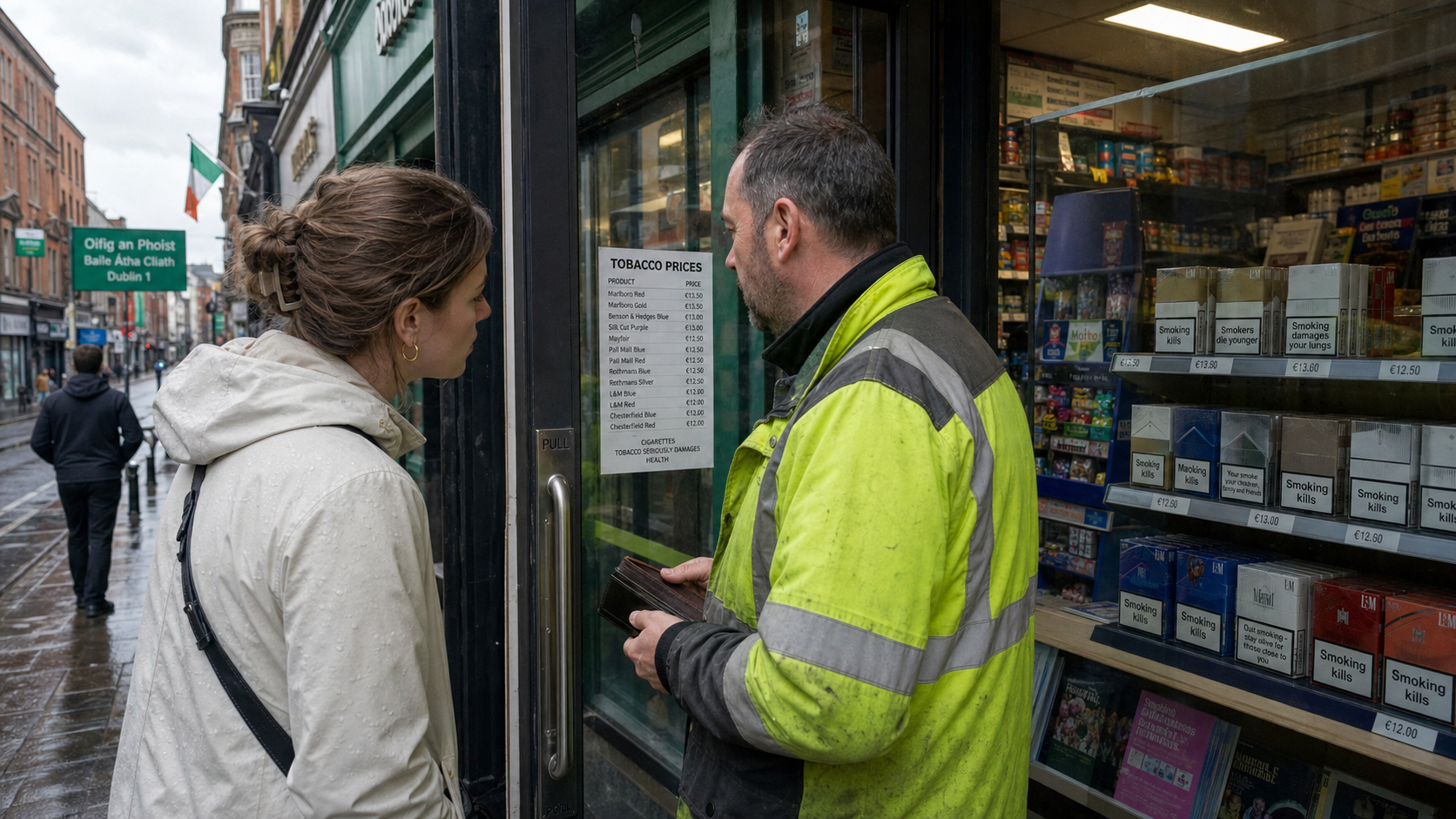
The Irish government has launched a review of tobacco affordability after smoking rates stalled despite a decade of significant price increases, with the Department of Health examining whether additional measures beyond taxation are needed to drive down the proportion of adults who smoke and achieve the country's long-standing goal of a tobacco-free society.
Background
Ireland has been at the forefront of tobacco control policy in Europe for more than two decades, introducing the world's first comprehensive workplace smoking ban in 2004 and subsequently implementing a series of measures including standardised packaging, point-of-sale display bans, and annual budget increases in tobacco excise duty. These measures have contributed to a significant reduction in smoking prevalence over the past two decades, with the proportion of Irish adults who smoke falling from approximately 30% in the early 2000s to around 18% in the mid-2020s.
However, progress has stalled in recent years. The smoking rate has remained stubbornly around 18% despite continued price increases, suggesting that the population of smokers who remain has become more resistant to the price signals that have driven previous reductions. This pattern is consistent with international research showing that the most price-sensitive smokers — typically younger people and those on lower incomes — have already quit or never started, leaving a core of more addicted smokers for whom price increases alone are insufficient motivation to quit.
Ireland's Tobacco Free Ireland strategy, launched in 2013, set a target of achieving a tobacco-free society — defined as fewer than 5% of adults smoking — by 2025. That target has not been met, and the government has acknowledged that additional measures will be needed to achieve it. The affordability review, announced in August 2026, is part of a broader reassessment of tobacco control policy that will inform the next phase of the strategy.
Key Developments
The Department of Health's affordability review will examine the relationship between tobacco prices, smoking prevalence, and the socio-economic distribution of smoking in Ireland. The review will consider whether the current level of tobacco taxation is sufficient to drive further reductions in smoking rates, or whether additional measures — such as minimum unit pricing, restrictions on the sale of cheaper tobacco products, or enhanced support for smoking cessation — are needed to complement the existing price-based approach.
The review will also examine the growing market for alternative nicotine products, including e-cigarettes and heated tobacco products, and their role in the overall tobacco control landscape. The regulation of these products has been a contentious issue in Ireland, with public health advocates divided between those who see them as a useful harm reduction tool for existing smokers and those who are concerned about their appeal to young people who have never smoked.
The Irish Cancer Society and the Irish Heart Foundation have both welcomed the review, calling for a comprehensive approach that goes beyond taxation to include enhanced cessation support, restrictions on tobacco marketing, and measures to address the socio-economic inequalities in smoking prevalence. Smoking rates in the most deprived communities in Ireland are significantly higher than the national average, and the organisations have argued that a tobacco control strategy that relies primarily on price increases will disproportionately burden lower-income smokers without necessarily helping them to quit.
Why It Matters
Tobacco remains the leading preventable cause of death in Ireland, responsible for approximately 5,500 deaths annually and a significant proportion of the burden on the health service. The stalling of smoking rates at around 18% represents a public health challenge that demands a fresh approach, and the affordability review is an important step in developing that approach. The review's findings will inform the next phase of Ireland's tobacco control strategy and will have implications for budget policy, health service planning, and the regulation of nicotine products. The international context is also relevant — several countries, including New Zealand and the United Kingdom, have introduced or are considering more radical tobacco control measures, and Ireland will be watching those experiments closely as it develops its own approach.
Local Impact
The impact of tobacco-related illness is felt in communities across Ireland, from the cancer wards of major hospitals to the GP surgeries and community health centres that manage the chronic conditions associated with long-term smoking. The HSE's smoking cessation services, which provide support to smokers who want to quit, have been under pressure from demand that exceeds their capacity, and the review is expected to consider whether additional investment in these services is needed. For the tobacco industry, which has been subject to increasingly restrictive regulation in Ireland over the past two decades, the review signals that further measures are likely, and the industry is expected to engage actively with the consultation process to protect its commercial interests.
What's Next
The Department of Health's affordability review is expected to conclude by the end of 2026, with the findings informing the 2027 budget and the next phase of the Tobacco Free Ireland strategy. The review will involve consultation with public health experts, patient advocacy organisations, the tobacco industry, and the general public. The Minister for Health is expected to make a statement on the review's findings and the government's response in early 2027. The review's recommendations will also inform Ireland's position in European Union discussions about tobacco regulation, where a revision of the Tobacco Products Directive is expected in the coming years.