Radiologist Who Reviewed HSE Patient Scans Had Medical Licence Revoked in Two Countries
A radiologist who was engaged to review patient scans for the Health Service Executive had previously had their medical licence revoked in both Sweden and Norway, raising serious concerns about the adequacy of vetting processes for medical professionals working within the Irish public health system through third-party teleradiology service providers — and prompting calls for a comprehensive review of how the HSE oversees the qualifications and fitness to practise of contracted staff.
Background
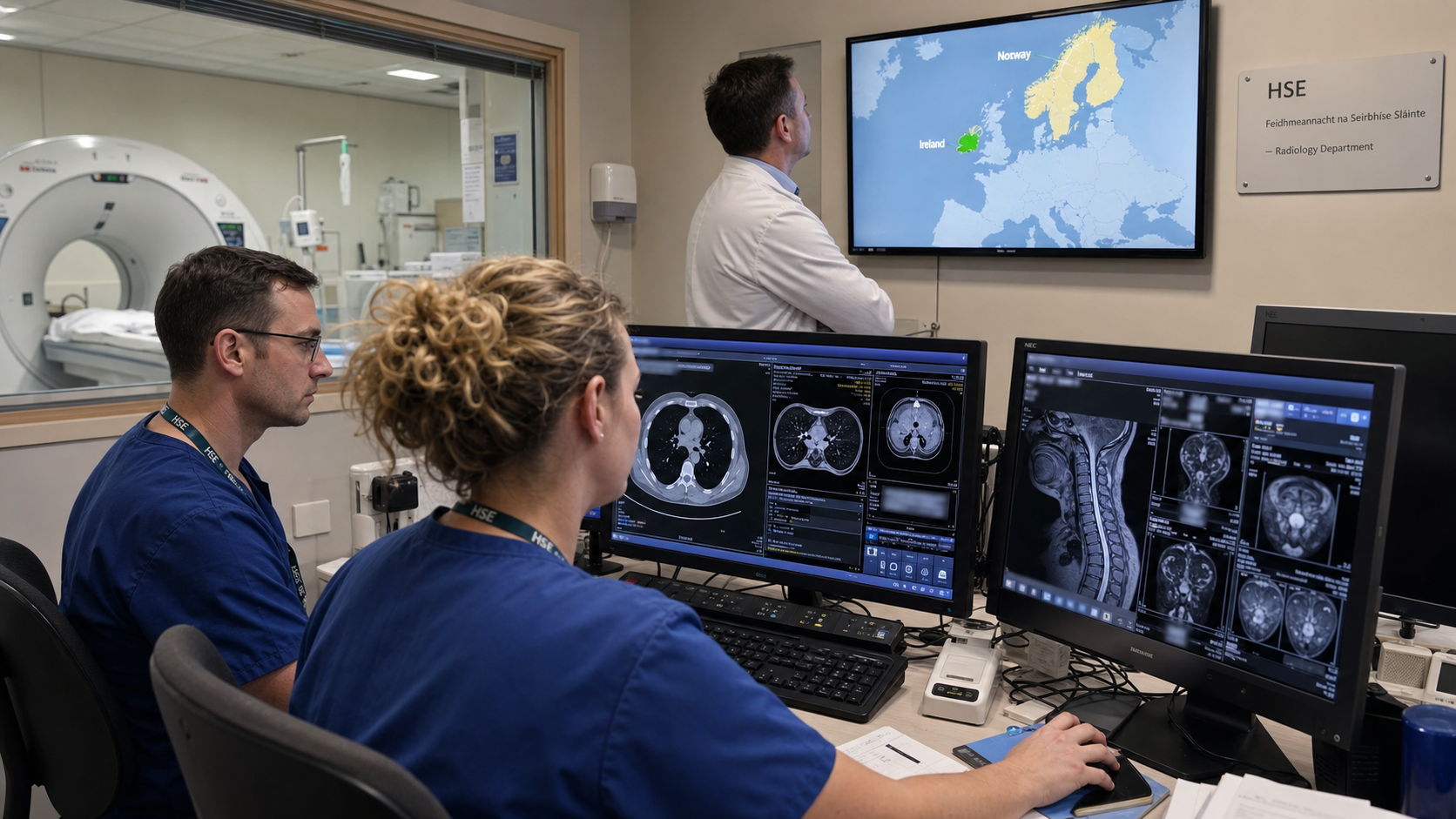
Teleradiology — the practice of transmitting medical images electronically to radiologists who review them remotely, often in different countries or time zones — has become an increasingly important part of the Irish healthcare system over the past decade. The HSE, which faces a chronic shortage of consultant radiologists, has relied on teleradiology companies to provide out-of-hours and supplementary reporting services, allowing hospitals to maintain diagnostic services at times when in-house radiologists are not available.
The shortage of consultant radiologists in Ireland is a long-standing structural problem. In 2015, the Faculty of Radiologists at the Royal College of Surgeons in Ireland noted that Ireland had significantly fewer radiologists per capita than comparable European countries such as Germany and France. The situation has improved somewhat in the intervening years, but the gap remains significant, and the HSE continues to rely heavily on locum, agency, and teleradiology staff to manage diagnostic workloads across its hospital network.
The use of teleradiology services introduces particular challenges for quality assurance and patient safety. When radiologists are employed directly by the HSE, their qualifications, registration, and fitness to practise are subject to oversight by the Medical Council of Ireland. When they are employed by third-party teleradiology companies, the oversight arrangements are more complex, and the responsibility for verifying qualifications and registration may be less clearly defined.
Key Developments
The Irish Times reported on 25 August that a radiologist who had been engaged to review patient scans for the HSE through a teleradiology company had previously had their medical licence revoked in both Sweden and Norway. The individual was able to secure employment with the teleradiology company despite these revocations, raising questions about the adequacy of the company's vetting processes and about the HSE's oversight of the qualifications of contracted staff.
The case follows a separate incident reported in July 2026, in which it emerged that a private provider, Affidea Ireland, had been employing sonographers for HSE-contracted ultrasound services who did not hold the contractually required postgraduate qualifications. In that case, Affidea maintained that all staff held bachelor's degrees and that all scans were reviewed by a consultant radiologist, but the HSE reiterated that its contracts explicitly mandate a postgraduate qualification at Level 9 of the National Framework of Qualifications.
Together, these incidents suggest a pattern of inadequate oversight of the qualifications and fitness to practise of staff providing diagnostic services to the HSE through third-party providers. The HSE has indicated that it is reviewing its oversight arrangements in light of the revelations, and the Medical Council has been asked to comment on the regulatory framework governing teleradiology services.
Why It Matters
The revelation that a radiologist with a revoked licence in two countries was reviewing HSE patient scans is a serious patient safety concern. Radiological diagnosis is a critical component of medical care — errors in the reading of scans can lead to missed diagnoses, delayed treatment, and, in the worst cases, patient harm or death. The integrity of the radiological reporting process depends on the competence and fitness to practise of the radiologists involved, and any failure in the vetting of those radiologists represents a direct risk to patient safety.
The case also raises systemic questions about the HSE's approach to the oversight of contracted services. The health service spends hundreds of millions of euro each year on contracted services from private providers, and the quality and safety of those services depend on robust contractual requirements and effective monitoring. The incidents involving teleradiology and sonography services suggest that the current oversight arrangements are inadequate and that a more rigorous approach is needed.
This is not the first time that concerns about the quality of contracted diagnostic services have been raised in Ireland. The CervicalCheck scandal, in which thousands of women were not informed of errors in the reading of their cervical smear tests, demonstrated the catastrophic consequences that can follow from failures in the oversight of diagnostic services. The current revelations, while different in nature, carry echoes of that earlier crisis and will intensify pressure on the HSE and the Department of Health to strengthen their oversight arrangements.
Local Impact
For patients across Ireland who have had scans reviewed by teleradiology services, the revelation will be a source of anxiety. The HSE has not indicated how many patients may have had their scans reviewed by the radiologist in question, or whether any of those patients have been contacted. Patient advocacy groups have called for full transparency about the extent of the issue and for a systematic review of scans that may have been affected. The HSE's patient safety team is expected to conduct a review of the cases involved and to notify any patients whose care may have been affected.
What's Next
The HSE has indicated that it is reviewing its oversight arrangements for teleradiology and other contracted diagnostic services in light of the revelations. The Medical Council has been asked to clarify the regulatory framework governing the use of radiologists who are registered in other jurisdictions but not in Ireland. The Department of Health is expected to commission an independent review of the HSE's contracting and oversight arrangements for diagnostic services, with a report expected before the end of 2026. Patient advocacy groups have called for the review to be completed as quickly as possible and for its findings to be made public.