NI Bus Safety Bill to Ban Overtaking Stationary School Buses on Rural Roads
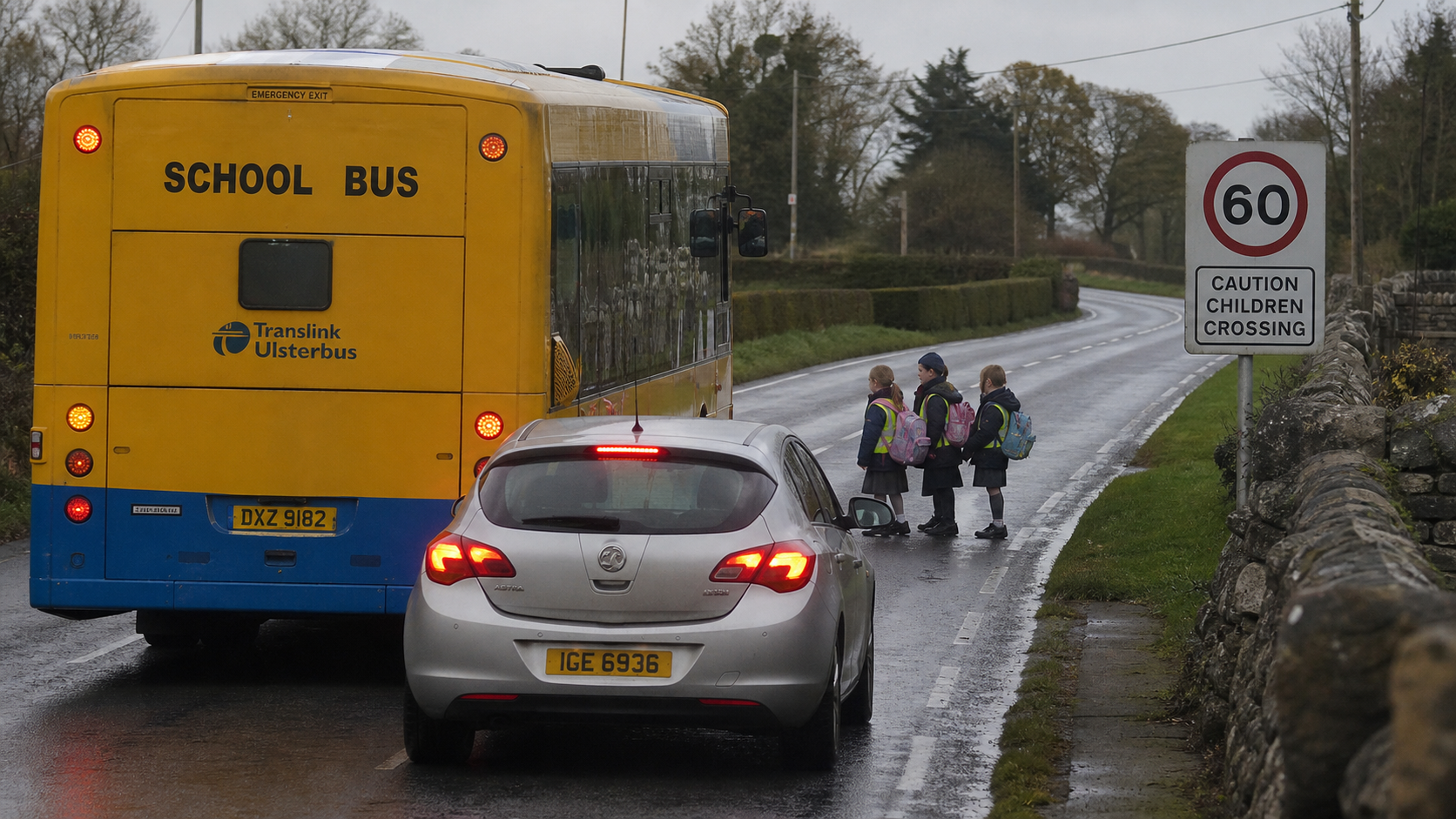
Infrastructure Minister Liz Kimmins has announced plans to introduce legislation banning the overtaking of stationary school buses on 60mph rural roads in Northern Ireland, following a public consultation that received more than 600 responses — a measure that road safety advocates have described as long overdue and that is intended to protect children at the moment of greatest vulnerability during their school journey.
Background
The safety of children travelling to and from school on rural roads in Northern Ireland has been a persistent concern for parents, road safety organisations, and politicians for many years. The combination of narrow roads, high speed limits, and the regular stopping and starting of school buses creates conditions in which children boarding or alighting from buses are exposed to significant risk from passing vehicles. A series of tragic accidents involving children at bus stops has brought the issue to public attention and generated sustained pressure on the Department for Infrastructure to act.
In other jurisdictions, including the United States and Canada, laws prohibiting the overtaking of stationary school buses are well-established and widely enforced, with flashing warning lights on buses providing a clear signal to other road users that children may be crossing the road. Northern Ireland has lagged behind in implementing equivalent measures, despite the evidence from other countries that such laws can significantly reduce the risk of accidents involving children at bus stops.
The Department for Infrastructure launched a major public consultation titled "Safer Journeys to School" in early 2026, examining potential new rules for motorists around stationary buses. The consultation received more than 600 responses — a high level of engagement for a transport policy consultation — reflecting the depth of public concern about the issue. The responses were broadly supportive of new legislation, though there were questions about the practicality of enforcement on narrow rural roads and about whether the ban should apply to all buses or only to school buses.
Key Developments
Minister Kimmins confirmed this week that she intends to bring forward legislation prohibiting the overtaking of school buses while they are stopped to pick up or drop off passengers on 60mph rural roads. The legislation will be brought to the Executive "soon," though no firm timeline has been given for its introduction to the Assembly. The minister acknowledged that there is uncertainty about whether the bill can pass through the Assembly before the next election, given the legislative timetable and the competing demands on Assembly time.
The proposed legislation will be accompanied by complementary safety measures, including new rules enforcing the proper use of flashing amber warning lights on school buses — with drivers who fail to operate these lights correctly subject to fixed penalty notices — and the expansion of 20mph zones around schools. The Department has also indicated it will invest in road engineering improvements at identified high-risk bus stop locations and will run public advertising campaigns aimed at drivers, parents, and children.
Enforcement of the proposed overtaking ban has been identified as a practical challenge, particularly on narrow rural roads where the physical layout may make it difficult to determine whether a vehicle has overtaken a stationary bus in a manner that constitutes a breach of the law. The PSNI has indicated it will work with the Department to develop enforcement protocols that are practical and proportionate.
Why It Matters
The proposed legislation addresses a genuine and serious risk to child safety on Northern Ireland's rural roads. The 60mph speed limit that applies to many rural roads — including those on which school buses regularly stop — creates conditions in which a vehicle overtaking a stationary bus can strike a child who is crossing the road at a speed that is almost certainly fatal. The introduction of a legal prohibition on such overtaking, backed by clear warning signals from buses and effective enforcement, has the potential to prevent deaths and serious injuries that are currently occurring with tragic regularity.
The measure is also significant because it reflects a broader shift in Northern Ireland's approach to road safety, from a reactive model that responds to accidents after they occur to a proactive model that identifies and addresses risks before they result in harm. The "Safer Journeys to School" consultation process, which engaged parents, schools, bus operators, and road safety organisations, is an example of the kind of evidence-based policy development that road safety advocates have been calling for.
Northern Ireland's road safety record has improved significantly over the past two decades, but the rate of improvement has slowed in recent years, and the number of children killed or seriously injured on the roads remains unacceptably high. The school bus safety legislation is one component of a broader road safety strategy that the Department for Infrastructure is developing, which will also address issues including speeding, drink-driving, and the safety of cyclists and pedestrians.
Local Impact
For parents of children who travel to school by bus in rural areas of Northern Ireland — in counties Antrim, Down, Armagh, Tyrone, Fermanagh, and Londonderry — the proposed legislation will provide a degree of reassurance that the government is taking their concerns seriously. The Translink school bus network serves thousands of children across Northern Ireland, and the safety of that network is a matter of direct concern to a significant proportion of the population. Local councils in rural areas have been particularly vocal in their support for the legislation, reflecting the concerns of their constituents about road safety on the roads that serve their communities.
What's Next
Minister Kimmins has indicated she will bring the legislation to the Executive for approval before introducing it to the Assembly. The timeline for Assembly consideration is uncertain, given the legislative timetable and the proximity of the next Assembly election. Road safety organisations have called for the legislation to be fast-tracked through the Assembly as a matter of urgency, arguing that every month of delay represents an ongoing risk to children's safety. The Department for Infrastructure is expected to publish a detailed legislative proposal in September.