Maynooth University Sleep Study to Examine Links Between Poor Sleep and Mental Health in Irish Adults
Maynooth University has launched a major new research project examining the links between poor sleep and mental health outcomes in Irish adults — a study that researchers say will provide the most comprehensive picture yet of the prevalence and impact of sleep disorders in Ireland, and that could inform significant changes in how the HSE approaches the treatment of both sleep problems and mental health conditions.
Background
Sleep disorders are among the most common and most underdiagnosed health conditions in Ireland. Estimates suggest that between 30% and 40% of Irish adults experience significant sleep difficulties at some point in their lives, with chronic insomnia — defined as difficulty sleeping at least three nights per week for three months or more — affecting approximately 10% to 15% of the adult population. Despite this prevalence, sleep disorders receive relatively little attention in the Irish healthcare system, and access to specialist sleep medicine services is limited, with long waiting lists at the small number of dedicated sleep clinics that exist in the country.
The relationship between sleep and mental health is well established in the scientific literature. Poor sleep is both a symptom and a cause of a range of mental health conditions, including depression, anxiety, and post-traumatic stress disorder. People with mental health conditions are significantly more likely to experience sleep disorders, and people with sleep disorders are significantly more likely to develop mental health conditions — a bidirectional relationship that makes it difficult to treat either condition in isolation. Despite this, the Irish mental health system has historically treated sleep problems as a secondary concern, focusing on the primary mental health diagnosis rather than addressing sleep difficulties as a condition in their own right.
Maynooth University's Department of Psychology has been at the forefront of sleep research in Ireland for over a decade, and the new study builds on a body of work that has established the university as one of the leading centres for sleep science in the country. The research team, led by Professor Siobhán Howard, has previously published significant findings on the relationship between sleep and academic performance in Irish students, and the new study extends that work to the broader adult population.
Key Developments
The new study, funded by the Health Research Board with a grant of €1.2 million over three years, will recruit 2,000 participants across Ireland over the next two years. Participants will be drawn from a range of settings, including GP practices, community mental health teams, and the general population, to ensure that the study captures the full spectrum of sleep experiences in Irish adults — from those with no significant sleep difficulties to those with severe, chronic insomnia and associated mental health conditions.
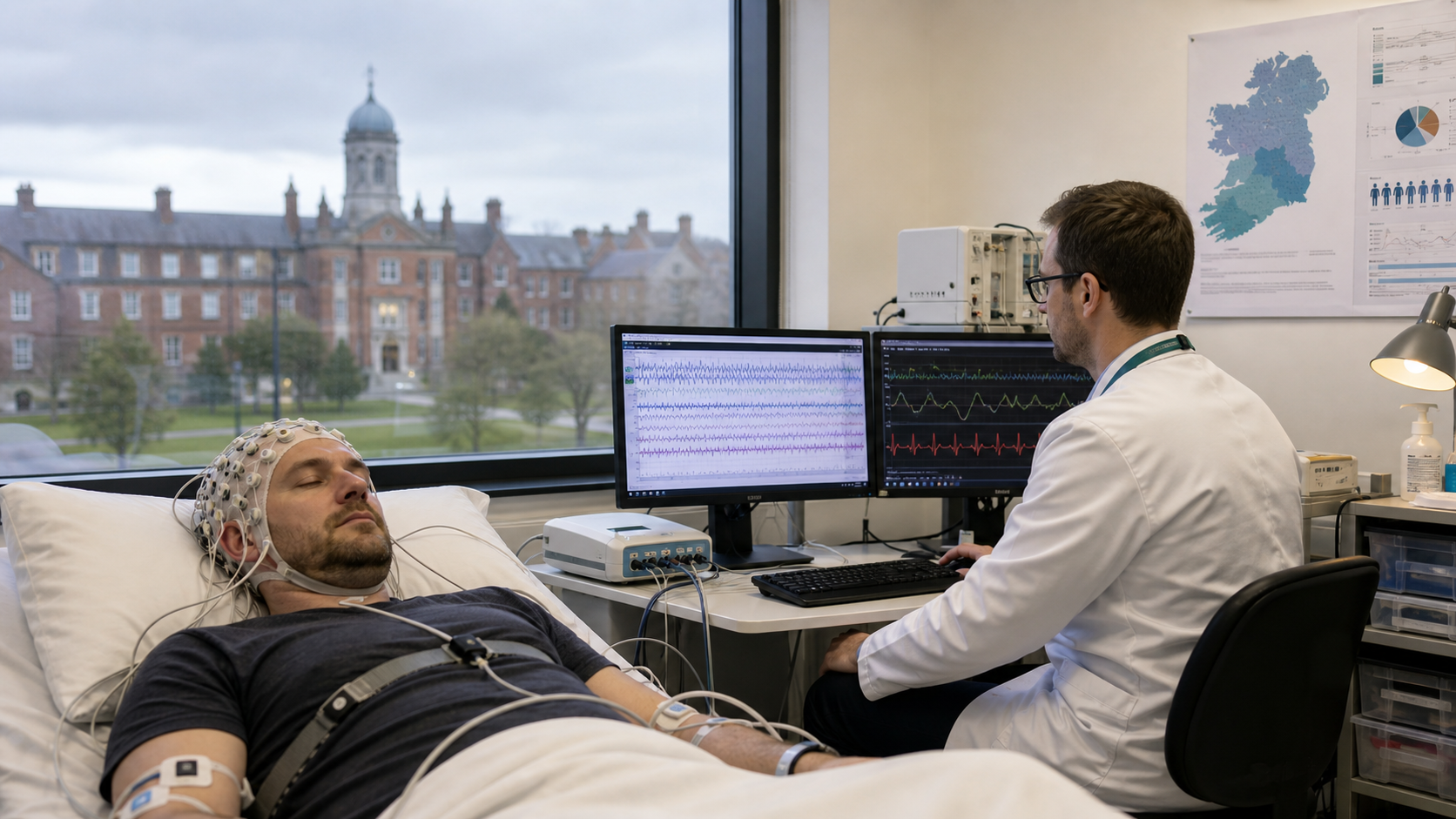
The study will use a combination of self-report questionnaires, actigraphy — a wrist-worn device that measures movement and provides an objective measure of sleep patterns — and, for a subset of participants, polysomnography, the gold-standard clinical assessment of sleep that involves monitoring brain activity, breathing, and movement during sleep. This multi-method approach will allow the research team to compare subjective and objective measures of sleep quality and to identify the specific aspects of sleep disruption that are most strongly associated with mental health outcomes.
The research team has also partnered with the HSE's National Office for Mental Health to ensure that the findings of the study are translated into practical recommendations for clinical practice. Professor Howard has indicated that one of the primary goals of the research is to develop evidence-based guidelines for the assessment and treatment of sleep disorders in the context of mental health care — guidelines that could be implemented across the HSE's network of mental health services.
Why It Matters
The Maynooth sleep study matters because it addresses a significant gap in the evidence base for Irish mental health policy. Ireland has invested substantially in mental health services in recent years, following the publication of the national mental health strategy 'Sharing the Vision' in 2020, but the integration of sleep medicine into mental health care has lagged behind the evidence. If the study confirms the expected links between sleep disorders and mental health outcomes in the Irish population, it will provide a strong evidence base for the HSE to invest in sleep medicine services and to integrate sleep assessment and treatment into its mental health pathways.
The study also matters in the context of Ireland's broader public health challenges. The Covid-19 pandemic had a significant impact on sleep patterns across the population, with surveys suggesting that rates of insomnia and sleep disruption increased substantially during the lockdown periods. While the acute phase of the pandemic is over, the legacy effects on sleep and mental health are likely to persist for some years, and the Maynooth study will provide important data on the current state of sleep health in the Irish adult population.
Local Impact
The study will recruit participants from across Ireland, with particular efforts to ensure representation from rural areas and from communities that are typically underrepresented in health research. GP practices in counties including Kildare, Meath, Wicklow, and Dublin — the counties closest to the Maynooth campus — will be among the first to be approached for participant recruitment, but the study will ultimately draw participants from all 26 counties of the Republic. For the participants themselves, involvement in the study will provide access to a comprehensive assessment of their sleep health and, for those with significant sleep disorders, referral to appropriate clinical services.
What's Next
Recruitment for the Maynooth sleep study will begin in September 2026, with the first results expected to be published in 2028. The research team will present interim findings at the annual conference of the Irish Sleep Society in 2027, providing an early indication of the study's key findings. Professor Howard has indicated that the team will also engage with the Department of Health and the HSE throughout the study to ensure that the findings are available to policymakers in a timely and accessible format. The study is expected to be one of the most significant contributions to Irish health research in the coming years.