Three Members of Polish Family Found Dead at Ballymena Home in Suspected Double Murder-Suicide
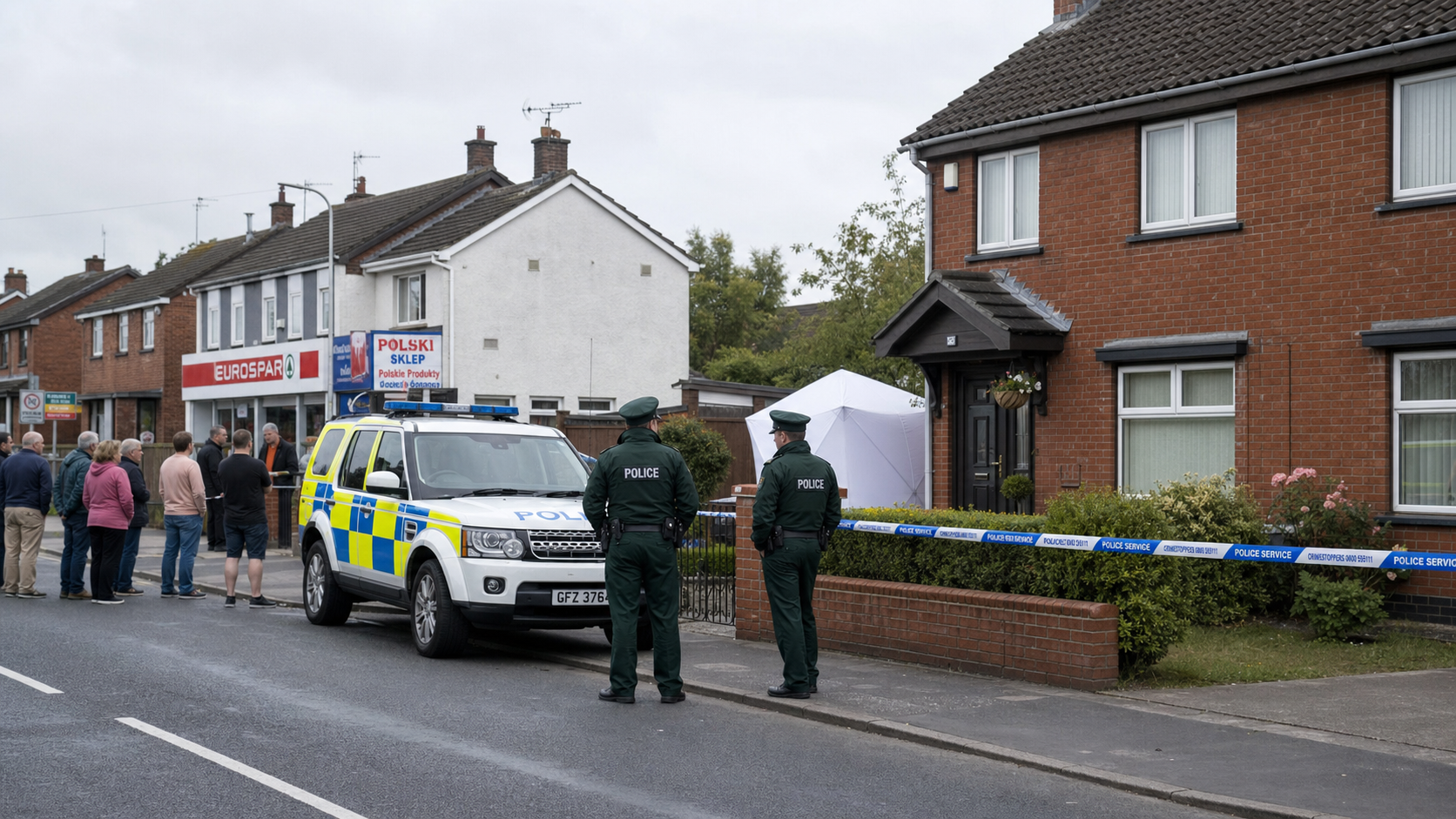
Three members of a Polish family — a 41-year-old man, a 39-year-old woman, and their eight-year-old daughter — were found dead at a property on Old Cullybackey Road in Ballymena on the morning of Monday, July 13, in what the Police Service of Northern Ireland has confirmed is being treated as a double murder-suicide. The discovery, made as the town was engaged in Twelfth of July celebrations, sent a wave of shock through the community and prompted an outpouring of condolences from political leaders across Northern Ireland.
Background
Ballymena, the principal town of the Mid and East Antrim district, is a community of approximately 30,000 people situated in County Antrim, roughly 30 miles north of Belfast. The town has a significant Polish community, part of the broader wave of migration from central and eastern Europe that transformed many Northern Irish towns and cities following EU enlargement in 2004. Polish nationals have become an integral part of Ballymena's social and economic fabric over the past two decades, working across a range of sectors and establishing families in the area.
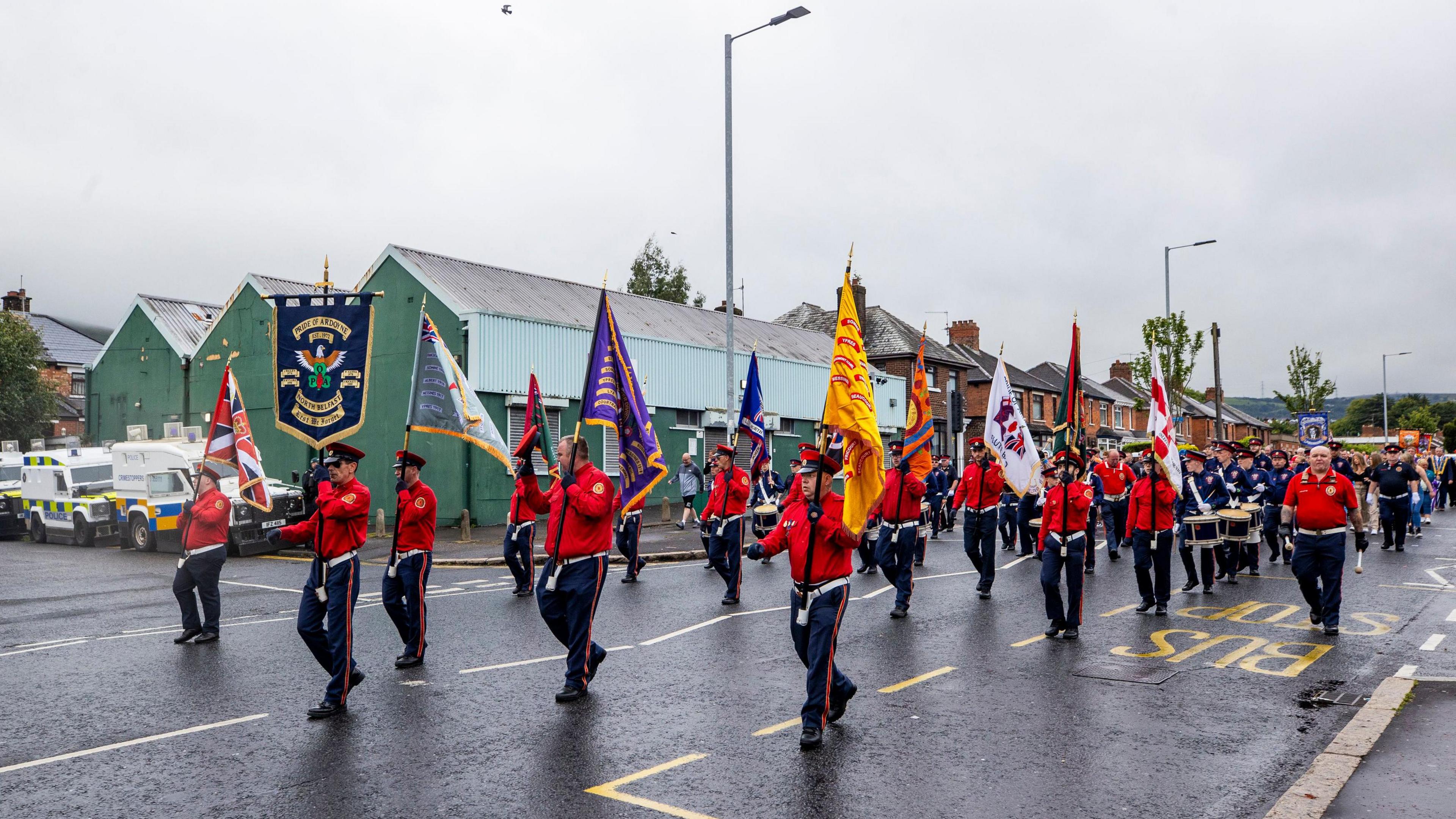
Old Cullybackey Road, where the tragedy occurred, is a residential area on the outskirts of Ballymena. The discovery of the three bodies on the morning of July 13 came as the town was in the midst of its annual Twelfth of July commemorations, with many residents either participating in or observing the Orange Order parades that are a central feature of the loyalist calendar in this part of County Antrim. The juxtaposition of community celebration and private tragedy created a particularly stark and sorrowful atmosphere in the town.
The PSNI's Mid and East Antrim District policing team responded to the scene, with specialist officers and forensic teams attending the property. The investigation was led by Superintendent William Calderwood, who has responsibility for policing in the district and who has been the primary public voice for the PSNI throughout the investigation.
Key Developments
Superintendent Calderwood confirmed that police were treating the deaths as a double murder-suicide and stated clearly that officers were not seeking any other suspects in connection with the incident. He reassured the public that there was no ongoing risk to the community — a statement that was important in the context of a town that was, at the time of the discovery, hosting large public gatherings for the Twelfth celebrations.
The PSNI confirmed it was working to inform relatives of the three deceased, including family members living in Poland, and was liaising with the Polish consulate to facilitate that process. The consular engagement reflects the international dimension of the tragedy and the PSNI's responsibility to ensure that the families of foreign nationals who die in Northern Ireland receive appropriate support and information.
First Minister Michelle O'Neill, Deputy First Minister Emma Little-Pengelly, and Justice Minister Naomi Long were among the political leaders who expressed their profound shock and sadness at the news. All three praised the emergency services who attended the scene and urged the public to refrain from online speculation out of respect for the grieving families. The cross-community nature of the political response — with leaders from Sinn Féin, the DUP, and the Alliance Party all speaking with one voice — reflected the gravity of the tragedy and its impact on the wider community.
Why It Matters
The Ballymena tragedy is a reminder of the hidden pressures that can exist within families and communities, pressures that are not always visible to neighbours, friends, or statutory services until it is too late. Northern Ireland has made significant progress in recent years in developing domestic abuse and family crisis support services, but the demand for those services consistently outstrips supply, and the barriers to accessing help — cultural, linguistic, and practical — remain significant for migrant communities.
For the Polish community in Ballymena and across Northern Ireland, the deaths are a source of particular grief. Polish nationals have built deep roots in many Northern Irish communities over the past two decades, and the loss of a family in such circumstances touches the entire community. Support organisations working with migrant communities in Northern Ireland have noted that language barriers and cultural differences can make it harder for people in crisis to access the help they need, and this tragedy will inevitably prompt reflection on how services can better reach those who may be struggling in silence.
The timing of the discovery — during the Twelfth of July celebrations — added a particular poignancy to the news. Belfast Live described a "silence" falling over Ballymena as word spread through the town, a moment that captured the way in which private tragedy can cut through the noise of public celebration with devastating effect.
Local Impact
In Ballymena, the impact of the tragedy has been felt across the community. Local schools, community organisations, and faith groups have been among those offering support to those affected, while the PSNI has made family liaison officers available to assist relatives and friends of the deceased. The Mid and East Antrim Borough Council has also expressed its condolences and indicated its readiness to support community recovery efforts.
The Polish community in Ballymena, which has its own social networks, cultural organisations, and places of worship, has been particularly affected. Community leaders have been working to provide support to those who knew the family and to ensure that accurate information is available in Polish to counter the spread of misinformation on social media.
For the emergency services personnel who attended the scene — police officers, paramedics, and others — the psychological impact of responding to such a distressing incident is significant. The PSNI has indicated that welfare support is being provided to those involved, reflecting a growing recognition within the service of the toll that traumatic incidents take on frontline staff.
What's Next
The PSNI investigation into the circumstances of the deaths is ongoing, with a formal inquest process expected to follow in due course. The coroner's office will be involved in establishing the precise sequence of events, and a full post-mortem examination of all three victims will form part of that process.
The Polish consulate has been engaged throughout and will continue to work with the PSNI and Irish authorities to support the family members of the deceased who are based in Poland. Funeral arrangements are expected to be made in consultation with the family, with the possibility that the remains may be repatriated to Poland.
In the longer term, the tragedy is likely to prompt renewed discussion about the support available to migrant communities in Northern Ireland who may be experiencing family crisis, domestic difficulties, or mental health challenges. Statutory and voluntary organisations working in this space have indicated their intention to engage with the Mid and East Antrim district council and the PSNI on how services can be made more accessible to those who need them most.