Orange Order Return Parade Passes Ardoyne Flashpoint Without Incident for Second Consecutive Year
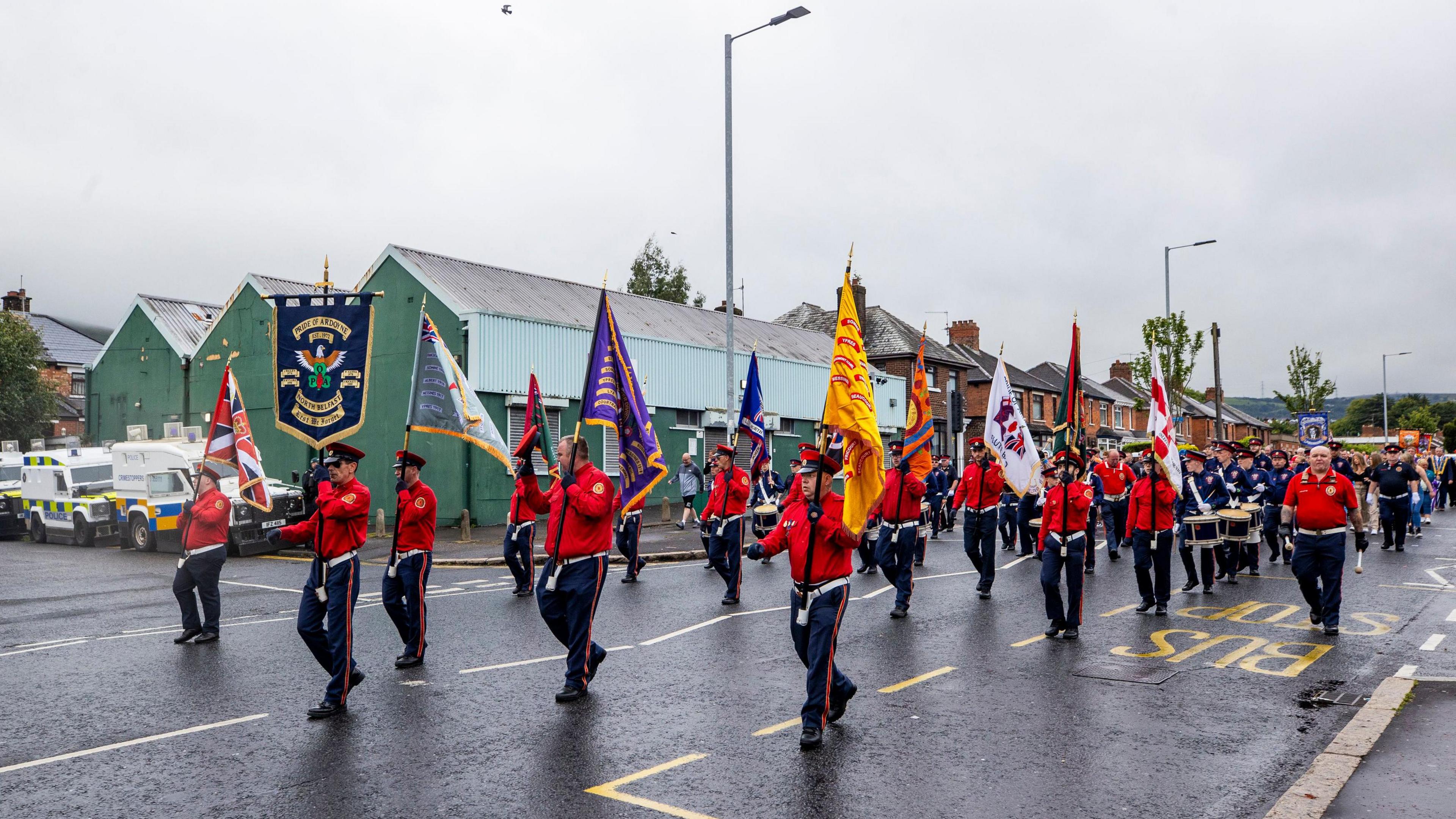
The Ligoniel lodges of the Orange Order completed their return parade past the Ardoyne shops on the Crumlin Road in north Belfast on the morning of Tuesday, July 14, without any incident — the second consecutive year that one of Northern Ireland's most historically contentious parading routes has passed without violence or significant disorder. The peaceful outcome, achieved under a Parades Commission determination that permitted the return leg for the second year running, has been cautiously welcomed as evidence of progress at one of Belfast's most sensitive interface areas.
Background
The Ardoyne interface on the Crumlin Road in north Belfast has been one of the most contested parading flashpoints in Northern Ireland for decades. The area sits at the boundary between the predominantly loyalist Woodvale district and the predominantly nationalist Ardoyne community, and the passage of Orange Order parades past the Ardoyne shops has been a source of intense conflict, negotiation, and periodic violence since the 1990s.
The dispute centres on the right of the Orange Order to march along what it regards as a traditional route through north Belfast, and the objections of the Ardoyne community to what many residents regard as an unwanted and provocative presence. The Parades Commission, the statutory body responsible for adjudicating on contentious parades in Northern Ireland, has been at the centre of the dispute for many years, issuing determinations that have variously permitted, restricted, and prohibited different elements of the parade.
In previous years, the Ardoyne interface was the scene of serious disorder, with rioting, petrol bomb attacks, and confrontations between police and protesters becoming an almost annual feature of the Twelfth period. The violence caused significant damage to community relations in north Belfast and placed enormous pressure on the PSNI, which was required to deploy large numbers of officers to manage the situation.
Key Developments
The Parades Commission granted permission for the Ligoniel lodges to complete their return journey past the Ardoyne shops on the morning of July 14, following the main Twelfth demonstrations on July 13. This scheduling — moving the return parade to the following morning rather than the evening of the Twelfth — was introduced last year as a measure designed to reduce the risk of disorder by separating the return from the heightened atmosphere of the main parade day.
The parade was conducted with a notably low-key police presence, reflecting the confidence of the PSNI and the Parades Commission that the risk of disorder had been significantly reduced. In adherence to conditions attached to the Parades Commission determination, participants marched with a single, respectful drum beat as they passed the interface area — a measure designed to minimise the provocative impact of the parade on the Ardoyne community.
The Irish News and the Newsletter both reported the peaceful conclusion of the parade, with community relations workers and political representatives from across the spectrum welcoming the outcome. The absence of disorder was attributed to a combination of the revised scheduling, the conditions attached to the determination, and the ongoing community relations work that has been taking place in north Belfast over recent years.
Why It Matters
The peaceful passage of the Ardoyne return parade for the second consecutive year is significant because it represents a departure from a pattern of conflict that had become almost normalised at this particular interface. For many years, the Ardoyne flashpoint was regarded as one of the most intractable parading disputes in Northern Ireland — a problem that seemed resistant to resolution despite years of mediation, negotiation, and legal intervention.
The fact that two consecutive years have now passed without serious disorder at the interface suggests that the combination of revised scheduling, Parades Commission conditions, and community relations work may be creating the conditions for a more sustainable resolution. This does not mean the underlying tensions have been resolved — the fundamental disagreement between the Orange Order and the Ardoyne community about the legitimacy of the parade has not disappeared — but it does suggest that the management of those tensions has improved significantly.
For north Belfast more broadly, the peaceful outcome is important because the area has experienced more than its share of interface tension and disorder over the years. The communities of Ardoyne, Woodvale, and the surrounding areas have a strong interest in a parading season that passes without violence, and the second consecutive peaceful outcome at the Ardoyne interface is a source of cautious optimism for those working on community relations in the area.
Local Impact
In north Belfast, the peaceful conclusion of the return parade has been welcomed by community leaders, residents' groups, and interface workers who have invested significant effort in building the conditions for a less contentious parading season. The Crumlin Road area, which includes the Ardoyne shops interface, has been the focus of sustained community relations work by organisations including the North Belfast Interface Network and various statutory and voluntary bodies.
For residents on both sides of the interface, the absence of disorder means a return to normality more quickly than in years when violence disrupted daily life for days or weeks after the Twelfth. Businesses on the Crumlin Road, which have historically suffered damage and disruption during periods of interface tension, have also benefited from the peaceful outcome.
The PSNI's north Belfast district policing team, which has responsibility for managing the interface area, has noted the positive outcome while emphasising that the work of maintaining community relations and managing the parading season requires sustained effort throughout the year, not just during the Twelfth period.
What's Next
The Parades Commission will review the outcome of this year's Ardoyne return parade as part of its ongoing assessment of the parading situation in north Belfast. The commission's determinations for future years will take into account the experience of the past two seasons and the views of all parties, including the Orange Order, the Ardoyne community, and the PSNI.
Community relations organisations working in north Belfast will continue their engagement with both communities throughout the year, building on the progress made during the parading season. The North Belfast Interface Network and other bodies have indicated their intention to use the positive outcome of this year's parade as a foundation for deeper dialogue about the long-term future of parading in the area.
The broader question of how Northern Ireland manages its parading season — and the role of the Parades Commission in adjudicating disputes — will continue to be a subject of political and community debate. The peaceful outcome at Ardoyne provides a useful case study in what can be achieved through careful management, revised scheduling, and sustained community relations work.