Taoiseach Demands Independent Assessment of Aughinish Alumina Exports as EU Sanctions Debate Intensifies
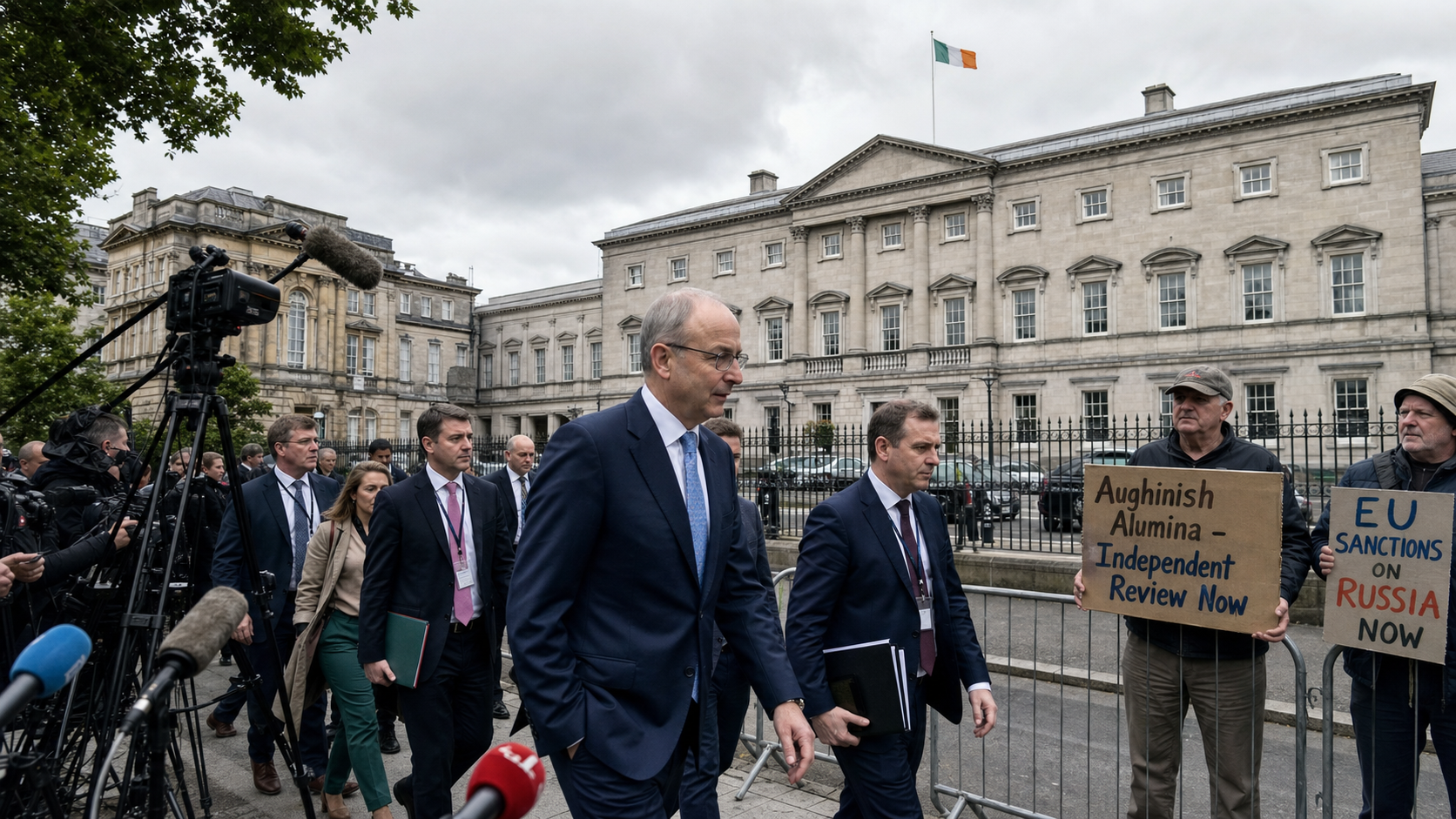
Taoiseach Micheál Martin has stated that any assessment of exports from Aughinish Alumina must be conducted independently of the company itself, as the debate over the Limerick refinery's links to Russian aluminium production intensifies at both national and European level. The Taoiseach's intervention came as the European Commission signalled that it would not rush into a decision on possible sanctions against the refinery's exports, and as a confidential report warned that EU sanctions would jeopardise the viability of the plant — which employs hundreds of workers and supplies approximately 30% of the EU's alumina needs.
Background
Aughinish Alumina, located on the Shannon Estuary in Co Limerick, is one of Ireland's largest industrial employers and one of the most significant alumina refineries in Europe. The plant is owned by Rusal, the Russian metals giant controlled by oligarch Oleg Deripaska, and has been at the centre of a prolonged controversy over whether its exports are contributing to Russia's war economy.
The controversy intensified in March 2026 following investigative reports by the Organised Crime and Corruption Reporting Project and The Irish Times, which alleged that alumina produced at the Limerick facility was being exported to Russian smelters and potentially entering the supply chain for Russian defence and weapons manufacturing. The reports prompted calls from opposition politicians and European parliamentarians for sanctions on the refinery's exports, and triggered a formal investigation by the Irish Department of Enterprise.
The European Parliament approved a non-binding resolution in July 2026 calling for a full ban on the export of alumina to Russia, supported by the European People's Party and the Socialists and Democrats. However, the European Commission has been more cautious, citing the refinery's critical role in European industrial supply chains and the risk that sanctions could trigger significant inflationary pressure and supply deficits for European smelters and downstream industries.
Key Developments
The Taoiseach's statement on Tuesday represented a significant hardening of the government's public position on the Aughinish issue. By insisting that any assessment of the refinery's exports must be independent of the company itself, Martin was implicitly acknowledging that previous assessments — including the Department of Enterprise investigation — had been insufficient to resolve the fundamental question of whether Aughinish alumina is contributing to Russia's war effort.
The European Commission's indication that it will not rush into a decision on possible sanctions reflects the genuine complexity of the issue. Aughinish supplies approximately 30% of the EU's alumina, and the sudden removal of that supply would have significant consequences for European aluminium producers and for the downstream industries — including aerospace, automotive, and construction — that depend on aluminium. The Commission is acutely aware that sanctions that damage European industry more than Russian interests are counterproductive.
A confidential report, details of which have been reported by The Irish Times, warned that EU sanctions would jeopardise the viability of the Aughinish plant. The company has warned that the imposition of sanctions on its exports would likely force the closure of the plant and the loss of hundreds of jobs in Co Limerick. A Fianna Fáil minister described the suggestion of redirecting exports as a 'simplistic' solution to a complex problem.
Why It Matters
The Aughinish controversy sits at the intersection of Ireland's economic interests, its foreign policy commitments, and its obligations as a member of the European Union. The plant is a major employer in Co Limerick, and its closure would be a significant economic blow to the region. But the evidence that its products may be contributing to Russia's war in Ukraine creates a moral and political dilemma that cannot be resolved simply by pointing to the jobs at stake.
Ireland's position within the EU debate on Aughinish is complicated by the fact that the refinery is located on Irish soil and employs Irish workers, giving the Irish government a direct stake in the outcome that other EU member states do not share. The Taoiseach's call for an independent assessment is an attempt to navigate this dilemma by demonstrating that Ireland is taking the concerns seriously while avoiding a premature commitment to a particular outcome.
The case is also a test of Ireland's credibility as a country that takes its EU obligations seriously. If the evidence ultimately shows that Aughinish alumina is contributing to Russia's war economy, Ireland will face a very difficult choice between its economic interests and its political commitments.
Local Impact
The uncertainty surrounding Aughinish's future is being felt acutely in Co Limerick, where the refinery is one of the largest private sector employers. Workers at the plant and their families are watching the political and regulatory developments closely, aware that the outcome of the EU deliberations could have a direct impact on their livelihoods. The Shannon Estuary region, which has been working to develop its economic base through renewable energy and other sectors, would face a significant setback if the Aughinish plant were to close.
What's Next
Further deliberations on possible EU sanctions against Aughinish alumina exports are expected in September 2026, when the European Commission is scheduled to review the matter. The Irish government is expected to engage actively in those deliberations, and the Taoiseach's call for an independent assessment suggests that Ireland will be seeking to shape the process rather than simply responding to it. The Department of Enterprise is expected to commission the independent assessment in the coming weeks.