People Before Profit Faces Internal Revolt as Members Resign Over 'Hegemonic' Leadership
A group of members has resigned from an internal People Before Profit faction, citing what they describe as "hegemonic" leadership practices within the party — the latest in a series of internal tensions that have seen the Irish left-wing party navigate factional disputes and ideological realignments at a moment when the broader Irish left is seeking to define its role in a changed political landscape.
Background
People Before Profit has been one of the more dynamic forces on the Irish political left since its emergence as a significant electoral presence in the 2011 general election, when the financial crisis created an opening for radical left politics that the party was well-positioned to exploit. The party, which operates as a sister organisation to the Socialist Workers Party and maintains close links with left-wing movements across these islands, has built its electoral base primarily in working-class urban constituencies in Dublin and Cork, as well as in parts of the north-west.
The party's internal life has always been characterised by a degree of ideological intensity that is common to organisations of the revolutionary left, where questions of political line and organisational method are taken seriously and debated vigorously. However, the past two years have seen a series of departures and factional disputes that have raised questions about the party's internal culture and its capacity to manage political disagreement constructively.
In June 2025, a group of approximately 30 to 40 members, including Dublin councillor Madeleine Johansson, resigned from PBP to form the "Red Network," primarily driven by disagreements regarding the party's potential strategy toward a coalition government with Sinn Féin. In August 2026, a new faction known as the Marxist Republican Network was announced within the party, advocating for a more radical transformation of PBP into an explicitly Marxist, class-independent, and revolutionary organisation.
Key Developments
The latest resignations involve members of an internal PBP grouping who have cited what they describe as "hegemonic" leadership practices — a term that in left political discourse typically refers to the dominance of a particular faction or leadership clique in ways that suppress internal debate and democratic participation. The resignees have not publicly identified themselves in full, but their statement, circulated on social media and to political journalists, describes a party culture in which dissent is managed rather than engaged with and in which the leadership exercises disproportionate control over internal processes.
The party leadership has not responded publicly to the specific allegations, though a spokesperson indicated that PBP remains committed to internal democracy and that the party's structures provide ample opportunity for members to raise concerns and participate in decision-making. Richard Boyd Barrett, who was selected as party leader in October 2024 in a move away from the collective leadership model that PBP had previously operated, has not commented directly on the resignations.
The timing of the resignations — during the summer recess, when political attention is reduced — suggests that the departing members may be seeking to minimise the immediate political impact while still placing their concerns on the public record. The Marxist Republican Network, which advocates for the dissolution of both the Irish and British states in favour of a 32-county constituent assembly, represents a more radical departure from the party's current political line and is likely to create ongoing tension within PBP's internal structures.
Why It Matters
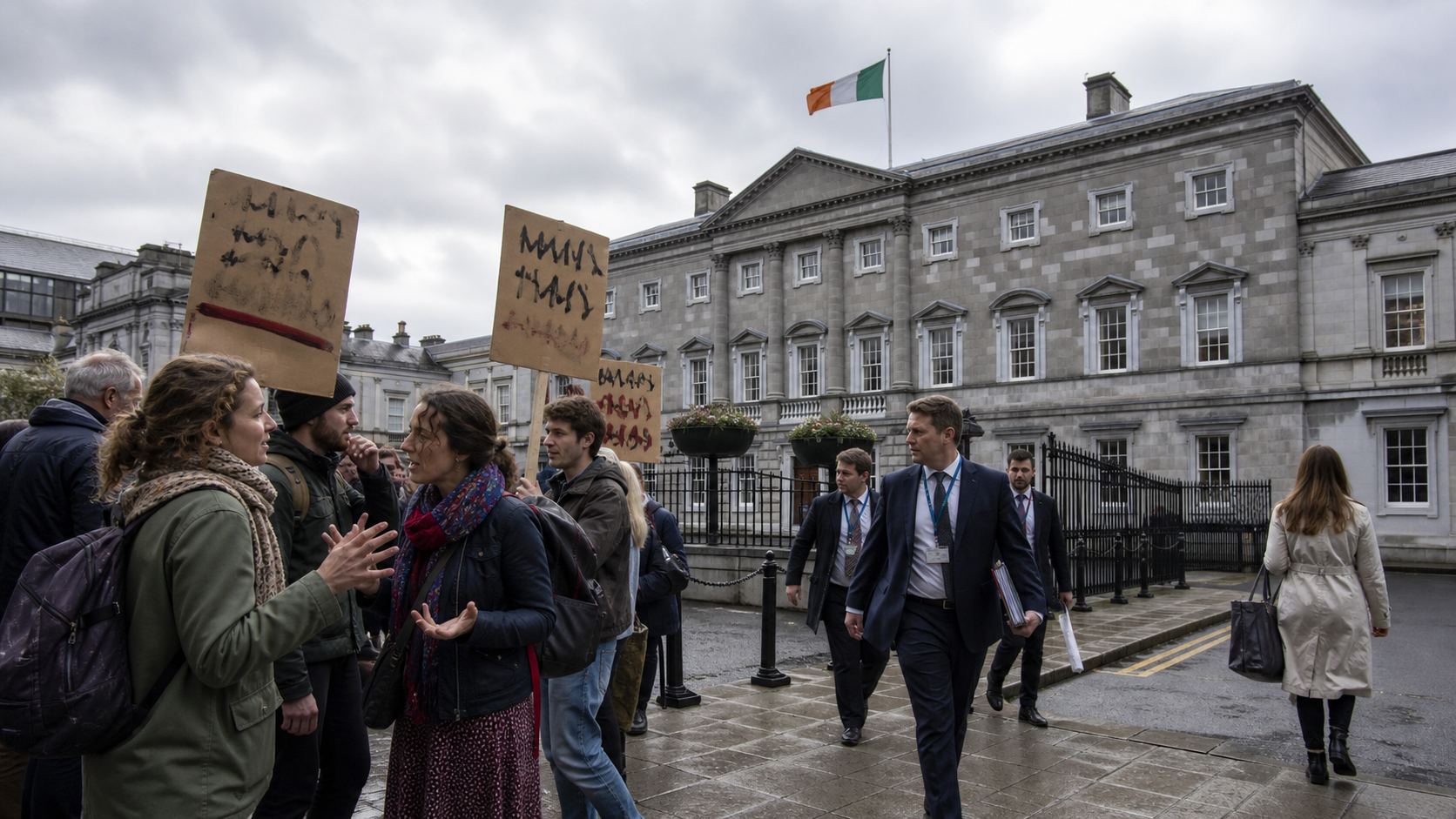
Internal disputes within small left-wing parties might seem like a niche concern, but they matter for the broader Irish political landscape in several ways. People Before Profit holds seats in the Dáil and has been a consistent voice on issues including housing, workers' rights, and climate policy. Its capacity to function as an effective opposition force depends on its internal cohesion and its ability to present a united front on the issues that matter to its voters.
The broader Irish left — which includes PBP, the Social Democrats, Labour, and various independent TDs — is navigating a period of significant flux following the 2024 general election, in which Sinn Féin's vote share declined from its 2020 peak and the centre-right coalition of Fine Gael and Fianna Fáil was returned to government. The question of how the left should position itself in relation to Sinn Féin — as a potential coalition partner or as a distinct radical alternative — is one that divides opinion within PBP and across the broader left.
Local Impact
For PBP's elected representatives in Dublin constituencies including Dublin South-Central, Dublin North-West, and Cork North-Central, the internal tensions create a challenging backdrop for their constituency work. Voters who supported PBP on the basis of its radical housing and workers' rights agenda may be less interested in the party's internal factional disputes, but sustained internal conflict can distract from the political work that builds and maintains electoral support. The party's performance in the next local elections will be an important test of whether the internal tensions have damaged its community roots.
What's Next
PBP's national conference, scheduled for October 2026, is expected to provide a forum for the internal tensions to be addressed, with motions on organisational structures and political direction likely to be tabled by multiple factions. The Marxist Republican Network has indicated it will seek to put its platform to the conference. The party leadership will be hoping to present a united front ahead of the conference, but the public nature of the recent resignations makes that task more difficult.