Ireland's Human Rights Record 'Stalled or Regressed', Rights Groups Tell UN in Geneva
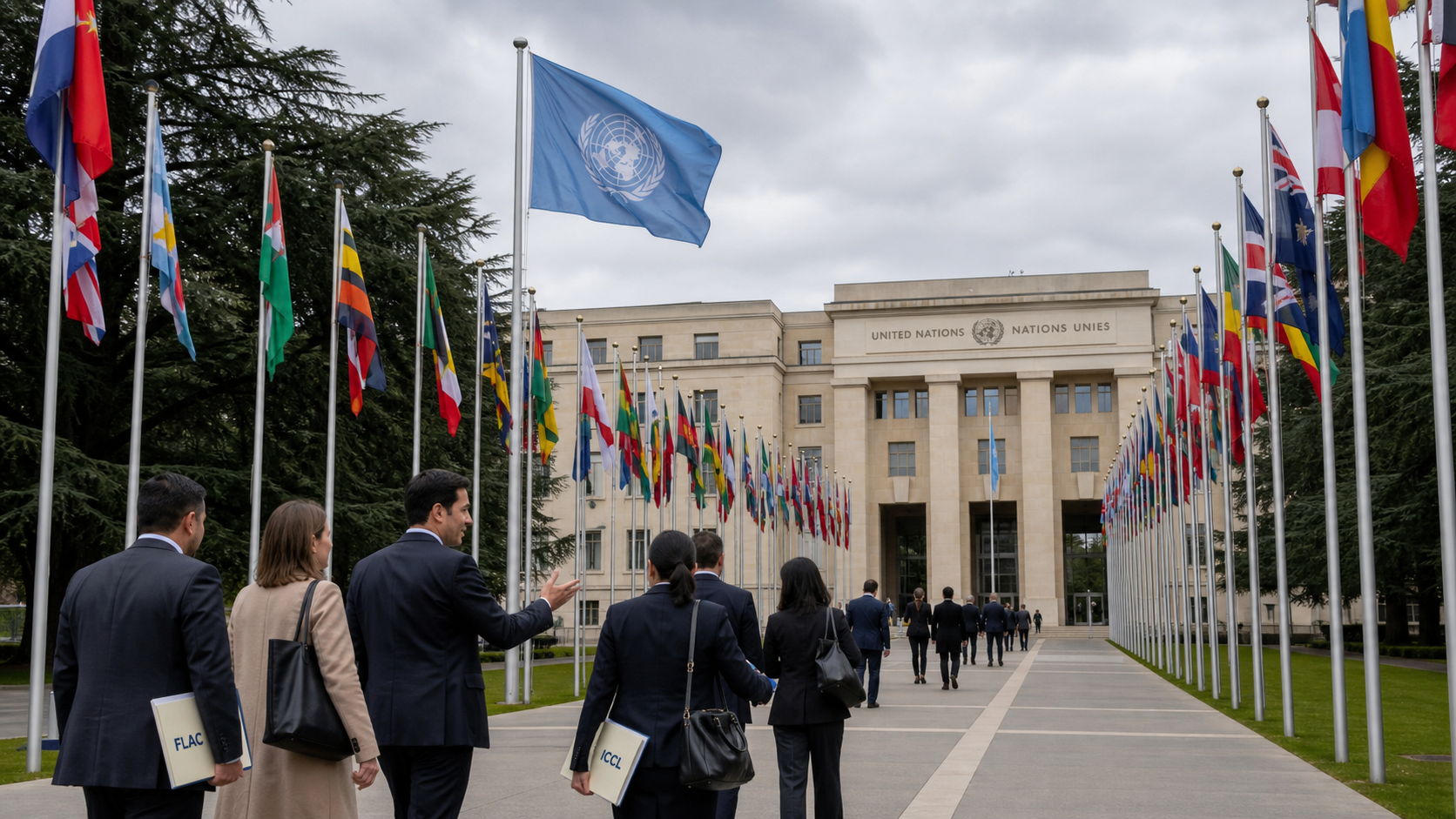
The Free Legal Advice Centres and the Irish Council for Civil Liberties have presented evidence to the United Nations in Geneva arguing that Ireland's human rights record has "stalled if not regressed" in the five years since its last Universal Periodic Review, raising concerns about proposed changes to judicial review, the failure to progress an Equality Bill, and persistent barriers to housing and social security for Traveller and Roma communities.
Background
The Universal Periodic Review is a mechanism through which the United Nations Human Rights Council examines the human rights record of all 193 member states on a recurring cycle. Ireland's third cycle of the UPR was completed in November 2021, and the evidence being gathered in 2026 will inform the next phase of the review process. The UPR provides an opportunity for civil society organisations to present independent assessments of a state's human rights performance, supplementing the government's own report with perspectives from those working directly with affected communities.
The Free Legal Advice Centres, known as FLAC, is one of Ireland's oldest and most respected civil society organisations, providing free legal advice and advocacy on issues of social justice and access to justice. The Irish Council for Civil Liberties, the ICCL, is Ireland's leading human rights organisation, monitoring legislation, policy, and practice against international human rights standards. Both organisations have a long history of engagement with UN human rights mechanisms and are regarded as authoritative voices on the state of civil liberties and human rights in Ireland.
Ireland is simultaneously campaigning for a seat on the UN Human Rights Council for the 2027 to 2029 term, with elections scheduled for October 2026. The juxtaposition of Ireland's international human rights ambitions with the domestic concerns raised by FLAC and the ICCL is not lost on observers, and the government will be keen to demonstrate that it takes the concerns of civil society seriously.
Key Developments
In their submissions to the UN, FLAC and the ICCL identified several areas of particular concern. On access to justice, the organisations expressed alarm about the proposed Civil Reform Bill, which they argue could hinder disadvantaged groups from challenging state decisions related to public services such as housing and education through judicial review. They called for comprehensive reform of the civil legal aid system, arguing that it should be treated as an essential public service rather than a residual provision for those who cannot afford private legal representation.
On equality and non-discrimination, the organisations highlighted that a draft Equality Bill has been published but not progressed through the Oireachtas, leaving significant gaps in Ireland's anti-discrimination framework. On Traveller and Roma rights, they noted that despite the existence of a Traveller and Roma inclusion strategy, persistent barriers to housing and social security remain, with no substantive legal reform following the 2019 independent review on Traveller homelessness.
The ICCL also raised concerns about what it described as a global trend of democratic backsliding, arguing that Ireland is not immune to this trend and that proposed changes to judicial review processes represent a worrying development that could impede access to justice for ordinary citizens. The 2026 Liberties Rule of Law Report, which assessed Ireland's performance against EU rule-of-law standards, categorised the country as a "stagnator" — maintaining political stability but suffering from legislative inertia and structural weaknesses in its justice, anti-corruption, and media freedom frameworks.
Why It Matters
The submissions by FLAC and the ICCL to the UN carry weight precisely because they come from organisations with deep expertise and credibility in the Irish human rights landscape. Their assessment that Ireland's record has stalled or regressed is a significant challenge to the government's self-presentation as a progressive, rights-respecting state. The concerns they raise — about access to justice, equality legislation, and Traveller rights — are not new, but the fact that they are being raised at the UN level gives them an international dimension that the government cannot easily ignore.
The timing of the submissions, coming as Ireland campaigns for a seat on the UN Human Rights Council, creates a particular political dynamic. A state that aspires to a leadership role in international human rights governance must be able to demonstrate that it is meeting its own obligations at home. The government will need to respond substantively to the concerns raised by FLAC and the ICCL if it is to maintain its credibility as a candidate for the Human Rights Council.
Local Impact
The concerns raised by FLAC and the ICCL have direct implications for communities across Ireland. The proposed changes to judicial review, if enacted, would affect the ability of individuals and community groups to challenge government decisions on planning, housing, and public services — decisions that have a profound impact on the daily lives of people in every county. The failure to progress the Equality Bill leaves gaps in protection for workers, consumers, and service users who experience discrimination. For Traveller and Roma communities, the persistent barriers to housing and social security represent a daily reality of exclusion that the state has repeatedly acknowledged but failed to adequately address.
What's Next
The evidence gathered by FLAC, the ICCL, and other civil society organisations will be submitted to the UN Human Rights Council as part of the Universal Periodic Review process. The government will have the opportunity to respond to the concerns raised and to outline the steps it is taking to address them. The election for the UN Human Rights Council seat is scheduled for October 2026, and the government's response to the civil society submissions will be an important factor in how Ireland's candidacy is perceived by other UN member states.