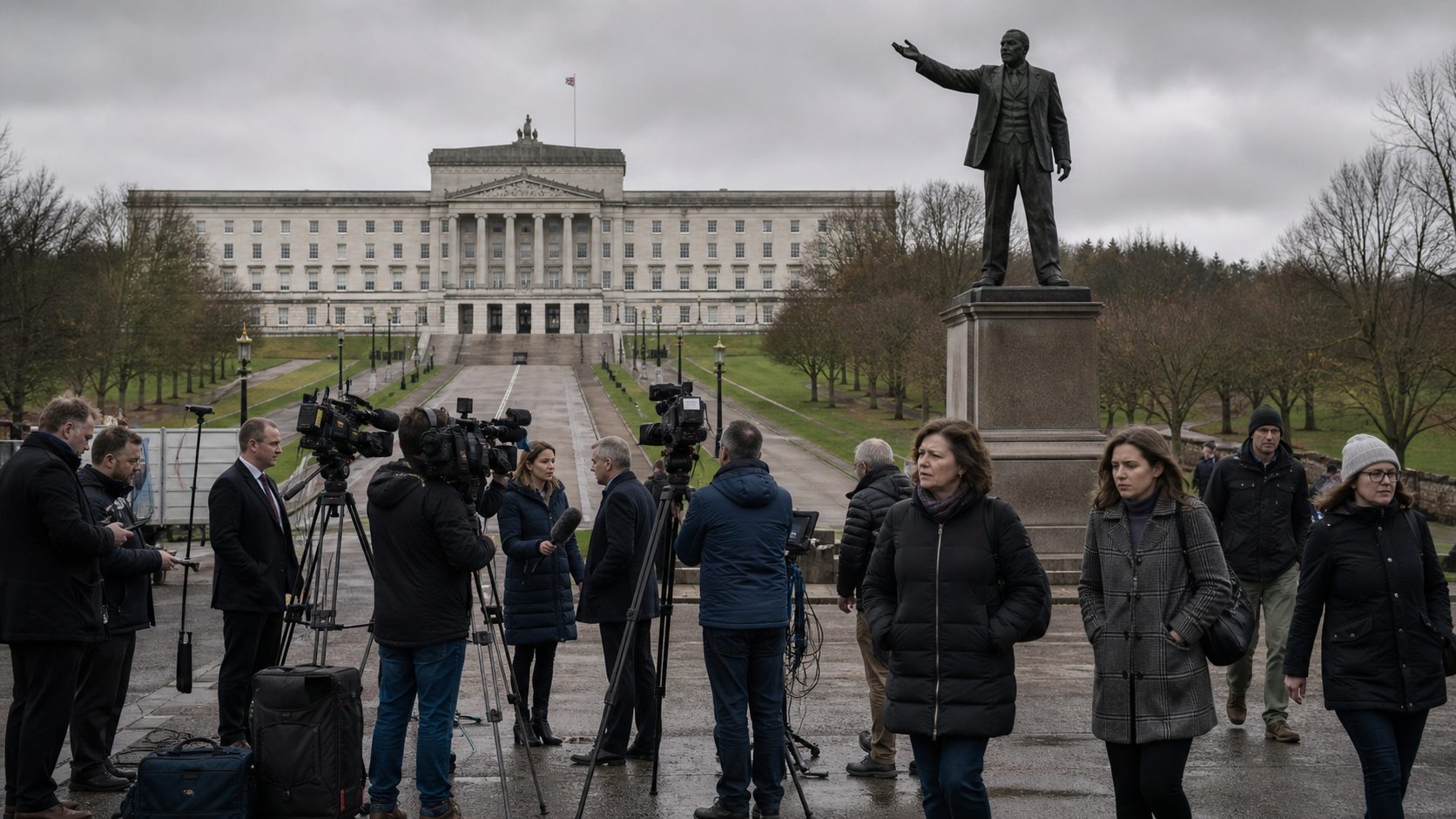
Stormont Health Crisis Deepens as Nesbitt Departure Leaves Department Without Minister and Reform Agenda in Limbo
The resignation of Mike Nesbitt as Stormont Health Minister has left Northern Ireland's Department of Health without political leadership at a critical juncture, with the Ulster Unionist Party under pressure to nominate a credible successor quickly, while political analysts and health advocates warn that the departure threatens to derail a reform agenda that was already moving too slowly for a system in chronic crisis.
Background
Northern Ireland's health system is, by most objective measures, the most pressured in the United Kingdom. Waiting lists for elective procedures are the longest in the UK, with hundreds of thousands of patients waiting more than a year for treatment. GP access is severely constrained, with some practices in Belfast, Derry, and rural areas effectively closed to new patients. Mental health services are chronically underfunded, and the workforce — nurses, doctors, allied health professionals — is under sustained pressure from a combination of pay disputes, burnout, and emigration.
Against that backdrop, Mike Nesbitt's tenure as Health Minister had been characterised by a genuine attempt to drive structural reform. His neighbourhood model of care — shifting resources from acute hospital settings toward community-based services — represented a coherent response to the system's long-term challenges, even if its implementation was slow and contested. His departure removes an experienced hand from a brief that demands both political skill and substantive policy knowledge.
The immediate cause of his resignation — the clash with UUP leader Jon Burrows over Causeway Hospital — reflects a broader tension within the power-sharing Executive between the demands of evidence-based health policy and the political pressures that elected representatives face from their constituents. The Causeway Hospital question is not unique: similar tensions have arisen over the future of services at Daisy Hill Hospital in Newry, the South West Acute Hospital in Enniskillen, and other facilities across Northern Ireland.
Key Developments
Political reaction to Nesbitt's resignation has been swift and largely critical of the circumstances that led to it. Philip McGuigan, Chair of the Stormont Health Committee, warned that the episode demonstrates the danger of allowing party political considerations to override clinical evidence in health service decisions. Alliance Party health spokesperson Paula Bradshaw called for an urgent meeting of the Health Committee to assess the implications for ongoing reform programmes.
Sinn Féin, whose ministers hold several other Executive portfolios, has called for the UUP to nominate a successor without delay, warning that a prolonged vacancy in the health brief would be "unacceptable" given the scale of the challenges facing the system. The SDLP has echoed that call, with health spokesperson Colin McGrath noting that patients cannot afford political uncertainty at the top of the Department of Health.
Jon Burrows, whose public opposition to the Causeway Hospital proposal triggered the crisis, has not commented publicly on the resignation beyond the UUP's formal statement thanking Nesbitt for his service. His silence has been noted by political commentators as a significant misjudgement — the party leader who precipitated a ministerial resignation without a clear plan for what comes next.
Why It Matters
The Nesbitt resignation is the most serious test of the Stormont Executive's stability since its restoration in February 2024. The power-sharing model depends on parties honouring the principle of collective responsibility — that ministers, once appointed, are entitled to make decisions within their portfolios without being publicly contradicted by their own party leaders. Burrows' intervention at the Coleraine town hall meeting violated that principle in a way that left Nesbitt with no viable alternative to resignation.
The episode raises questions about whether the current Executive can sustain the kind of difficult, evidence-based decisions that health reform requires. If ministers cannot rely on their party leaders to support — or at least not publicly undermine — their departmental decisions, the incentive to take on the health brief diminishes significantly. That is a problem for a system that desperately needs political leadership willing to make hard choices.
Local Impact
For patients across Northern Ireland's five health trusts, the ministerial vacancy creates immediate uncertainty. Decisions on service reconfiguration — including the Causeway Hospital question — are effectively paused until a new minister is in post and has had time to review the evidence. For patients already waiting months or years for treatment, further delay is not an abstraction but a lived reality with real consequences for their health and quality of life.
The Northern Health and Social Care Trust, which covers the Causeway area, has indicated that it will continue to operate services as normal during the transition period. But the strategic decisions about the trust's future configuration — which require ministerial sign-off — cannot proceed without political leadership.
What's Next
The UUP must nominate a replacement minister under the d'Hondt mechanism. The party's options are constrained by the size of its Assembly group and the availability of members with relevant experience. The nomination process is expected to take at least several days, and possibly longer if internal party discussions prove difficult. The new minister will inherit a department in mid-reform, a workforce under pressure, and a waiting list crisis that shows no sign of resolving itself without sustained political will.