Stormont's Revolving Door Problem: Can Devolved Government Deliver Before the 2027 Election?
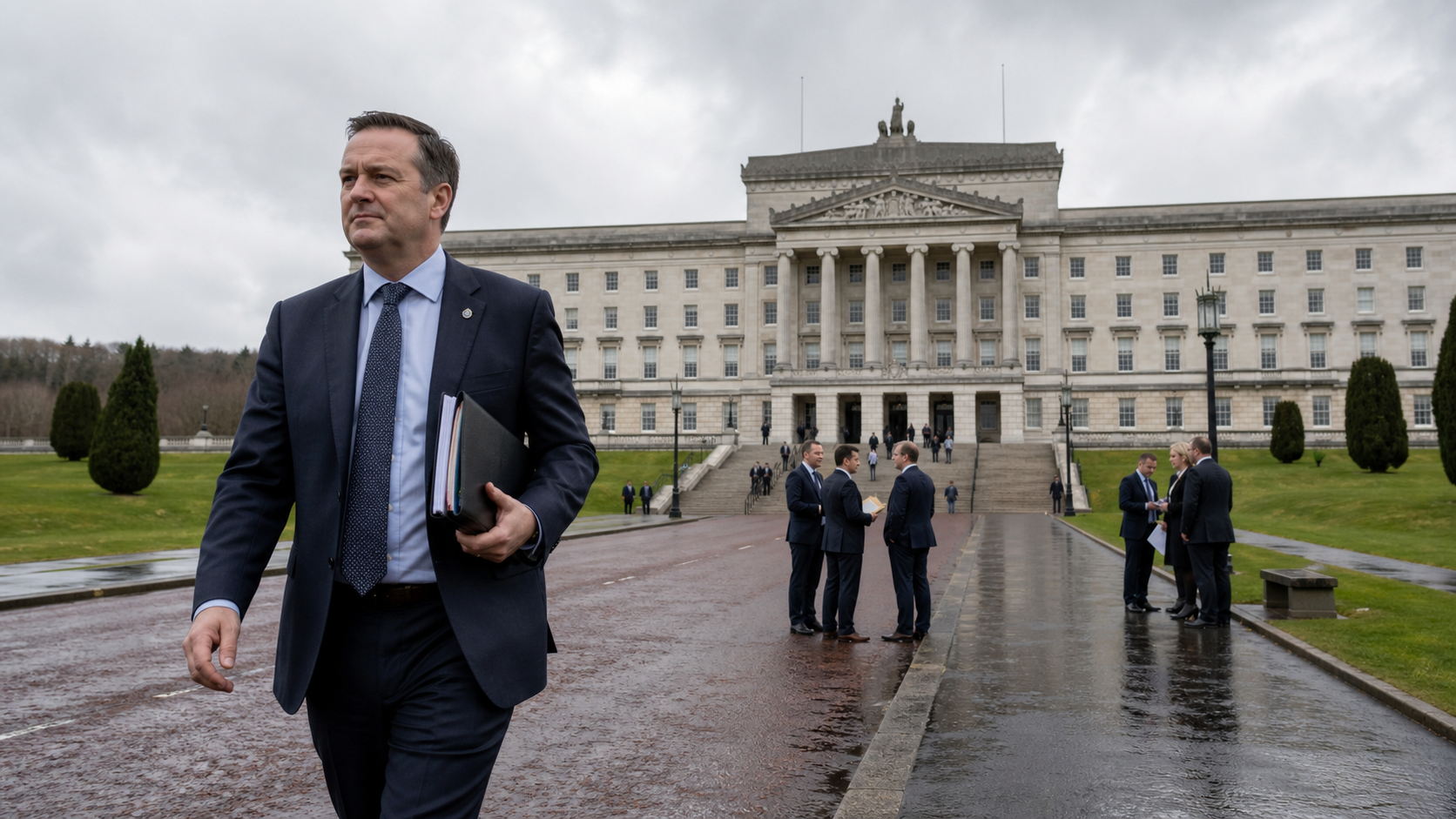
The appointment of Robbie Butler as Northern Ireland's Health Minister — the third person to hold the role in relatively quick succession — has prompted a searching debate about the capacity of the Stormont Executive to deliver meaningful reform in the nine months remaining before Assembly elections in May 2027. Political analysts, health professionals, and community representatives have all raised concerns about the cumulative impact of ministerial instability on the health service's ability to implement the complex, long-term changes that its structural problems demand. The episode has also reignited questions about the internal dynamics of the Ulster Unionist Party and the leadership style of party leader Jon Burrows.
Background
Northern Ireland's devolved institutions have had a turbulent history since their establishment under the Good Friday Agreement in 1998. The Assembly has been suspended on multiple occasions, most recently for a three-year period between 2017 and 2020 and again between 2022 and 2024, when the DUP's withdrawal from the Executive over the Northern Ireland Protocol brought devolved government to a halt. The restoration of the institutions in 2024, following the Windsor Framework agreement, was widely welcomed as an opportunity to focus on the practical business of governing — but the subsequent period has been marked by a series of political controversies that have distracted from that agenda.
The health portfolio has been particularly affected by instability. Robin Swann, who served as Health Minister during the Covid-19 pandemic and earned widespread respect for his handling of the crisis, was succeeded by Mike Nesbitt, who brought considerable credibility and a clear reform agenda to the role. Nesbitt's resignation, triggered by a public dispute with UUP leader Jon Burrows over the Causeway Hospital question, has removed a minister who had built relationships with health service leaders and was beginning to make progress on the complex task of reconfiguring services.
The pattern of ministerial change is not unique to the health portfolio. The Stormont Executive has seen significant turnover across a range of departments in recent years, reflecting both the political volatility of the post-Brexit environment and the internal dynamics of the parties that make up the mandatory coalition. The d'Hondt system, which allocates ministerial posts proportionally based on Assembly seats, means that the Executive is always a coalition of parties with different priorities and, sometimes, fundamentally different visions for Northern Ireland's future.
Key Developments
The reaction to Butler's appointment from across the political spectrum has been measured rather than enthusiastic. DUP health spokesperson Diane Dodds acknowledged the scale of the challenge facing the new minister while noting that the party would hold him to account for progress on waiting lists and service reform. SDLP leader Colum Eastwood expressed sympathy for Butler's position while questioning whether the UUP's internal difficulties were compatible with effective governance. Alliance Party leader Naomi Long was more pointed, suggesting that the episode demonstrated the need for a review of how ministerial appointments are made and how party leaders can intervene in departmental decisions.
Health professionals have been more direct in their concerns. The British Medical Association's Northern Ireland committee has warned that the health service "cannot afford prolonged uncertainty" and that the pattern of ministerial change is damaging staff morale and making it harder to recruit and retain senior clinicians. The Royal College of Nursing has called for a cross-party commitment to a long-term health workforce strategy that would survive changes of minister and, if necessary, changes of government.
The Stormont Health Committee, chaired by Sinn Féin's Liz Kimmins, has indicated that it will seek an early meeting with Butler to discuss his immediate priorities and to press him on the timeline for key decisions, including the Causeway Hospital question and the implementation of the "Shift Left" primary care reform agenda.
Why It Matters
The broader significance of the current situation lies in what it reveals about the structural challenges facing devolved government in Northern Ireland. The mandatory coalition model, which requires parties with fundamentally different constitutional aspirations to govern together, creates inherent tensions that are managed rather than resolved. When those tensions surface — as they did in the Nesbitt-Burrows dispute — the consequences are felt not just by the parties involved but by the public services that depend on stable ministerial leadership.
With Assembly elections due in May 2027, the political calculus for all parties is increasingly shaped by electoral considerations. The temptation to prioritise short-term political positioning over long-term policy delivery is strong, and the health service — with its complex, politically sensitive reform agenda — is particularly vulnerable to this dynamic. The question of whether Stormont can deliver meaningful health reform in the nine months remaining before the election is one that will define the legacy of the current Assembly term.
Local Impact
For patients across Northern Ireland — whether waiting for an orthopaedic procedure at the Royal Victoria Hospital in Belfast, a diagnostic scan at Antrim Area Hospital, or a mental health assessment through the Western Trust in Derry — the ministerial instability at Stormont is not an abstract political concern. It translates directly into uncertainty about the direction of the service, delays in decision-making, and a sense that the political system is not capable of addressing the problems that affect their daily lives.
What's Next
Butler is expected to appear before the Stormont Health Committee within the next fortnight. The committee will press him on his immediate priorities, his approach to the Causeway Hospital question, and his plans for the waiting list reduction strategy. A departmental budget review is expected in September, which will set the financial parameters for the remainder of the Assembly term. Assembly elections are scheduled for May 2027, at which point the current Executive's record on health reform will be a central issue in the campaign.